
A Masterpiece of Water and Stone
Carved over millennia by the Latorița River, these gorges are a vertical world of grey limestone, vibrant moss, and hidden springs. The road itself feels like a narrow thread stitched between giant rock walls, offering a sense of intimacy with nature that is hard to find elsewhere.
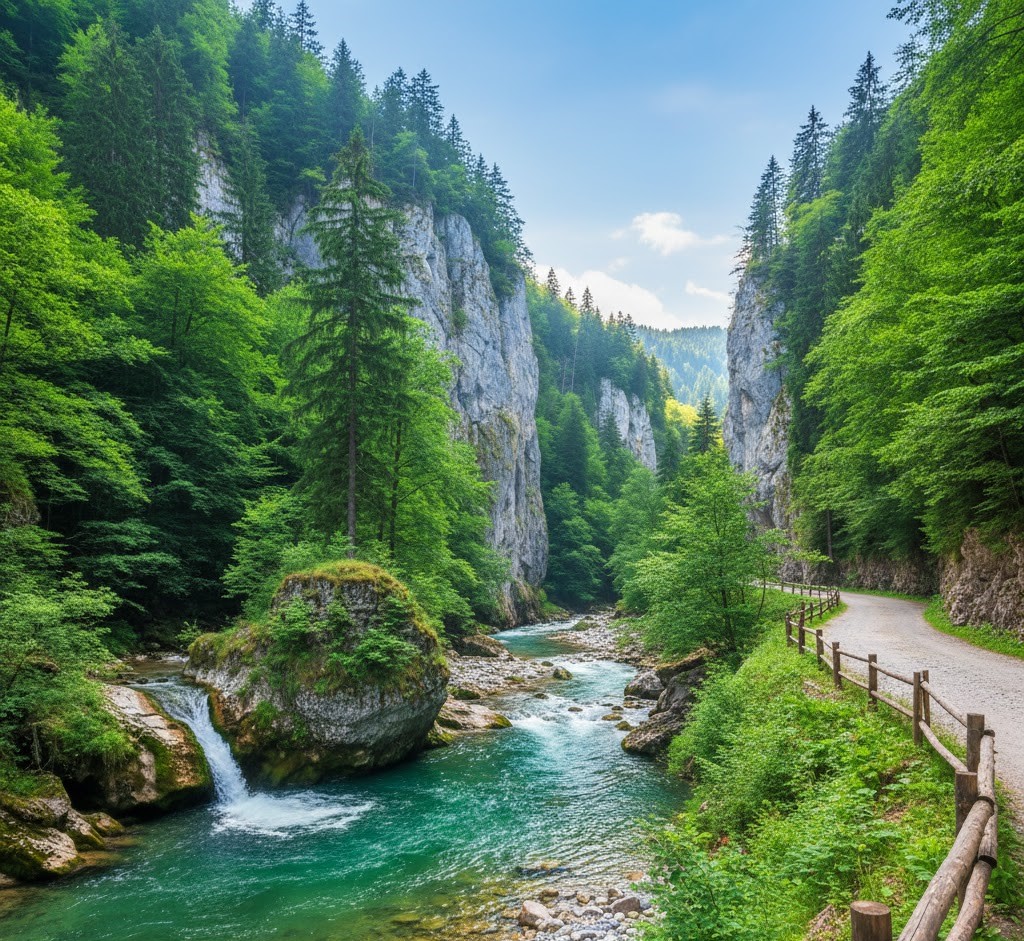
The Legend: The Mourning River
The name Latorița is said to have deep roots in local lore. One old story tells of a young girl named Latorița who was lost in the peaks during a fierce storm. Her mother’s tears for her lost daughter supposedly became the springs that feed the river today. Locals say the river’s constant roar through the gorges is actually the mountain’s song, mourning for the beauty it keeps hidden in its heart.
 Essential Travel Advice
The Latorița Gorges are as dangerous as they are beautiful.
- Rockfalls: After heavy rain or during the spring thaw, be cautious of falling rocks from the steep walls.
- Wildlife Corridor: This canyon is a primary transit route for large carnivores moving between mountain ranges. Since wild animals are unpredictable, we recommend staying close to your vehicle or hiking in groups with noise-making devices (like bells or whistles).
Why It Belongs on Your Bucket List
The Latorița Gorges are not just a road; they are a transition. They prepare your soul for the stillness of the lakes that lie ahead. It is a place of power, shadows, and incredible natural architecture.
A video wich present Latorița Gorges (Cheile Latoritei):
Frequently Asked Questions (FAQ) - Latorița Gorges
1. Where are the Latorița Gorges located?
The gorges are situated in the Latorița Mountains (part of the Parâng group) in Vâlcea County, Romania. They stretch along the Latorița River, connecting the village of Ciungetu to the high alpine lakes, Petrimanu and Galbenu.
2. Is the road through the gorges paved?
No. The road (DJ701D) is a forest/macadam road. While it is usually accessible for standard cars during dry summer months, it can be rough, muddy, or have large stones. For a comfortable and safe trip, a 4x4 or a car with high ground clearance is highly recommended.
3. Are there any waterfalls to see in the gorges?
Yes! The Latorița Gorges are famous for their "hanging" waterfalls. The most notable ones are Apa Spânzurată (Hanging Water) and Moara Dracilor (Devil's Mill). Many smaller, unnamed falls appear on the limestone walls after heavy rainfall.
4. Can I hike through the gorges?
Absolutely. Many visitors park their cars near the entrance and walk several kilometers to truly appreciate the scale of the cliffs. It is a relatively flat walk along the river, but be mindful of occasional logging trucks and remember that wild animals are unpredictable in this densely forested canyon.
5. What is the best time to visit?
-Spring (May-June): To see the waterfalls at their maximum flow.
-Autumn (October): For the incredible contrast between the grey limestone and the fiery colors of the beech forest.
-Winter: Access can be very difficult and is often blocked by snow or ice; it is only recommended for experienced off-roaders with proper equipment.
6. Is there a signal or any services in the gorges?
No. There is no mobile signal once you enter the deep canyon. There are also no gas stations or shops. Make sure to fill your tank in Brezoi or Voineasa and bring plenty of water and snacks for the trip.
