
Țuică: The Traditional Plum Spirit (see more)
Țuică is the national drink of Romania, strictly defined as a spirit made exclusively from plums. Romania is one of the world's top plum producers, and a significant portion of the harvest goes directly into the copper stills (cazane).
- The Craft: The plums are fermented in large wooden vats for several weeks before being distilled. The process usually takes place in late autumn, turning the village "cazan" into a social hub where stories are exchanged over the fire.
- Țuică Bătrână: This is Țuică that has been aged in mulberry wood casks (dud), which gives it a beautiful golden color and a smoother, vanilla-like aroma.
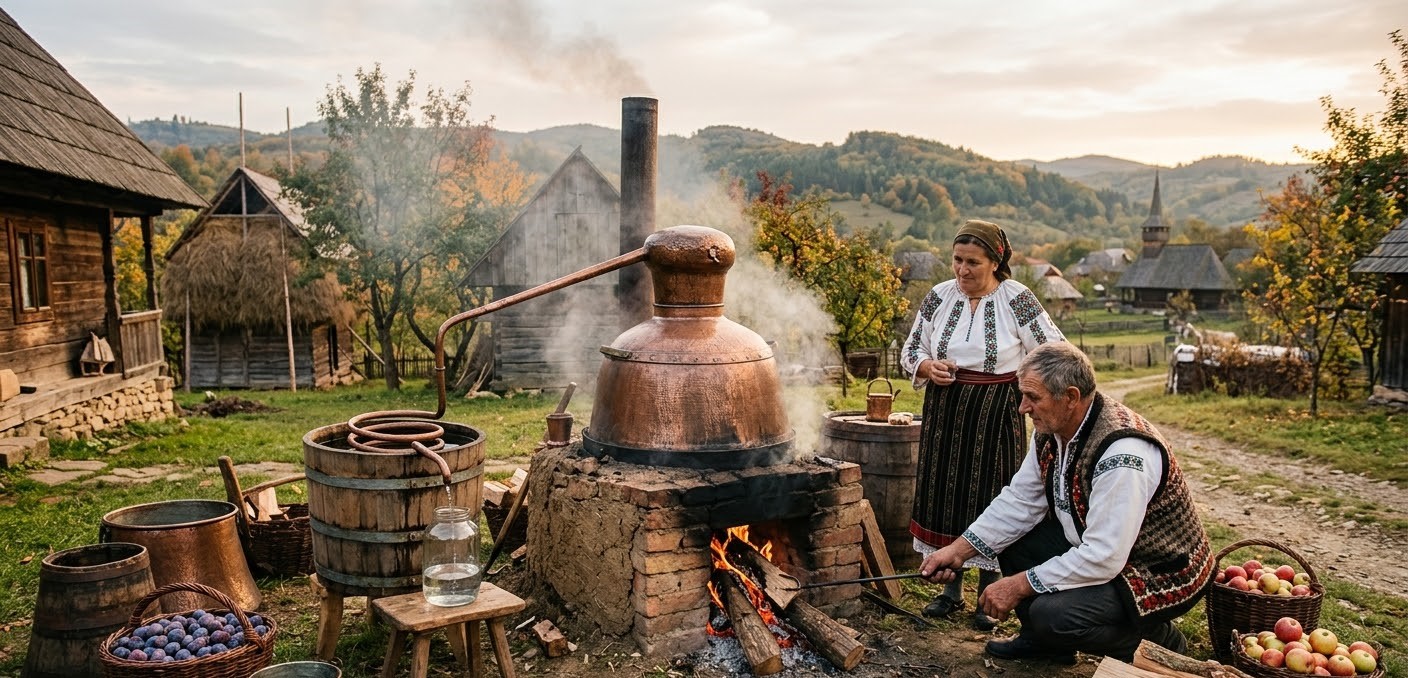
Pălincă: The Strong Soul of the North
While Țuică is common across the country, Pălincă is the pride of Transylvania and Northern Romania (Maramureș, Satu Mare).
- The Difference: Unlike Țuică, Pălincă is usually double-distilled, making it much stronger, with an alcohol content often ranging between 50% and 60%.
- Variety of Fruits: While plum Pălincă is the most common, it can also be made from pears, apricots, apples, or sour cherries, each offering a distinct bouquet of flavors.
- The Welcome: In Romanian villages, it is customary to welcome guests with a small glass (păhărel) of Țuică and a piece of fresh bread or telemea cheese. It is believed to "open the appetite."
- The Toast: When clinking glasses, Romanians say "Noroc!" (Good luck) or "Sănătate!" (To your health).
- The Seasonal Cure: In the winter, "Țuică fiartă" (boiled Țuică with peppercorns, honey, and cinnamon) is a popular traditional remedy for the common cold and a way to stay warm during the bitter frost.
The Legend of "Water of Life" (Apa Vie)
In Transylvania and Maramureș, Pălincă was historically regarded not just as a drink, but as a form of "Living Water." Elders believed that a drop of double-distilled Pălincă had the power to "awaken the blood" and drive away the evil spirits that brought sickness during harsh winters. There is a deep-rooted belief that a glass of Pălincă "cleanses the soul of sorrow," making room for joy and good conversation.
The Trial of Fire (Proba Focului)
A living legend in Romanian villages says that the purity of Pălincă is measured by fire. Locals claim that if you pour a little Pălincă on the rim of a glass and light it, the flame must be pure blue. If the flame dies out quickly or has strange colors, it means the spirit is not "clean" (not made purely from fruit). This "Trial of Fire" is considered a certificate of honor for any household master.
The Golden Spirit of the Mulberry Tree
There is an entire mythology surrounding the mulberry wood (dud) casks used to age Țuică. It is said that mulberry wood is "alive" and that it "lends" the color of gold to the spirit to give it the brilliance of the sun, even on the darkest winter days. Aged, yellow Țuică is considered the "liquid gold" of the Romanian hills.
The Ritual of the "Offering Drop" (Păhărelul de Pomană)
A profound tradition dictates that the very first drop from a new bottle of Țuică should not be drunk. Instead, a few drops are spilled onto the ground. This gesture is a tribute to ancestors ("for those who have passed"), a way of sharing the earth's bounty with those who labored on it before us.
A captivating video that follows the full traditional cycle: harvesting the plums, the fermentation in wooden vats, and the final distillation in a copper still:
Frequently Asked Questions: Romanian Țuică & Pălincă
What is the main difference between Țuică and Pălincă?
Țuică is made exclusively from plums and is typically distilled once (or twice for "horincă"), resulting in an alcohol content of 25-40%. Pălincă is a double-distilled spirit, much stronger (often over 50%), and can be made from various fruits like pears, apricots, or apples.
Is it safe to buy these spirits from roadside vendors?
Yes, most villagers take great pride in their craft. Buying from "negustori ambulanți" in rural areas or mountain passes is the most authentic way to experience the local tradition. These spirits are usually sold in recycled glass bottles and represent a significant part of the local economy.
Why is some Țuică yellow while some is clear?
Clear Țuică is fresh or stored in glass. The yellow or amber color comes from aging in wooden barrels—typically oak or mulberry (dud). This aging process not only changes the color but also softens the "bite" of the alcohol and adds a vanilla-like aroma.
What is the "Trial of Fire" (Proba Focului)?
This is a traditional method used by locals to test purity. A small amount of Pălincă is poured and lit; a steady, pure blue flame indicates that the spirit is high-quality and made purely from fruit without added sugar or artificial ingredients.
Why do Romanians pour a few drops on the ground before drinking?
This is a sacred ritual called "Păhărelul de Pomană." It is a gesture of respect for ancestors and loved ones who have passed away, symbolically sharing the harvest with those who worked the land before us.
Can Țuică really help with a cold?
In Romanian folk medicine, "Țuică fiartă" (boiled Țuică with honey and peppercorns) is a famous remedy. While not a clinical cure, the warmth and the vapors are believed to help clear the sinuses and "burn out" the chills during winter.
What is the best way to serve it?
It is traditionally served at room temperature in small shot glasses (păhărele) before a meal. It is meant to be sipped slowly to appreciate the fruit's bouquet, often accompanied by "gustări" like smoked bacon (slănină) (see more), red onions, and salty sheepfold cheese (see more) .
