
The Hospitality of the Shepherd's Fold
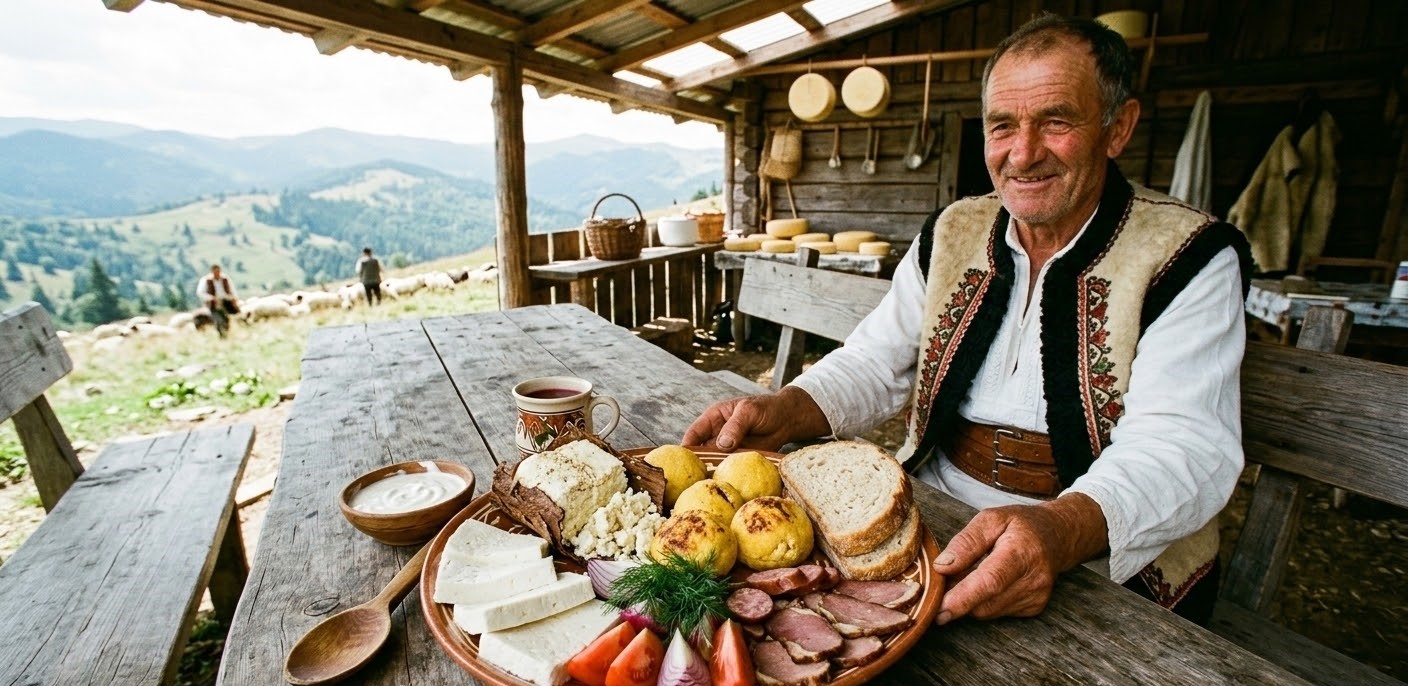
In Romania, hospitality is a sacred tradition. Shepherds in the Carpathian Mountains (see more) are famous for their welcoming nature. Visitors are often greeted like old friends and invited to sit at wooden tables to taste the fruits of their labor.
At a traditional stâna, everything is produced on-site using techniques passed down through generations. It is not just a meal; it is an immersion into a lifestyle that has defined the Romanian spirit for millennia.
Beyond Just Cheese: A Feast of Flavors
While the cheese is the star, the experience at a sheepfold offers so much more:
- Brânză de Burduf: A salty, strong-flavored sheep's milk cheese, traditionally aged in a sheep's stomach or in pine bark, which gives it a unique woody aroma.
- Bulz (see more): Perhaps the most famous shepherd’s dish. It consists of creamy polenta (mămăligă) shaped into balls, stuffed with rich cheese, and grilled over open flames until the center is melted and the outside is smoky and crisp.
- Balmoș (see more): A luxurious dish where cornmeal is cooked directly in sheep's sour cream and butter until it reaches a silky, rich consistency.
- Traditional Meat Delicacies: You will often find Pastramă (mutton pastrami) seasoned with local herbs and garlic, slow-cooked or smoked, serving as the perfect companion to the fresh dairy.
Fun Facts for the Curious
- The Pine Bark Secret: Brânza de burduf aged in pine bark is a specialty you won't find anywhere else. The resin from the bark acts as a natural preservative and infuses the cheese with an unmistakable forest scent.
- Transhumance: This ancient practice of moving livestock between summer and winter pastures is still alive in Romania, keeping the traditions of the stâna vibrant and authentic.
Frequently Asked Questions: Brânză de Stână & The Romanian Sheepfold
What exactly is a "stâna"?
A stâna is a traditional sheepfold located high in the mountains or on rolling hills. It is the place where shepherds live during the summer months to graze their flocks and produce authentic dairy products using ancestral methods.
Is "Brânză de Stână" different from store-bought cheese?
Yes, significantly. Because the sheep and cows graze on wild mountain herbs and flowers, the milk has a much richer and more complex flavor. Additionally, the cheese is often prepared over a wood fire or aged in natural materials like pine bark, giving it a smoky or resinous taste you won't find in a supermarket.
What is the best way to eat "Bulz"?
Bulz is best enjoyed hot, straight from the grill or the embers of a campfire. When you cut into the golden polenta ball, the melted brânză de burduf inside should flow out. It is often served with a dollop of fresh sour cream (smântână) or a side of fried egg.
Are visitors really welcome at any sheepfold?
In Romanian culture, shepherds are known for their hospitality. While they are busy with their daily chores, most are very happy to welcome travelers, share a story, and offer a tasting of their products. It is polite to offer a small payment if you eat a full meal or buy cheese to take away.
When is the best time to visit a sheepfold?
The season for high-altitude sheepfolds usually runs from May (after the Sâmbra Oilor festival) until late September or early October, when the weather turns cold and the shepherds bring the flocks back down to the villages.
What should I bring with me?
Since sheepfolds are often in remote areas, make sure to wear sturdy hiking boots and bring a light jacket, as mountain weather can change quickly. A small amount of cash is also recommended if you wish to purchase fresh cheese or pastramă directly from the shepherds.
