
The Art of Curing
Making the perfect slănină is a slow process that requires patience:
- The Salting: The thick slabs of pork fat are kept in coarse sea salt for several weeks to extract moisture and preserve the meat.
- The Flavoring: Garlic, paprika, and black pepper are often rubbed into the rind for that unmistakable kick.
- The Smoking: This is the secret step. Using hard wood (like beech or cherry), the slănină is cold-smoked until it reaches a beautiful golden or deep red hue.
The Legend of the "White Gold"
Legend has it that a young mountain lad once fell in love with a wealthy boyar's daughter. To test him, the father demanded a food that "never spoils in the sun or the frost, and gives a man the strength of ten bears."
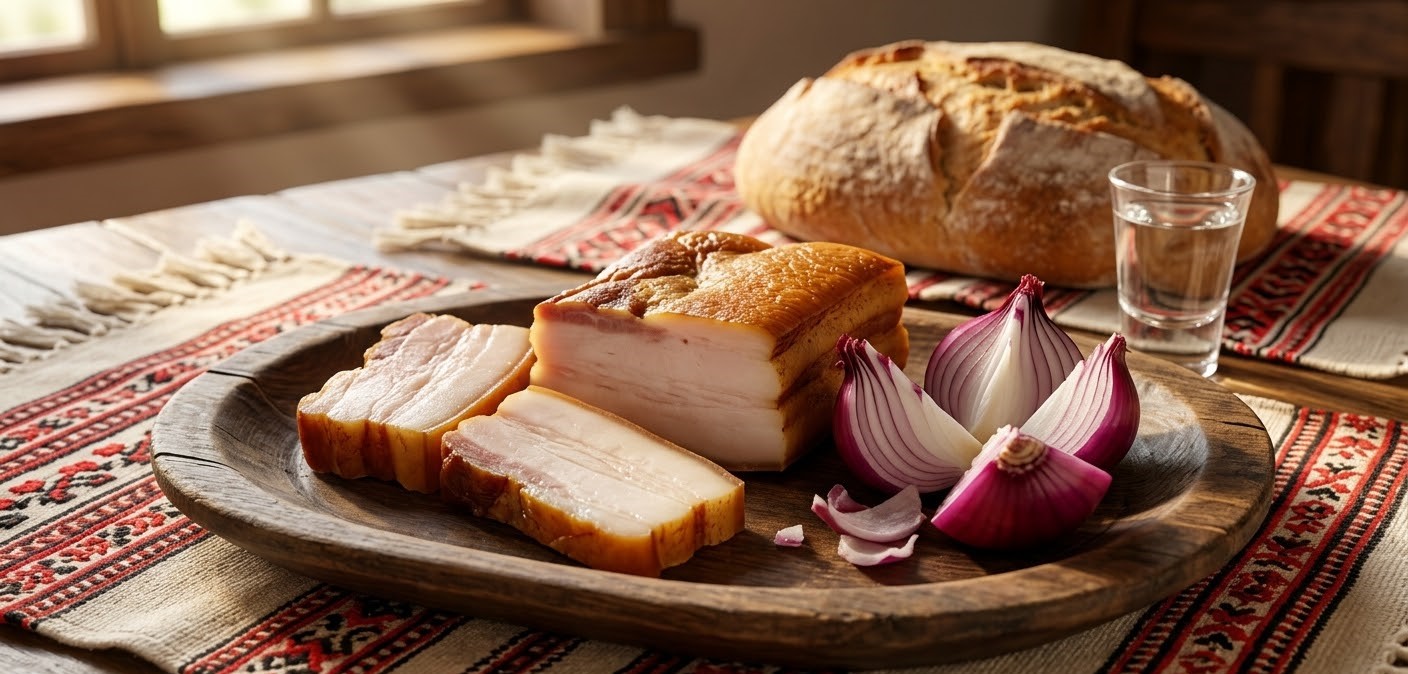
Guided by the village elders, the lad took the finest pork fat, cured it in the salt of the earth, and hardened it in the smoke of beech wood until it turned golden outside and white as snow inside. Upon tasting it with a red onion, the boyar felt his strength return instantly. He realized this "simple food" was the essence of survival. Since then, Slănină has been known as the "White Gold" of the Romanian peasant.
How to Eat it Like a Local
To truly enjoy it on your visit to Romania:
- The Slice: Cut it into thin, almost translucent slices.
- The Pairing: Always serve it with red onions (crushed with a bit of salt), fresh sourdough bread, and a glass of strong Tuică or Pălincă.
- The Outdoor Snack: It’s the favorite food for shepherds and hikers because it provides lasting energy and doesn't spoil easily.
A video which presenting the process to obtain Romanian Smoked Homemade Bacon (Slănină Afumată de Casă):"For Romanians, Slănină isn't just food; it's a legacy of survival and wisdom passed down through generations."
A short video presenting how to make Smoked Homemade Bacon (Slănină Afumată de Casă) [close to Romanian style]:
FAQ: The Secrets of Romanian Slănină
What exactly is Slănină?
Slănină (often called slană or clisă in different regions) is the thick layer of fat found under the skin of the pig. Unlike western bacon, which is mostly meat, slănină is pure, high-quality fat that has been dry-cured with salt and then smoked to create a buttery, savory delicacy.
Is it healthy to eat?
In moderation, yes! Traditional slănină is rich in oleic acid (the same healthy fat found in olive oil) and Vitamin D. Rural Romanians have eaten it for centuries to sustain them through hard physical labor in the fields. It’s the ultimate "keto" snack before keto was even a thing.
How do I store it?
The beauty of slănină is its shelf life. Historically, it was kept in the podul casei (the attic) or a cool cellar. Today, you can keep it in the fridge wrapped in parchment paper. It lasts for months and the flavor only gets better with time.
Can I cook with it?
Absolutely. While it's best enjoyed raw with onions, many Romanians fry it to make jumări (cracklings) or use small cubes of it to add a smoky depth to bean stews (iahnie de fasole) or traditional cabbage rolls (sarmale).
Why is it always served with red onion?
It’s the perfect culinary balance! The sharpness and acidity of the red onion cut through the richness of the fat, making every bite feel light and flavorful. It’s a pairing as classic as bread and butter.
Where can I find the best slănină in Romania?
While every region has its version, the slănină from Transylvania and the mountain villages of Prahova like Cuib (see more) is famous for its thick texture and careful smoking process over beech wood.
