
The Footprint of the "Vârtop Man"
The most fascinating feature of this cave is the discovery of three fossilized footprints left by a Neanderthal man.
- Historical Significance: One of these footprints was preserved in a block of carbonate rock and is estimated to be approximately 62,000 years old.
- The Discovery: Found in the "Room of the Steps," this remains one of the oldest traces of prehistoric man ever discovered in a Romanian cave.
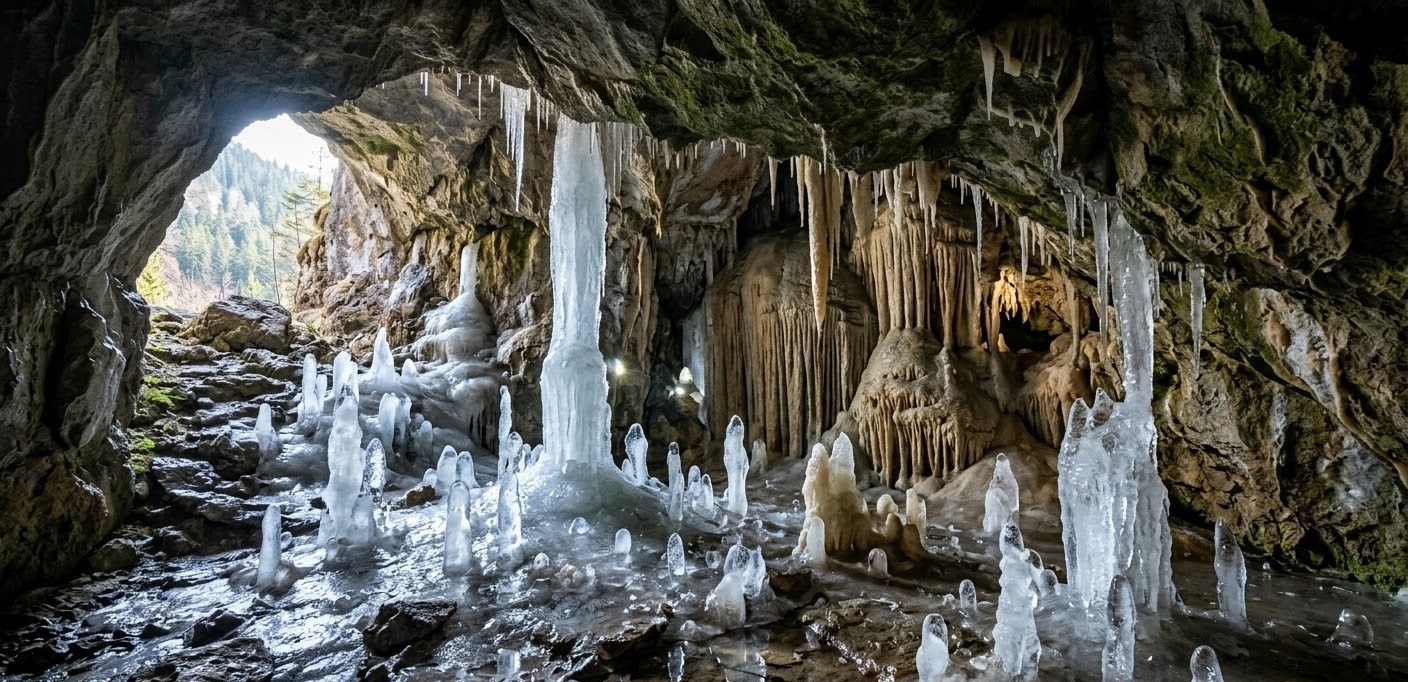
A World of Ice and Stone
Unlike the massive glacier at Scărișoara, Vârtop is smaller and more intimate, but incredibly rich in "speleothems" (cave formations).
- The Ice: During winter and spring, the entrance gallery is filled with ice stalagmites and columns that glitter like diamonds in the light of a headlamp.
- The Formations: The cave is famous for its diversity—domes, draperies, and corals made of calcite that have grown undisturbed for millennia.
Local Moți people tell stories of "Vâlve" (mountain spirits or fairies) that guard the entrances to these deep caves. It is said that the ice in the Vârtop Cave is actually the frozen tears of a giant who lost his way in the labyrinth of the Apuseni, mourning the beauty of the world he could no longer see.
Fun Facts for Travelers
- The Temperature: Even in the hottest August, the temperature inside stays close to 0 degrees Celsius. Don't forget a warm jacket!
- The "Great Chandelier": One of the cave's halls features a spectacular group of stalactites that look exactly like a crystal chandelier found in a royal palace.
- Small but Mighty: The cave is only about 340 meters long, but every meter is packed with geological wonders.
- Location: Near Casa de Piatră village, Alba County (Apuseni Mountains).
- Access: A steep but short hike from the valley floor.
- Visit Type: Entry is only allowed with a local guide who has the key to the protective gate.
- Difficulty: Moderate; some sections require stooping and careful footing on slippery surfaces.
Frequently Asked Questions: The Vârtop Ice Cave (Ghețarul de la Vârtop)
1. Is this the same as the Scărișoara Ice Cave?
No. While both are in the same region, Vârtop is smaller and famous for its prehistoric footprints and diverse calcite formations. Scărișoara Ice Cave (see more) is much larger and holds a massive, permanent underground glacier.
2. Why is the "Vârtop Man" footprint so important?
It is one of the oldest human traces found in Romania, estimated to be about 62,000 years old. It belonged to a Neanderthal and was preserved in a block of stone within the cave, offering a rare glimpse into prehistoric life.
3. Can I visit the cave alone?
No. The cave is a protected natural monument and is kept locked to prevent damage to the delicate formations. You must contact a local guide in the village of Casa de Piatră to open the gate and lead the tour.
4. How long does a visit take?
A guided tour usually lasts between 45 and 60 minutes. This gives you plenty of time to explore the main galleries and admire the "Great Chandelier" formation.
5. What should I wear inside the cave?
The temperature inside is close to 0 degrees Celsius year-round. Even in the middle of summer, you will need a warm jacket, long trousers, and sturdy hiking boots, as the ground is wet and slippery.
6. Is it difficult to reach the cave entrance?
The hike from the village of Casa de Piatră to the cave entrance is relatively short but quite steep. It requires a decent level of fitness and good shoes, but it is accessible to most hikers.
7. Can I see the ice all year round?
The ice formations (stalagmites and columns) are most spectacular in winter and spring. By late summer, some of the ice near the entrance might melt, but the beautiful stone formations remain visible all year.
