
Ancient Legends and Local Stories
The history of these mountains is deeply intertwined with the earth itself. Legend has it that the wealth of minerals found here was a gift from the spirits of the mountains, who guided early settlers to the veins of copper and iron.
One of the most enduring local stories involves the "Living Fire" or "Mountain Spirits" that miners supposedly encountered in the deep galleries of the 18th-century mines. It was said that if a miner treated the mountain with respect, a faint light would guide him to the richest ore. Conversely, those who were greedy would find themselves lost in a labyrinth of tunnels. This folklore reflects the deep-seated respect the local community has for the rugged landscape that has sustained them for centuries.
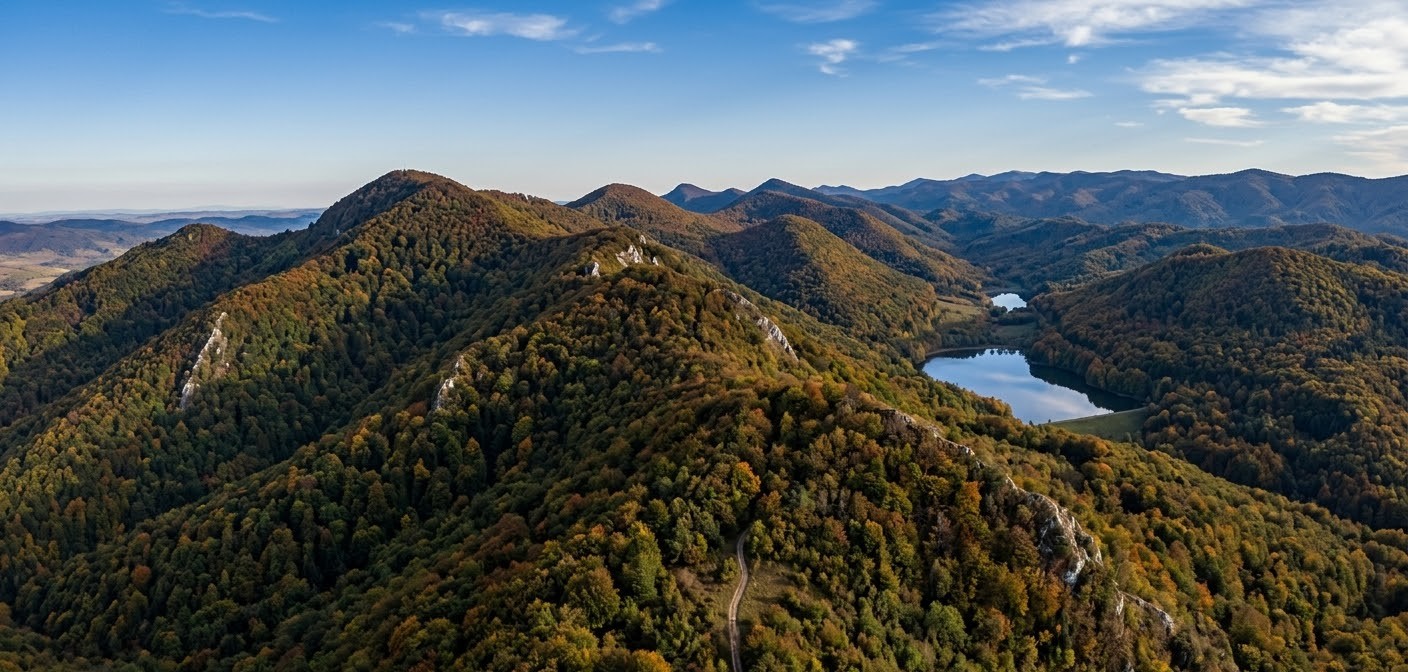
Biodiversity and Natural Wonders
Despite their modest height, the Dognecea Mountains are a haven for wildlife and rare flora. The limestone substrate and Mediterranean climatic influences create a unique habitat.
- Flora: You can find the Banat Peony and various species of wild orchids. The forests are a dense mix of beech, oak, and hornbeam, providing a lush canopy that stays vibrant late into the autumn.
- Fauna: The area is home to the Horned Viper (Vipera ammodytes), Europe's most venomous snake, which basks on the sunny limestone cliffs. Birdwatchers can spot the Golden Eagle soaring above the ridges, while the dense woods house wild boars, deer, and the elusive lynx.
For those who appreciate the logistics of the landscape, here are the essential stats:
- Highest Peak: Culmea Mare, reaching an elevation of 617 meters.
- Geological Composition: Primarily composed of crystalline schists, limestone, and eruptive rocks (granodiorites), which explains the heavy mineralization of the area.
- Water Resources: The mountains are famous for their man-made lakes, such as Lacul Mare and Lacul Mic, originally created in the 18th century to serve the local mining industries. Today, they serve as serene spots for fishing and relaxation.
- A Mining Powerhouse: In the 1700s, Dognecea was one of the most important mining centers in the entire Austro-Hungarian Empire. The technical expertise developed here influenced mining practices across Central Europe.
- The Lake that Disappeared: Local tales often mention "hidden waters" that flow through underground limestone caverns, occasionally creating temporary springs that vanish as quickly as they appear.
- The "Iron Gates" of the West: While the famous Iron Gates are on the Danube, the Dognecea range acts as a geological gateway, transitioning from the high mountains to the rolling Banat plains.
The Dognecea Mountains are perfect for those who prefer quiet, scenic hikes over crowded tourist trails. Whether you are exploring the ruins of old industrial cooling towers or sitting by the crystal-clear waters of Lacul Mare, you are treading on ground where history and nature are inextricably linked.
A video presenting a bicycle tour of Dognecea Mountains (Munții Dognecei):\
FAQ: Dognecea Mountains (Munții Dognecei)
Q: Where exactly are the Dognecea Mountains located? A: They are part of the Banat Mountains in southwestern Romania (Caraș-Severin County). The main access points are the town of Bocșa and the industrial hub of Reșița. The village of Dognecea sits right in the heart of the range.
Q: How high are these mountains? A: They are relatively low compared to the alpine peaks of the Carpathians. The highest point is Culmea Poeții (often referred to locally as Culmea Mare), reaching 617 meters. This makes them ideal for gentle trekking and mountain biking rather than technical climbing.
Q: Are there any specific places to swim or picnic? A: Yes! The area is famous for its artificial lakes. Lacul Mare (The Big Lake) is a favorite for swimming, camping, and picnics. Just a 15-minute walk away is Lacul Mic (The Small Lake), also known as the Lake with Water Lilies (Lacul cu Nuferi), which is incredibly picturesque during the blooming season.
Q: What is the "Mining Legacy" people talk about? A: Dognecea was a powerhouse of the Austro-Hungarian Empire. Since the 18th century, it was a vital source of iron, copper, lead, and even silver. You can still see "mining crosses" on old bridges featuring the hammer and pickaxe symbols, and the local Roman Catholic church (built in 1733) is one of the oldest in the Banat region.
Q: Is it safe to hike there? A: Generally, yes. The trails are mostly forest roads and gentle ridges. However, keep in mind:
- Wildlife: The area is home to the Horned Viper (see more). They are shy but venomous, so watch your step on sunny limestone rocks.
- Navigation: Some trails aren't perfectly marked, so using a GPS app is recommended.
- Shepherd Dogs: As in many Romanian mountains, you may encounter sheepfolds. It is best to keep a distance and make noise so the shepherds notice you.
