
Biodiversity & Virgin Forests
One of the most remarkable things about this area is the Izvoarele Nerei Nature Reserve. It protects one of the largest areas of virgin beech forests in Europe.
- Flora: You’ll find vast forests of European beech (Fagus sylvatica) (see more), some trees being over 350 years old.
- Fauna: It is a sanctuary for the "Big Three" of the Carpathians: the brown bear, the wolf, and the lynx. If you are lucky, you might also spot the Banat Fire Salamander (see more) or the Ural owl (see more).
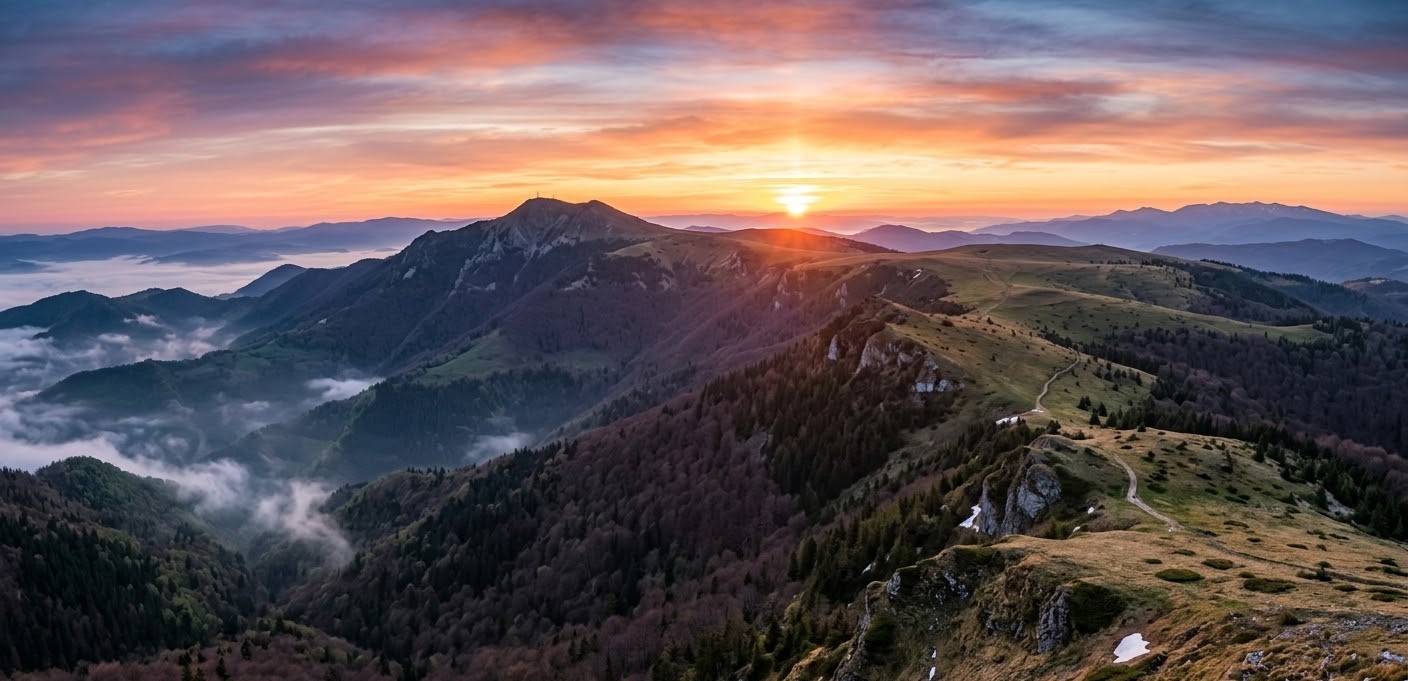
Legends and Stories
The Legend of the Semenic Flower
Locals tell stories about a rare flower called Semenic (the mountain's namesake), which is said to be the Romanian version of the Edelweiss. Legend says that this flower only grows where the mountain spirits have danced, and its presence protects the shepherds from the fierce winter blizzards.
The "Vântu" (The Wind)
Semenic is famous for its constant winds. Older generations in the surrounding villages of Cuib or Văliug used to say that the wind isn't just weather—it’s the mountain breathing, trying to tell the secrets of the gold mines that were once hidden in these rocks.
Fun Facts for Travelers
- The Oldest Ski Resort: Semenic is home to some of the oldest organized skiing traditions in Romania, thanks to the influence of the mountain-loving German communities (Banat Swabians) who settled in the nearby towns.
- Three Rivers: This massif is the "water tower" of the region, being the source of three major rivers: Nera, Timiș, and Bârzava.
- The "Banat Roof": Piatra Goznei is the highest point, and on very clear days, it is whispered you can see all the way to the Danube.
Highest Peak: Piatra Goznei (1,447 meters)
Location: Caraș-Severin County, Banat Region
Climate: Specific mountain climate with excessive humidity and strong winds
Main Access: Through the mountain village of Văliug or the town of Reșița
Nearby Attractions: Three Waters Lake (Lacul Trei Ape) (see more), Comarnic Cave (see more), and Caraș Gorges
A nice aerial video presenting Semenic Mountains (Munții Semenic) during winter:
FAQ: Exploring the Semenic Mountains
What is the best time to visit the Semenic Mountains?
It depends on your passion. For skiing and winter sports, January to March is perfect, as Semenic is famous for its long-lasting snow. For hiking and seeing the virgin beech forests in all their glory, June to October offers the best weather and breathtaking colors.
Is it safe to hike alone in the Semenic area?
While the trails are generally well-marked, we recommend hiking in groups. As with most Romanian mountains, wild animals like brown bears and wolves inhabit the deep forests. Always make your presence known by talking or making noise.
Can I find English-speaking guides in the region?
Yes, in the nearby mountain villages like Văliug or Gărâna, you can find local guesthouses that can provide or recommend English-speaking guides who know the legends and secret paths of the mountain.
What should I wear when visiting?
Even in summer, the wind on the Semenic plateau can be quite strong and chilly. Always bring a windbreaker and waterproof gear. If you plan to visit the caves (like Comarnic), remember that temperatures inside stay around 7-10°C year-round.
Are there any unique cultural events nearby?
Absolutely! If you visit in July, don't miss the Gărâna Jazz Festival. It is one of the most famous open-air jazz festivals in Europe, located in a scenic mountain village just at the foot of the Semenic Mountains.
Is there a fee to enter the Semenic-Cheile Carașului National Park?
There is usually a small ecological fee for visiting certain protected areas or caves. This helps with the conservation of the virgin forests and the maintenance of the trails.
