
Habitat and Lifestyle
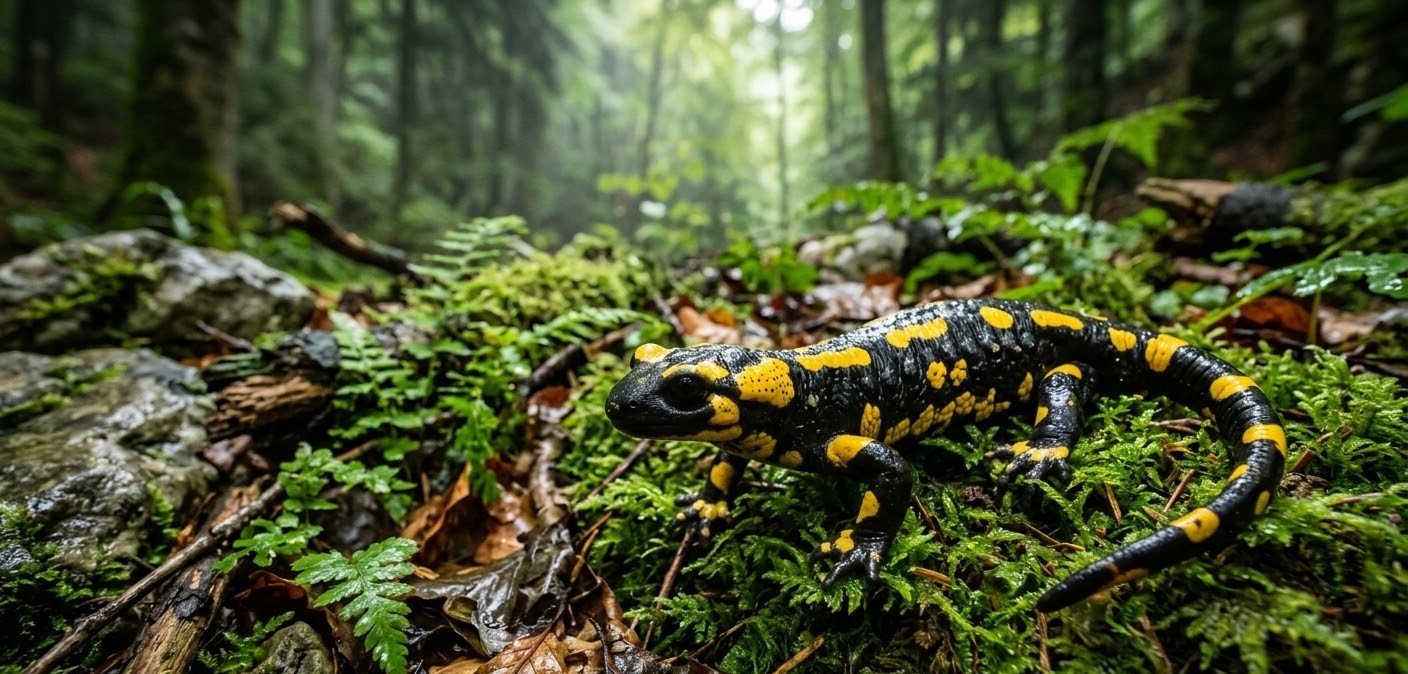
In the Banat region, especially in the Semenic-Cheile Carașului National Park, these creatures thrive in the old-growth beech forests.
- The Night Watchman: They are primarily nocturnal, but you can often spot them during the day after a heavy mountain rain—a phenomenon that has earned them the nickname "rain children" in some local traditions.
- Environment: They love high humidity and are usually found near clean mountain streams or hidden under the damp leaves of the forest floor.
Legends and Stories
The Alchemist’s Flame
Ancient legends across Europe, including the Carpathian regions, once claimed that salamanders were born from fire or could extinguish flames with their cold bodies. In Romanian mountain folklore, it was sometimes believed that seeing a salamander was a sign that a hidden treasure was nearby, guarded by the "fire" of the earth. In reality, their bright colors are a warning to predators: "I am toxic, do not touch!"
Fun Facts for Travelers
- Unique Identification: Just like human fingerprints, the pattern of yellow spots on a Fire Salamander is unique to each individual. No two salamanders in the Banat forests are exactly alike!
- Long-Lived Guardians: These amphibians can live for a surprisingly long time—up to 20 years in the wild, and even longer in protected environments.
- Toxic Defense: They possess small glands that can spray a mild toxin (samandarin) if they feel threatened. It's harmless to human skin but very irritating to eyes, so it's best to admire them without picking them up.
- Scientific Name: Salamandra salamandra
- Average Size: 15–25 cm
- Conservation Status: Protected by law in Romania
- Best Viewing Time: Spring and Autumn, especially on rainy or misty days
- Location: Common in the Banat Mountains, Apuseni (see more), and the Carpathian arc
FAQ: The Fire Salamander in the Wild
Why is it called a "Fire" Salamander if it lives in damp places?
The name comes from an ancient myth. People used to believe these amphibians were born from fire because they would often crawl out of logs that were placed on a campfire. In reality, they were just hiding in the damp wood to stay cool and were trying to escape the heat!
Is it safe to pick up a Fire Salamander?
It is highly recommended not to touch them. Aside from the fact that they are a protected species and should not be disturbed, their skin produces a toxin called samandarin. While not fatal to humans, it can cause skin irritation or a painful reaction if it gets into your eyes or mouth.
What should I do if I see one while hiking?
The best thing to do is to admire it from a distance and take photos without using a strong flash, which can stress the animal. Ensure you do not step off the marked trails, as you might accidentally crush others hiding under the leaf litter.
Does the bright yellow color mean it is poisonous?
Yes, this is called aposematism. In nature, bright colors (like the yellow on their black bodies) serve as a warning to birds and other predators that the salamander tastes bad and is toxic, convincing them to look for a snack elsewhere.
When is the best time to spot them in the Banat Mountains?
They are most active during warm, rainy days or very humid nights. If you are hiking in the Semenic or Caraș Gorges after a summer rain, keep your eyes on the mossy ground—that is when they usually come out to hunt for snails and insects.
How long do they live?
They are incredibly resilient! In the wild, they can live for 15 to 20 years, but there have been records of salamanders in captivity living for over 50 years. This makes them a true symbol of longevity in the Romanian forests.
