
Biodiversity: A Green Sanctuary
Pădurea Craiului is a haven for lovers of the pristine wild. The area is part of the Natura 2000 network, protecting a variety of rare species:
- The Cave Fauna: This region is home to rare species of bats and the beetle of the caves, adapted to total darkness.
- The Flower of the Rocks: In spring, the steep limestone walls are decorated with the Dianthus spiculifolius (see more), a delicate white carnation unique to the Carpathians.
- Large Mammals: It is not uncommon to find traces of brown bears, wolves, or lynx roaming the dense beech and oak forests.
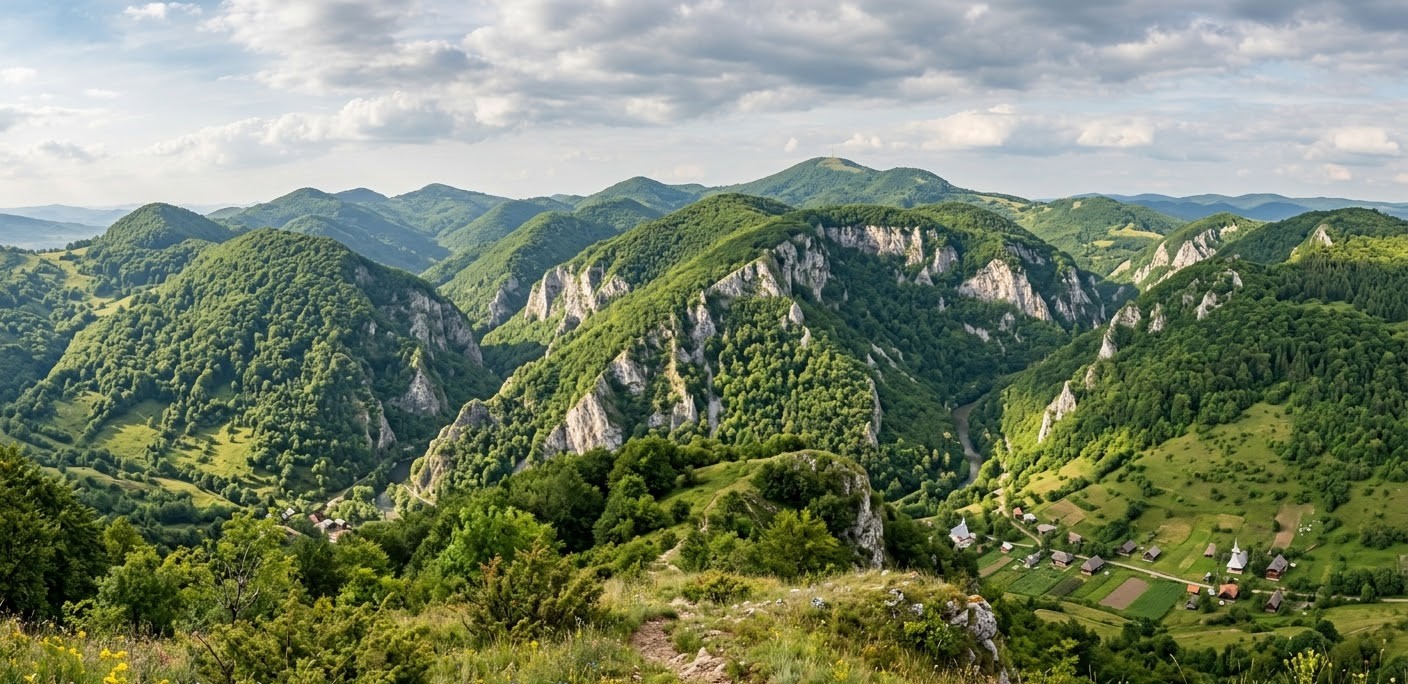
The Legend of the "Forest of the King"
The name itself, Pădurea Craiului, translates to "The King’s Forest." Local lore suggests these woods were once the private hunting grounds of medieval royalty. However, a more mystical legend speaks of a "King of the Mountains" who lived in the deep caverns. It is said that the wind howling through the limestone gorges is actually the King breathing, guarding the immense treasures hidden in the crystal caves where no human foot has ever stepped.
Why a Foreigner Should Visit
- Caving for Everyone: You don't need to be a professional. Caves like Meziad or Farcu (the Crystal Cave) offer guided tours that feel like a journey to the center of the Earth.
- Via Ferrata: The Crișul Repede Gorge offers some of the most scenic iron-climbing paths in Romania, providing "eagle-eye" views of the river below.
- Traditional Villages: You can still find wooden houses and locals who practice traditional crafts, offering a glimpse into a lifestyle that has vanished in Western Europe.
- The Cave of Crystals (see more): The Farcu Cave is one of the few places in the world where you can see rare "dragonfly wing" crystals. It was discovered by accident during mining works!
- The Wind Cave (see more): Peștera Vântului is the longest cave in Romania (over 50 km long). It got its name because of the powerful air currents felt at the entrance.
- Nature’s Bridge: The region features impressive natural bridges and sinkholes (dolines) that make the landscape look like a giant green Swiss cheese.
Feature - Details
Highest Peak - Hodrâncușa (827 meters)
Rock Type - Predominantly Limestone (Karst landscape)
Location - Bihor County, Western Romania
Main River - Crișul Repede
Accessibility - Best reached from Oradea or Cluj-Napoca (see more)
A nice video presenting Pădurea Craiului Mountains (Munții Pădurea Craiului):
Frequently Asked Questions (FAQ) about Pădurea Craiului
1. Where exactly are the Pădurea Craiului Mountains located?
They are situated in northwestern Romania, in Bihor County. They form the northwestern "corner" of the Apuseni Mountains, making them very accessible from major cities like Oradea (approx. 1 hour drive) or Cluj-Napoca (approx. 2 hours drive).
2. Are the hiking trails difficult?
Not at all! Unlike the high Southern Carpathians, Pădurea Craiului is known for its gentle relief. Most trails are perfect for families, casual hikers, and mountain bikers. The average altitude is around 500–600 meters, so you won't face extreme steepness.
3. What is the "must-see" cave in the area?
If you only have time for one, visit the Farcu Crystal Cave. It’s one of the few places in the world where you can see delicate calcite crystals without being a professional caver. For a more "monumental" experience, the Meziad Cave offers massive underground halls that will leave you breathless.
4. Can I visit the caves all year round?
The main show caves (Meziad, Farcu) are generally open year-round, but it’s always best to check the local schedule, especially in winter. Inside, the temperature stays a constant 10-12°C, so bring a jacket even if it’s summer outside!
5. Is the area safe regarding wild animals?
While brown bears and wolves do live in these forests, they are very elusive. As a general rule in Romania, stay on marked trails and make a bit of noise (talking or whistling) to avoid surprising any wildlife. As Laurentiu always says, wild animals are unpredictable, so keep a respectful distance.
6. What is the best time of year to visit?
- Spring (May-June): For the vibrant green forests and rushing waterfalls.
- Autumn (October): For the spectacular "copper" colors of the beech trees against the white limestone rocks.
There is no general fee to enter the mountains, but specific attractions like the managed caves (Meziad, Farcu) or the Via Ferrata routes require a small ticket fee for maintenance and guiding services.
