
The Call of the Wild: Biodiversity
For any traveler seeking the true heart of the Carpathian wilderness, these mountains are a sanctuary for European "Big Three" predators:
- The Brown Bear (see more): The dense forests of the Bistrița Mountains provide a perfect habitat for a significant population of brown bears.
- The Grey Wolf: Elusive and legendary, wolf packs roam these ridges, keeping the natural ecosystem in balance.
- The Carpathian Lynx: If you are lucky and silent, you might spot the tracks of this solitary feline in the more remote areas.
Legends and Local Lore: The Spirit of the Mountain
The Bistrița Mountains are not just about rocks and trees; they are steeped in legends that have shaped the local culture:
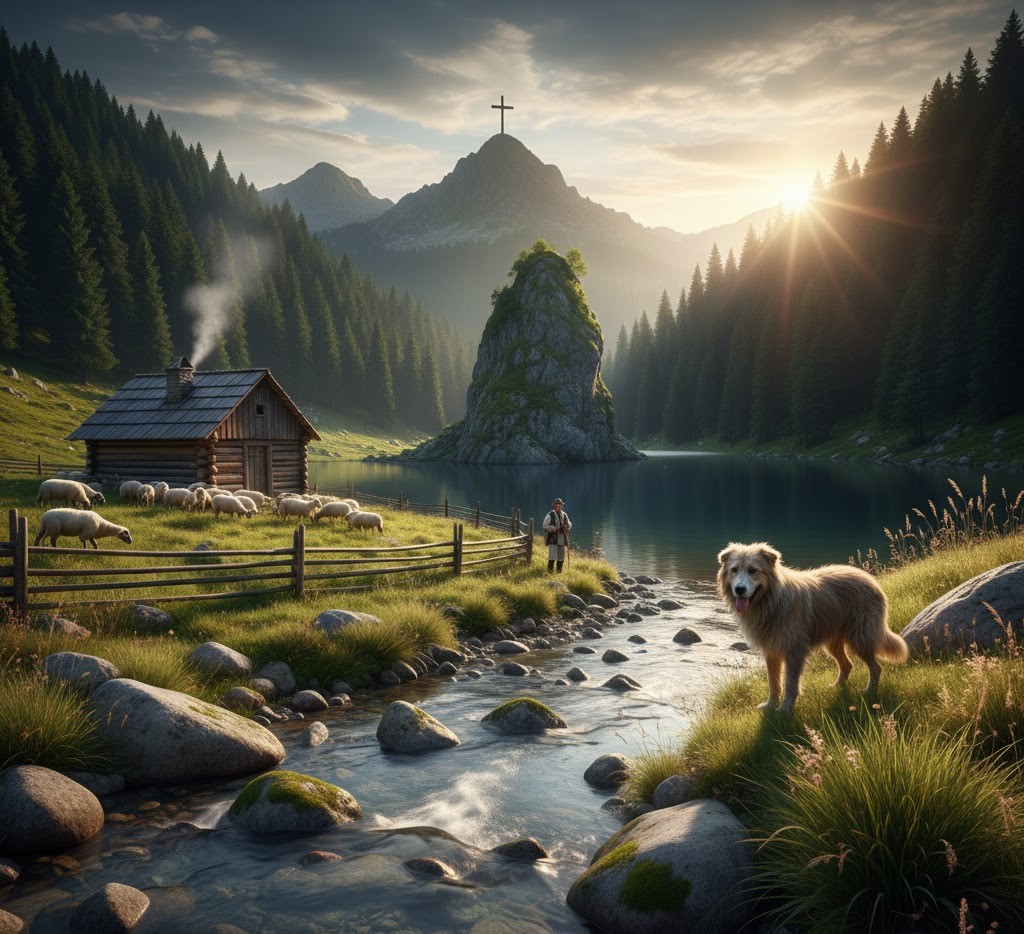
-The Giant's Footsteps: Local lore tells of giants who once inhabited these peaks, carving the deep valleys with their steps. It is said that some of the uniquely shaped rock formations are actually these ancient beings turned to stone.
-The Legend of Budacu: The highest peak, Budacu (1,792m), is central to many stories involving outlaws (haiduci) who used the mountain's caves and thick forests to hide from authorities, sharing their gold with the poor mountain villagers.
What a Traveler Should Know
If you are passing through on your way to the more famous Bukovina monasteries or the Bicaz Gorge, here is why you should stop:
- Barnar Valley: One of the most picturesque and wild valleys in the massif, perfect for those who want to experience nature without any asphalt in sight.
- Authenticity: This is not a "tourist trap." You will encounter shepherds tending their flocks at high-altitude sheepfolds (stâne), where you can often taste traditional cheese (see more) made exactly as it was hundreds of years ago.
- The View from the Top: On clear days, the summit of Budacu offers a breathtaking 360-degree panorama of the surrounding massifs, including Ceahlău (see more) and Rodna.
A superb video which presenting Bistrița Mountains (Muntii Bistritei):
FAQ: Bistrița Mountains (Munții Bistriței)
- Where are the Bistrița Mountains located?
They are part of the Eastern Carpathians in northern central Romania. They are bordered by the Bistrița River to the north and east, and the DN15 and DN17 roads. - What is the highest peak in the massif?
The highest point is Budacu Peak, reaching an altitude of 1,859 meters. (Note: some sources vary slightly, mentioning 1,858m or 1,859m). - Is this a good destination for wildlife spotting?
Yes, it is one of the wildest areas in Romania. The mountains are home to brown bears, red deer, wolves, wild boars, and the elusive lynx. Birdwatchers can also spot the capercaillie (cocoșul de munte) and various eagles.
[] Are there any natural monuments or legends in the area?- [] Piatra Dracului (The Devil's Rock): A solitary 23-meter high rock at the edge of the Izvorul Muntelui reservoir. Legends say the Devil made a bet with God that he could steal a rock from Ceahlău and carry it away before dawn, but he dropped it when he heard the rooster crowing.
- Strange Rock Formations: In the Zugreni Gorges (Cheile Zugrenilor), you can find rocks with bizarre names like Piatra lui Osman (Osman's Rock) or Stânca Coifului (The Helmet Rock).
- Can I visit the local sheepfolds (stâne)?
- Traditional Experience: Yes, the Bistrița Mountains are famous for their active pastoral life. You can find traditional sheepfolds on the high ridges where shepherds spend the entire summer.
- Local Products: Many shepherds are welcoming and may offer you a taste of traditional "caș" or "urdă" (Romanian mountain cheeses) made on the spot using ancient methods.
- Safety Tip: Be very careful with the sheepdogs (ciobănești). They are bred to protect the flock from bears and wolves and can be aggressive toward hikers. It is best to call out to the shepherd from a distance before approaching.
- What is the level of tourist infrastructure?
The infrastructure is very limited compared to other massifs. There are almost no mountain chalets inside the range, with Cabana Zugreni being the main accommodation at the base. Trails are often poorly marked. - Are there any safety concerns?
Wild animals like bears and vipers are present in the area. Due to the lack of clear markings, it is easy to get lost without proper equipment. - What else can I see nearby?
The area is famous for its mineral water springs (Borcut), some of which contain sulfur and are known for their therapeutic properties.
