
The Phenomenon of the Turquoise Waters
The most striking feature of the region is the color of the water. High concentrations of calcium carbonate give the springs and lakes a vibrant, ethereal blue-green hue.
- Ochiul Beiului (The Eye of the Bey) (see more): A karst lake that never freezes, maintaining a constant temperature and a mesmerizing shade of turquoise.
- Beușnița Waterfalls (see more): A series of tufa limestone cascades covered in emerald moss, creating a fairytale-like curtain of falling water.
- Biodiversity: The park is a "hotspot" for biodiversity. Due to Mediterranean influences, you can find the horned viper (Vipera ammodytes) (see more), the fire salamander, and rare orchids. The dense forests of beech and hazel provide shelter for the Carpathian brown bear and the European lynx.
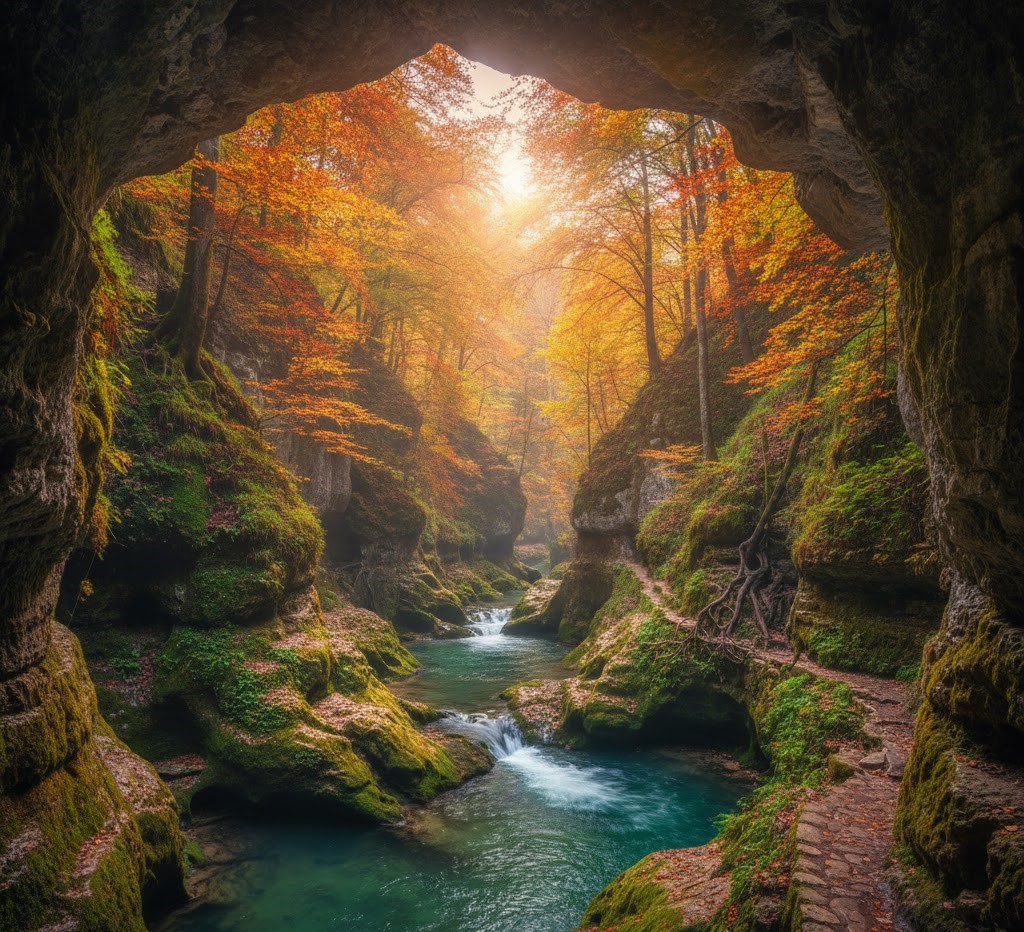
Exploring the Tunnels and Trails
The gorge is famous for the "La Tunele" section—a series of small tunnels carved directly into the rock walls during the Roman Empire or the Ottoman period (historians still debate the exact origin). Walking through these hand-carved passages with the rushing Nera River below is a highlight for any adventurer.
Travel Information
- Access: The primary entrance points are from the villages of Sasca Montană or Potoc.
- Trail Difficulty: The main path through the gorge is of medium difficulty but requires crossing the river in certain spots if the water level is high.
- Conservation: As a protected National Park, visitors are reminded to leave no trace and respect the fragile ecosystem.
Frequently Asked Questions: Visiting Cheile Nerei-Beușnița National Park
1. Where is Cheile Nerei located?
The Cheile Nerei-Beușnița National Park is situated in southwestern Romania, in Caraș-Severin County, within the Anina Mountains (see more). The nearest major cities are Reșița and Timișoara.
2. What are the main attractions in the park?
The park is famous for several unique natural landmarks:
- Ochiul Beiului Lake: A turquoise karst lake that never freezes.
- Beușnița Waterfalls: Stunning moss-covered cascades.
- La Tunele: A series of small tunnels carved into the rocky cliffs above the Nera River.
- Bigăr Waterfall (see more): Located nearby, once voted the most beautiful unique waterfall in the world.
- Devil’s Lake (Lacul Dracului): The largest karst lake in Romania, formed by a collapsed cave ceiling.
Most trails in the Cheile Nerei are of low to medium difficulty. The path to Ochiul Beiului and Beușnița is relatively flat and accessible for families. However, the full crossing of the Nera Gorge (approx. 22 km) requires good physical condition, sturdy hiking boots, and potentially crossing the river if the water level is high.
4. Can I swim in Ochiul Beiului or the waterfalls?
No. Swimming is strictly prohibited in Ochiul Beiului and the Beușnița Waterfalls to protect the fragile ecosystem and the chemical balance that creates the unique turquoise color. Please respect the park regulations to preserve this natural wonder.
5. What is the best time to visit?
- Spring (May - June): The best time to see the waterfalls at their maximum flow and enjoy the fresh green of the forest.
- Autumn (September - October): Perfect for photography due to the contrast between the turquoise water and the rusty colors of the beech forest.
- Summer: Great for the cooling effect of the gorge, though some smaller waterfalls may have less water.
The park is a wild habitat. While bears and wolves are present but rarely seen, the area is known for the Horned Viper (Vipera ammodytes). They are not aggressive but will bite if stepped on or provoked. Always wear high hiking boots and long trousers, and stay on the marked paths.
7. Where should I stay?
The most popular base for exploring the park is the village of Sasca Montană, where you can find cozy guesthouses. Another option is Potoc, which is closer to the entrance of the Ochiul Beiului trail.
