
A Fortress Built for Control
The "Citadel" was built in the early 18th century by the Habsburgs. Unlike most fortresses designed to protect the city from outside invaders, Cetățuia had a darker purpose: it was built to control the city. Its cannons were pointed inward, toward the inhabitants, to ensure the imperial rule was respected.
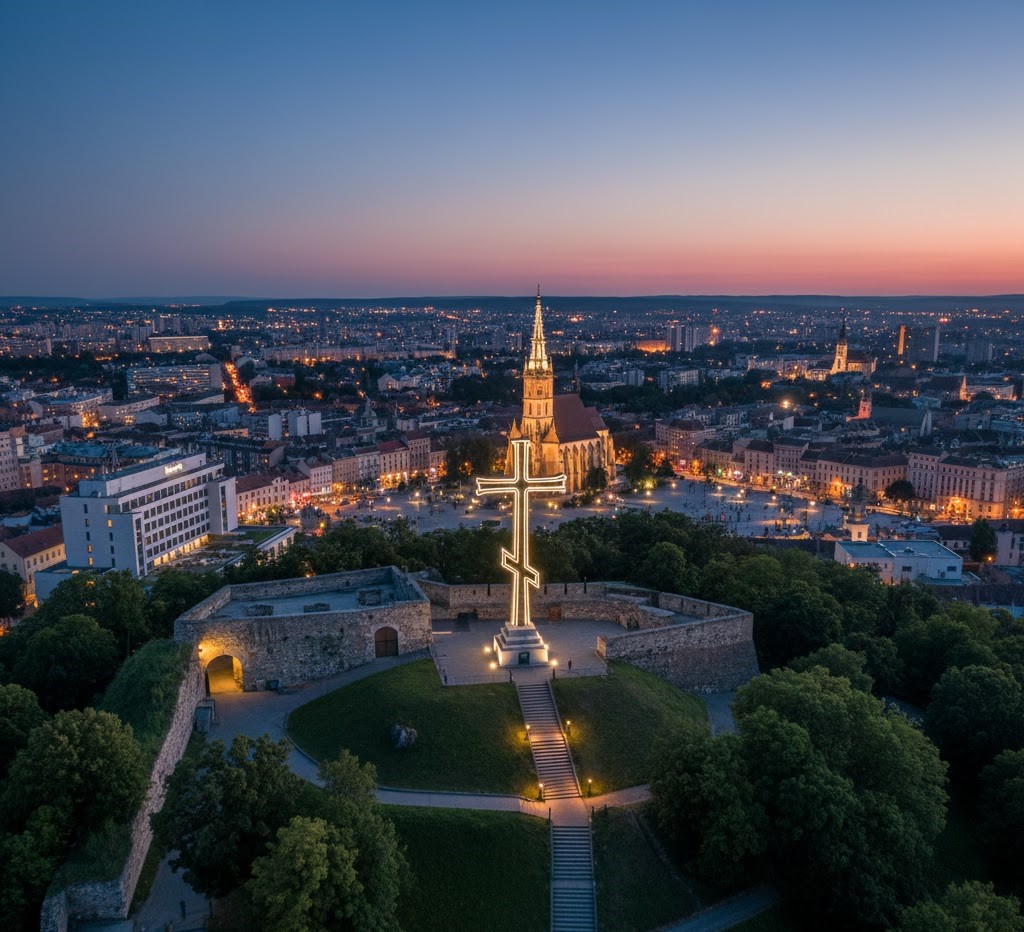
Today, the star-shaped Vauban fortification is mostly a peaceful park, but you can still see the massive stone gates (The Water Gate and the Machiavelli Gate) that once guarded the hill.
The Legend of the Unfinished Tunnel
Every old fortress has its secrets, and Cetățuia is no exception.
The Tunnel to the Center: Local lore suggests that deep beneath the hill, there is a secret tunnel that crosses under the Someș River, connecting the Citadel directly to St. Michael's Church in the Unirii Square. Legends say it was used by imperial spies and high-ranking officers to move unseen between the military base and the heart of the city. While historians have found small underground corridors, the "great tunnel" remains a mystery that continues to fuel the imagination of every generation of Cluj residents.
Why You Should Visit
- The Best View in Cluj: From the top, you can see the entire city spread out like a map, from the Gothic spires of the center to the modern stadiums.
- The Iron Cross: A massive monument dedicated to the memory of the "Martyrs of the Revolution," which becomes beautifully illuminated at night.
- Picnics and Coffee: The hill is dotted with terraces and grassy areas where you can enjoy a coffee while watching the city wake up or go to sleep.
 Safety and Nature
While Cetățuia is an urban park, the rules of the wild still apply in a different way:
-The Slopes: The southern slopes of the hill are prone to landslides. Always stay on the paved stairs and marked paths.
-Urban Wildlife: You might encounter stray cats or squirrels, but keep in mind that wild animals—even those in urban parks—can be unpredictable. Avoid feeding them to keep the ecosystem balanced.
-Night Visits: The hill is beautiful at night, but be careful on the stairs after rain, as the stone can become very slippery.
A video wich present Cetățuia Hill (The Citadel) and views from there:
 Frequently Asked Questions: Cetățuia Hill (The Citadel)
1. How long does it take to climb to the top? If you are taking the stairs from the Someș River side (near the bridge), it usually takes about 10 to 15 minutes at a moderate pace. There are several plateaus where you can stop to catch your breath and enjoy the view.
2. Is there parking available at the top? Yes, you can reach the top by car. There is a parking area near the Belvedere Hotel, but it can get quite crowded during the weekends or at sunset. It is often easier to leave your car at the bottom and walk up.
3. Is it safe to visit at night? Generally, yes. Cetățuia is a very popular spot for locals and students even after dark. However, the stairs are not perfectly lit in all sections, so watch your step. Also, remember that wildlife (even urban ones like stray dogs or nocturnal animals) can be unpredictable, so stay on the main paths.
4. Are there any restaurants or cafes on the hill? Yes, there is the restaurant within the Belvedere Hotel, and during the warmer months, there are several terraces and "garden bars" where you can grab a drink or a snack while enjoying the panorama.
5. Is Cetățuia Hill accessible for people with disabilities? The traditional stair routes are not accessible. However, the top of the hill is accessible by car or taxi via Strada Șerpuitoare, and the main plateau near the hotel is flat and easy to navigate.
6. Can I see the old prison buildings? Part of the original fortress buildings served as a prison in the past. While most have been repurposed or are in ruins, you can still see the massive Austrian-style brickwork and the old gates which give you a sense of the hill's military history.
