Lake Zănoaga (Lacul Zănoaga): The Deepest Secret of the Retezat Mountains +video and views
Posted: Wed Feb 04, 2026 12:37 pm
Nestled amidst the rugged grandeur of the Retezat National Park, where ancient glaciers carved out a landscape of unparalleled beauty, lies a jewel of the Carpathians: Lake Zănoaga (Lacul Zănoaga). While perhaps not as vast as Bucura Lake (Click HERE to see more), Zănoaga holds its own unique claim to fame and an undeniable mystique.
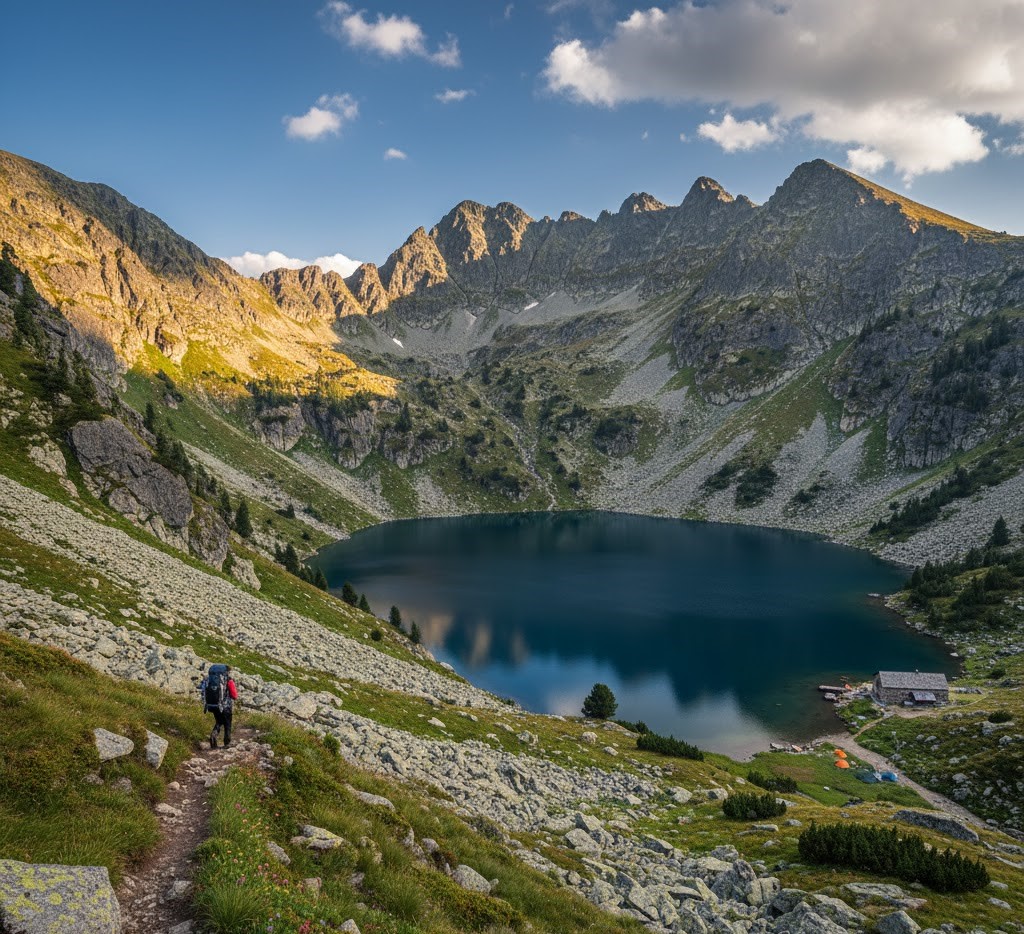
At an altitude of 1,997 meters (6,552 ft), Lake Zănoaga is renowned for being the deepest glacial lake in Romania, plunging to an impressive depth of 29 meters (95 ft). This incredible depth gives its waters an intense, dark blue hue, reflecting the surrounding towering peaks and hinting at the secrets hidden beneath its surface.
 The Legend: The Dragon's Abyss
Like many ancient places in the Retezat, Lake Zănoaga is touched by myth. While specific, detailed legends about Zănoaga itself are rarer than for Bucura, the sheer depth and dark appearance of its waters have fueled local imagination.
One common thread in Carpathian folklore speaks of Zmei (Dragons or mythical beings) that inhabit deep caves and lakes, often guarding treasures or possessing magical powers. Given its extraordinary depth and somewhat isolated location, it's easy to imagine how Zănoaga might have been seen as a potential lair for such a creature.
Why Visit Lake Zănoaga?
Beyond its mythical appeal and impressive depth, Lake Zănoaga offers a truly immersive wilderness experience:
Important Safety Note: The Wilderness of Retezat
The Retezat National Park is a pristine wilderness, and its beauty comes with responsibilities.
Lake Zănoaga is a testament to the raw, untamed beauty of the Retezat Mountains. Its silent, deep waters hold not just the reflections of ancient peaks but also the echoes of mythical tales, inviting every visitor to ponder the secrets that lie beneath. It's a journey not just to a lake, but to the heart of Carpathian mystique.
A 4K video wich present Lake Zănoaga (Lacul Zănoaga):
Frequently Asked Questions about Lake Zănoaga
1. What makes Lake Zănoaga special compared to other lakes in Retezat? While Bucura is the largest, Zănoaga is the deepest glacial lake in Romania, reaching a depth of 29 meters. Because of its depth and the way the surrounding peaks shade it, the water has a much darker, more mysterious indigo color compared to the lighter turquoise of shallower lakes.
2. How difficult is the hike to Lake Zănoaga?
The hike is generally considered moderate to difficult, depending on your starting point.
4. Can I find drinking water at the lake?
Yes, there is a natural spring (izvor) located near the camping area and the rescue refuge. The water is cold and fresh, but as with all mountain springs, it is wise to have a purification method if you have a sensitive stomach.
5. Are the trails to Zănoaga safe during bad weather?
It is not recommended to hike towards Zănoaga (especially via the Judele Pass or the "Căldarea Zănoagei") during heavy rain, fog, or thunderstorms. The terrain becomes very slippery, and the ridge sections are exposed to lightning. Always check the weather forecast at the Salvamont post before heading out.
6. Is the area around Zănoaga dangerous because of wildlife?
Zănoaga is in a more remote and quieter part of the park, which means wildlife is more active. While sightings of the Chamois (Capra Neagră) are a highlight, remember that wild animals are unpredictable. Bears and vipers are present in the Retezat.
From Gura Zlata: Approximately 5–6 hours.
From Lake Bucura: Approximately 2–3 hours (via the Judele Pass).
From Poiana Pelegii: Approximately 4–5 hours.
At an altitude of 1,997 meters (6,552 ft), Lake Zănoaga is renowned for being the deepest glacial lake in Romania, plunging to an impressive depth of 29 meters (95 ft). This incredible depth gives its waters an intense, dark blue hue, reflecting the surrounding towering peaks and hinting at the secrets hidden beneath its surface.
Deep blue waters of Lake Zanoaga (lacul Zanoaga) in Retezat National Park, with a hiker on a rocky trail and a stone rescue refuge on the shore under a dramatic mountain backdrop
Like many ancient places in the Retezat, Lake Zănoaga is touched by myth. While specific, detailed legends about Zănoaga itself are rarer than for Bucura, the sheer depth and dark appearance of its waters have fueled local imagination.
One common thread in Carpathian folklore speaks of Zmei (Dragons or mythical beings) that inhabit deep caves and lakes, often guarding treasures or possessing magical powers. Given its extraordinary depth and somewhat isolated location, it's easy to imagine how Zănoaga might have been seen as a potential lair for such a creature.
- Some local whispers suggest that the lake's unusual depth is not merely glacial. They say a Zmeu, angered by human encroachment or perhaps simply seeking an impenetrable sanctuary, dug its lair deep into the earth beneath the Retezat peaks, and this abyss later filled with the purest mountain water, forming Zănoaga.
- Another interpretation, common to many deep, dark lakes in the region, is that it is a "gateway to another realm" or a place where the veil between worlds is thin. The still, reflective surface, disturbed only by the wind, could easily be seen as a mirror to another dimension.
Why Visit Lake Zănoaga?
Beyond its mythical appeal and impressive depth, Lake Zănoaga offers a truly immersive wilderness experience:
- Intense Serenity: Zănoaga is generally less frequented than Lake Bucura, offering a more tranquil and isolated hiking experience. The silence here is profound, broken only by the wind or the distant call of an eagle.
- The Depth and Color: Stand by its shores and gaze into the deep, dark blue waters. There's a captivating sense of mystery and grandeur that its depth evokes.
- Surrounding Peaks: The lake is beautifully framed by peaks like Custura, Zănoaga, and Netiș, offering spectacular photographic opportunities.
- Wildlife Spotting: Being a wilder area, your chances of spotting chamois (capra neagră) or even seeing tracks of other wildlife are higher here.
- Alpine Flora: In early summer, the surrounding meadows burst into a riot of alpine flowers, adding vibrant color to the rocky landscape.
- Lake Zănoaga can be reached via several hiking trails, often incorporated into longer circuits:
- From Poiana Pelegii / Bucura Lake: A common approach is to hike to Bucura and then continue towards Zănoaga. This is a longer, more demanding route.
- From Cabana Gura Zlata / Rotunda: This route involves a significant ascent, but takes you through some breathtaking scenery, including the charming Rotunda shepherd's huts.
Important Safety Note: The Wilderness of Retezat
The Retezat National Park is a pristine wilderness, and its beauty comes with responsibilities.
 Be Prepared: Always carry a detailed map, a compass or GPS device, sufficient water and food, and layers of clothing suitable for rapidly changing mountain weather. Leave no trace – pack out everything you pack in.
 Be Prepared: Always carry a detailed map, a compass or GPS device, sufficient water and food, and layers of clothing suitable for rapidly changing mountain weather. Leave no trace – pack out everything you pack in.
- Respect Wildlife: This area is home to brown bears, wolves, and vipers. Maintain a safe distance, store food securely, and be aware of your surroundings.
Lake Zănoaga is a testament to the raw, untamed beauty of the Retezat Mountains. Its silent, deep waters hold not just the reflections of ancient peaks but also the echoes of mythical tales, inviting every visitor to ponder the secrets that lie beneath. It's a journey not just to a lake, but to the heart of Carpathian mystique.
A 4K video wich present Lake Zănoaga (Lacul Zănoaga):
Frequently Asked Questions about Lake Zănoaga
1. What makes Lake Zănoaga special compared to other lakes in Retezat? While Bucura is the largest, Zănoaga is the deepest glacial lake in Romania, reaching a depth of 29 meters. Because of its depth and the way the surrounding peaks shade it, the water has a much darker, more mysterious indigo color compared to the lighter turquoise of shallower lakes.
2. How difficult is the hike to Lake Zănoaga?
The hike is generally considered moderate to difficult, depending on your starting point.
- If coming from Gura Zlata, be prepared for a long, sustained ascent with a significant elevation gain (over 1,200 meters).
- If coming from Bucura Lake, you must cross the Judele Pass, which is steep and rocky. Good physical condition and hiking boots with ankle support are mandatory.
4. Can I find drinking water at the lake?
Yes, there is a natural spring (izvor) located near the camping area and the rescue refuge. The water is cold and fresh, but as with all mountain springs, it is wise to have a purification method if you have a sensitive stomach.
5. Are the trails to Zănoaga safe during bad weather?
It is not recommended to hike towards Zănoaga (especially via the Judele Pass or the "Căldarea Zănoagei") during heavy rain, fog, or thunderstorms. The terrain becomes very slippery, and the ridge sections are exposed to lightning. Always check the weather forecast at the Salvamont post before heading out.
6. Is the area around Zănoaga dangerous because of wildlife?
Zănoaga is in a more remote and quieter part of the park, which means wildlife is more active. While sightings of the Chamois (Capra Neagră) are a highlight, remember that wild animals are unpredictable. Bears and vipers are present in the Retezat.
- Pro tip: Make noise while hiking through dense vegetation to avoid startling a bear, and never leave food scraps around your tent, as this attracts animals.
From Gura Zlata: Approximately 5–6 hours.
From Lake Bucura: Approximately 2–3 hours (via the Judele Pass).
From Poiana Pelegii: Approximately 4–5 hours.