The Silent Giant: Exploring Tăușoare Cave (Pestera Tăușoare), Romania’s Deepest Mystery +vide and views
Posted: Sat Jan 31, 2026 4:01 pm
While Jgheabul lui Zalion cave is known as the most difficult (Click HERE to see more) , Peștera Izvorul Tăușoarelor (commonly known as Tăușoare) holds the crown for depth and scientific wonder. Tucked away on the southern slopes of the Rodna Mountains (Click HERE to see more), this cave is a vast, silent cathedral of stone that descends deeper into the earth than any other in Romania.
 A Record-Breaking Abyss
Tăușoare isn't just a cave; it’s a subterranean skyscraper. Reaching a total vertical drop of 415 meters (over 1,360 feet), it is officially the deepest cave in Romania. Its galleries stretch for over 16 kilometers, weaving a complex web of tunnels through the limestone heart of the mountain.
What Makes Tăușoare Unique?
Beyond its record depth, Tăușoare is a treasure trove for geologists and biologists worldwide. It is famous for:
Unlike tourist caves like Scarisoara (Click HERE to see more) or Bears’ Cave (Click HERE to see more) , Tăușoare is a strictly protected scientific reserve (Class A). This means it is not open to the public.
Access is restricted to scientific researchers and highly experienced speleologists. This "closed-door" policy has preserved the cave in its pristine, prehistoric state, making it a "living laboratory" where time seems to have stopped millions of years ago.
A video from inside the Tausoare Cave (Pestera Tăușoare):
The Southern Gateway to Rodna
Located near the town of Năsăud, in the Izvorul Tăușoarelor Basin, the cave marks the entrance to the wilder, more mysterious side of the Rodna Massif. For the average hiker, the area offers stunning karst landscapes and the thrill of knowing that beneath your hiking boots lies the deepest point in the country.
Quick Facts:
1. What is the deepest cave in Romania?
The Izvorul Tăușoarelor Cave (Peștera Tăușoare) is the deepest cave in Romania, reaching a maximum vertical drop of 415 meters.
2. Can I visit Tăușoare Cave as a tourist?
No, Tăușoare Cave is not open to tourists. It is a Class A Scientific Reserve, meaning access is strictly limited to researchers and professional speleologists with special permits from the Romanian Academy and the Park Administration.
3. What are the "Spheres of Tăușoare"?
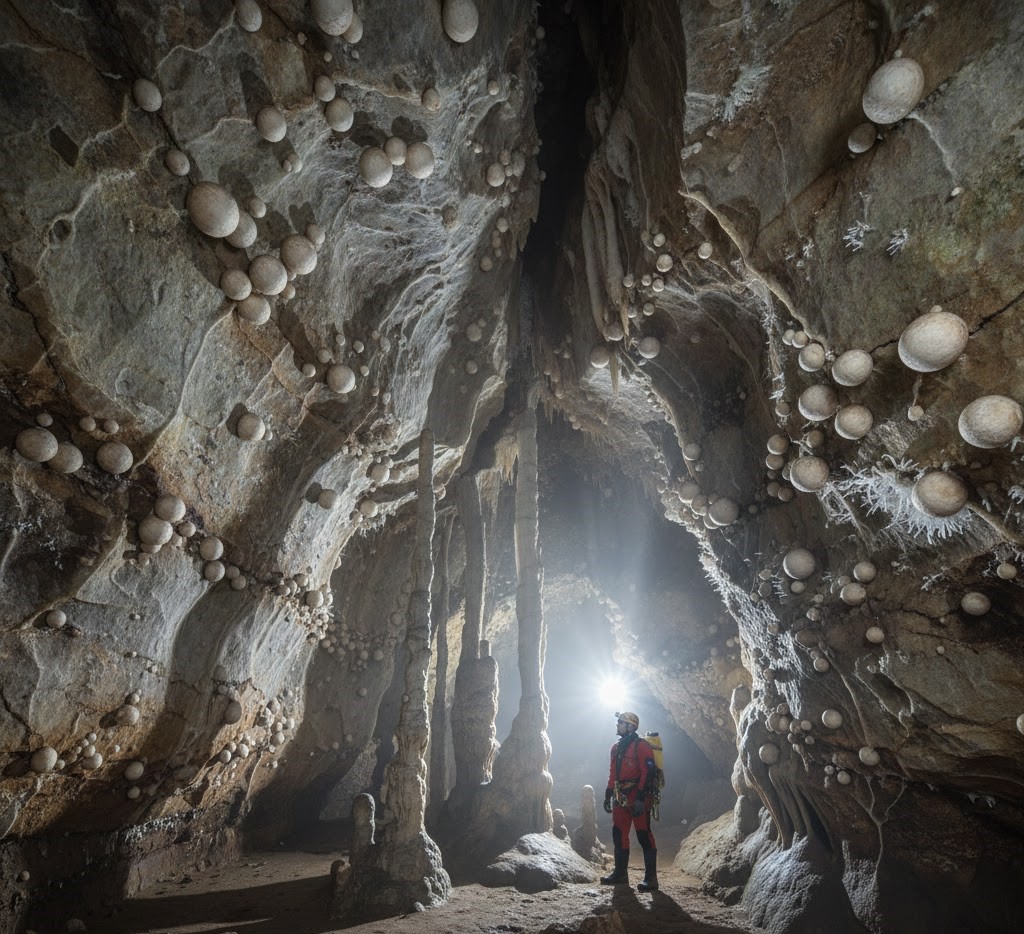
The Spheres of Tăușoare are unique geological formations found within the cave. They are spherical limestone concretions embedded in the walls, created by rare mineral precipitation processes that are still being studied by geologists.
4. Where exactly is the cave located?
The cave is situated on the southern slope of the Rodna Mountains, in the Izvorul Tăușoarelor Basin, near the town of Sângeorz-Băi and the commune of Rebra in Bistrița-Năsăud county.
5. Is Tăușoare Cave dangerous?
Yes, it is extremely dangerous for untrained individuals. The cave features massive vertical drops, labyrinthine galleries stretching over 16 km, and fragile ecosystems. Its depth and complexity require advanced technical climbing skills and specialized breathing gear in certain sections.
6. Why is the cave protected by UNESCO?
While the cave itself is part of the Rodna Mountains National Park (a UNESCO Biosphere Reserve), it is specifically protected for its rare minerals (like mirabilite), its unique geological formations, and as a crucial hibernation site for protected bat species.
Professional explorer inside Tausoare Cave, Romania, surrounded by rare limestone spheres and crystal formations in the deepest cave of the Rodna Mountains.
Tăușoare isn't just a cave; it’s a subterranean skyscraper. Reaching a total vertical drop of 415 meters (over 1,360 feet), it is officially the deepest cave in Romania. Its galleries stretch for over 16 kilometers, weaving a complex web of tunnels through the limestone heart of the mountain.
What Makes Tăușoare Unique?
Beyond its record depth, Tăușoare is a treasure trove for geologists and biologists worldwide. It is famous for:
- The "Tăușoare Spheres": Mysterious, naturally formed limestone spheres found in the cave walls. Their origin remains a subject of scientific debate.
- Mirabilite Crystals: Rare, needle-like crystals that grow in the dry sections of the cave—a sight few humans have ever seen.
- A Sanctuary for Life: The cave is a vital hibernation site for several species of bats, which thrive in its stable, isolated climate.
Unlike tourist caves like Scarisoara (Click HERE to see more) or Bears’ Cave (Click HERE to see more) , Tăușoare is a strictly protected scientific reserve (Class A). This means it is not open to the public.
Access is restricted to scientific researchers and highly experienced speleologists. This "closed-door" policy has preserved the cave in its pristine, prehistoric state, making it a "living laboratory" where time seems to have stopped millions of years ago.
A video from inside the Tausoare Cave (Pestera Tăușoare):
The Southern Gateway to Rodna
Located near the town of Năsăud, in the Izvorul Tăușoarelor Basin, the cave marks the entrance to the wilder, more mysterious side of the Rodna Massif. For the average hiker, the area offers stunning karst landscapes and the thrill of knowing that beneath your hiking boots lies the deepest point in the country.
Quick Facts:
- Record: Deepest cave in Romania (-415m).
- Length: ~16 km of explored galleries.
- Protection: UNESCO-monitored area / Scientific Reserve.
- Status: Closed to tourists (Scientific access only).
1. What is the deepest cave in Romania?
The Izvorul Tăușoarelor Cave (Peștera Tăușoare) is the deepest cave in Romania, reaching a maximum vertical drop of 415 meters.
2. Can I visit Tăușoare Cave as a tourist?
No, Tăușoare Cave is not open to tourists. It is a Class A Scientific Reserve, meaning access is strictly limited to researchers and professional speleologists with special permits from the Romanian Academy and the Park Administration.
3. What are the "Spheres of Tăușoare"?
The Spheres of Tăușoare are unique geological formations found within the cave. They are spherical limestone concretions embedded in the walls, created by rare mineral precipitation processes that are still being studied by geologists.
4. Where exactly is the cave located?
The cave is situated on the southern slope of the Rodna Mountains, in the Izvorul Tăușoarelor Basin, near the town of Sângeorz-Băi and the commune of Rebra in Bistrița-Năsăud county.
5. Is Tăușoare Cave dangerous?
Yes, it is extremely dangerous for untrained individuals. The cave features massive vertical drops, labyrinthine galleries stretching over 16 km, and fragile ecosystems. Its depth and complexity require advanced technical climbing skills and specialized breathing gear in certain sections.
6. Why is the cave protected by UNESCO?
While the cave itself is part of the Rodna Mountains National Park (a UNESCO Biosphere Reserve), it is specifically protected for its rare minerals (like mirabilite), its unique geological formations, and as a crucial hibernation site for protected bat species.