
The Legend of the "Sun in the Soil"
While corn originated in the Americas and arrived in Romania in the 17th century (during the reign of Șerban Cantacuzino), local folklore quickly adopted it. Villagers began to see the bright yellow kernels as a gift from the sun, trapped in the earth to provide sustenance through the harsh Carpathian winters. In many traditional stories, a full corn crib (pătul) was the ultimate sign of a hardworking, blessed household.
Mămăliga (polenta) (see more): The "Bread" of the East
You cannot talk about Romanian corn without mentioning Mămăliga. This traditional cornmeal porridge is the country’s most famous culinary staple.
- The Shepherd’s Staple: Originally a peasant food because it was easier to prepare than bread, it became a national treasure.
- Versatility: It can be served creamy with fresh sour cream and salty sheep’s cheese (see more) (Mămăligă cu brânză și smântână) or sliced and grilled until crispy.
- A Healthy Alternative: Naturally gluten-free, it was historically the primary source of energy for those working the land.
While industrial farming is common, Romania still preserves many ancestral varieties of corn, especially in remote hillside villages.
- Flint Corn: Many local varieties are "flint" types, which have a harder outer shell and a richer, more intense flavor compared to the soft "dent" corn used in large-scale production.
- Traditional Harvesting: In many parts of the country, you can still see "clacă"—a community gathering where neighbors help each other harvest and shuck the corn by hand, turning hard work into a celebration of songs and stories.
- Top Producer: Romania is consistently among the top corn producers in the European Union, often ranking first or second in total production area.
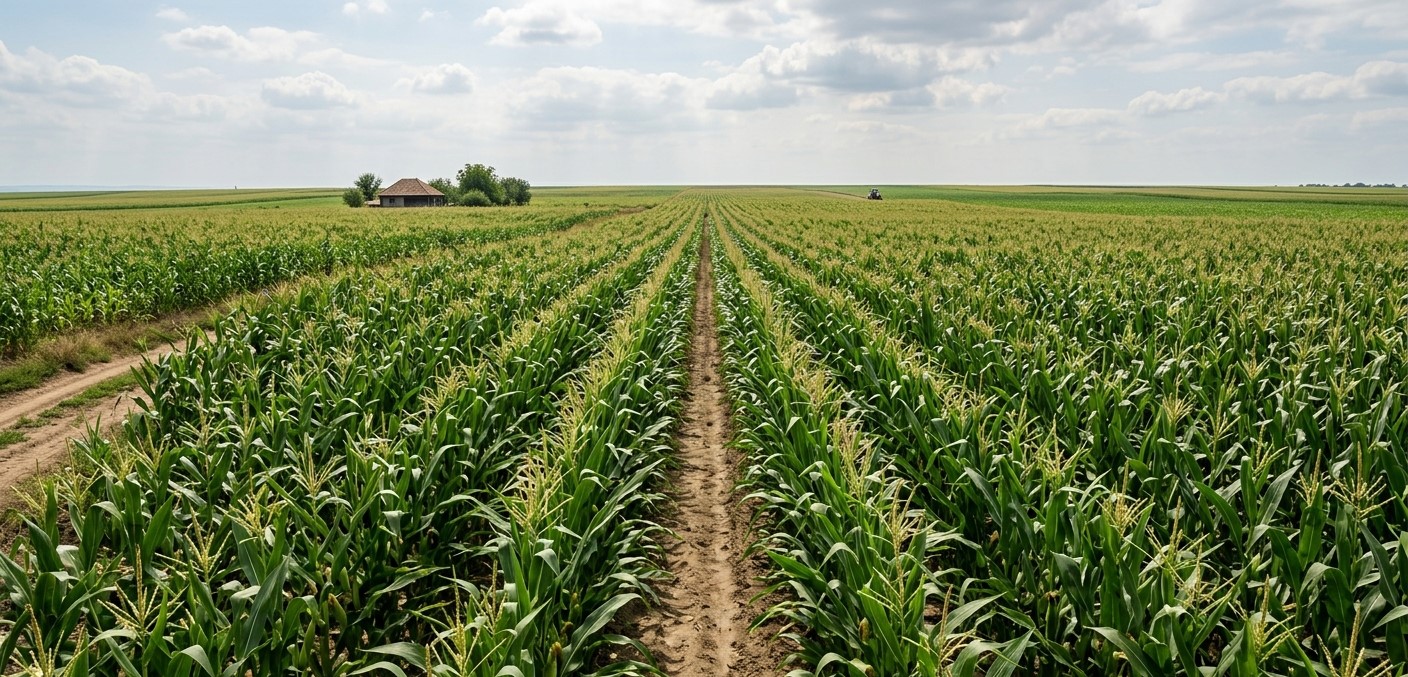
- Perfect Climate: The fertile black soil (chernozem) of the Romanian plains and the temperate climate provide the ideal conditions for corn to thrive.
- Full Utilization: In traditional households, nothing is wasted. The grain feeds the animals, the husks are used for making traditional dolls or mats, and the dried stalks serve as fuel for heating.
Romania continues to be a "granary of Europe," and the recent statistics reflect both the resilience of our farmers and the generosity of the land.
- 2025 Retrospective: After facing some climatic challenges in previous years, 2025 marked a significant recovery. Romania produced approximately 10.5 to 11 million tons of corn. This solid harvest allowed the country to maintain its position as one of the top exporters in the European Union, supplying high-quality grain to markets across the Middle East and Western Europe.
- Abundant Snowfall: The winter of 2025-2026 provided a consistent blanket of snow, which acted as a natural insulator and, more importantly, replenished the deep soil moisture reserves as it melted.
- Spring Rains: The generous rainfall during the early spring has created the perfect "starter" environment for the newly planted seeds.
- Projections: If these favorable conditions continue through the critical pollination period in July, Romania is expected to reach a harvest of over 13 million tons in 2026, potentially reclaiming its spot as the #1 corn producer in the EU by volume.
Fun Facts for Travelers
- Roasted Delicacy: During late summer, don't miss the chance to try "Porumb Copt" (roasted corn) sold at roadside stands or seaside resorts. The smell of charred corn over an open fire is a nostalgic scent for every Romanian.
- Sweetness of Home: Romania also produces a specific variety of "sweet corn" used in desserts or eaten boiled with a pinch of salt.
- The "Păpuși de Porumb": In some regions, children still learn how to make "corn dolls" from the dried husks, a tradition passed down through generations.
For a foreigner, understanding the importance of corn is a key to understanding the Romanian spirit. It represents resilience, the connection to the land, and the simple joy of a shared meal.
A short video presenting corn treatment using drone:
Frequently Asked Questions: Romanian Corn (Porumbul Românesc)
1. Is Romania a major player in global corn production?
Yes, Romania is consistently one of the top corn producers in the European Union. It often competes with France for the number one spot in terms of harvested area and total production volume. In 2026, thanks to excellent soil moisture from winter snow, Romania is projected to have one of its strongest harvests in recent years.
2. What makes Romanian corn different from varieties in the US or Asia?
While industrial hybrids are common for export, many Romanian smallholders still grow traditional flint corn varieties. These have a harder kernel and a deeper yellow-orange color, which results in a much more flavorful and aromatic mămăligă (cornmeal mush) compared to the sweeter, softer dent corn found elsewhere.
3. How much corn did Romania produce in 2025?
In 2025, Romania's corn production reached approximately 10.5 to 11 million tons. This was a solid recovery year, allowing the country to maintain its status as a key grain exporter to the Middle East and Western Europe.
4. Why are the 2026 harvest forecasts so optimistic?
The 2026 season benefited from ideal climatic conditions:
Winter Snow: A consistent snow blanket replenished deep soil water reserves.
Spring Rains: Frequent and gentle rains during the planting season ensured perfect germination.
Current Projections: Experts anticipate a harvest exceeding 13 million tons if favorable weather continues through the summer pollination period.
5. What is "Mămăligă" and why is it so important?
Mămăligă is Romania's national dish made from boiled cornmeal. Historically, it was the "bread of the poor" because corn was easier to grow and process than wheat. Today, it is a gourmet staple served in the finest restaurants, usually accompanied by sheep’s cheese (brânză de burduf), sour cream, or stews.
6. When is the harvest season in Romania?
The corn harvest typically begins in late August and lasts through October, depending on the region and the specific corn variety. If you travel through the Romanian countryside during this time, you will see the landscape transform from a "sea of green" to a brilliant golden brown.
7. Is the corn used only for food?
No. While much of it is used for human consumption and animal feed, the Romanian village tradition is zero-waste:
Husks: Used for weaving traditional mats or making folk dolls.
Cobs: Often used as a high-heat fuel source for traditional terracotta stoves.
Stalks: Used as fodder or garden insulation during the winter.
8. Can tourists buy fresh corn?
Absolutely! During late summer, you will find "Porumb Copt" (roasted corn) or "Porumb Fiert" (boiled corn) sold by locals along major roads, in mountain resorts, and at the seaside. It is a classic Romanian summer snack.
