
The Legend of the "Pâinea Albă" (White Bread)
In Romanian folklore, wheat is considered a sacred gift. There is an old belief that the grain of wheat bears the face of Christ or a small cross, and therefore, it is a sin to step on a single grain or to waste even a crumb of bread.
Legend says that in ancient times, the grains of wheat were as large as apples, covering the entire stalk. However, because people became ungrateful and began to disrespect the harvest, God reduced the grains to their current small size, leaving them only at the top of the stalk so that humanity would learn the value of hard work and humility. To this day, the "Coliva" (ritual wheat dish) and the "Colacul" (braided bread) remain central to every major life event in Romania, from weddings to spiritual remembrance.
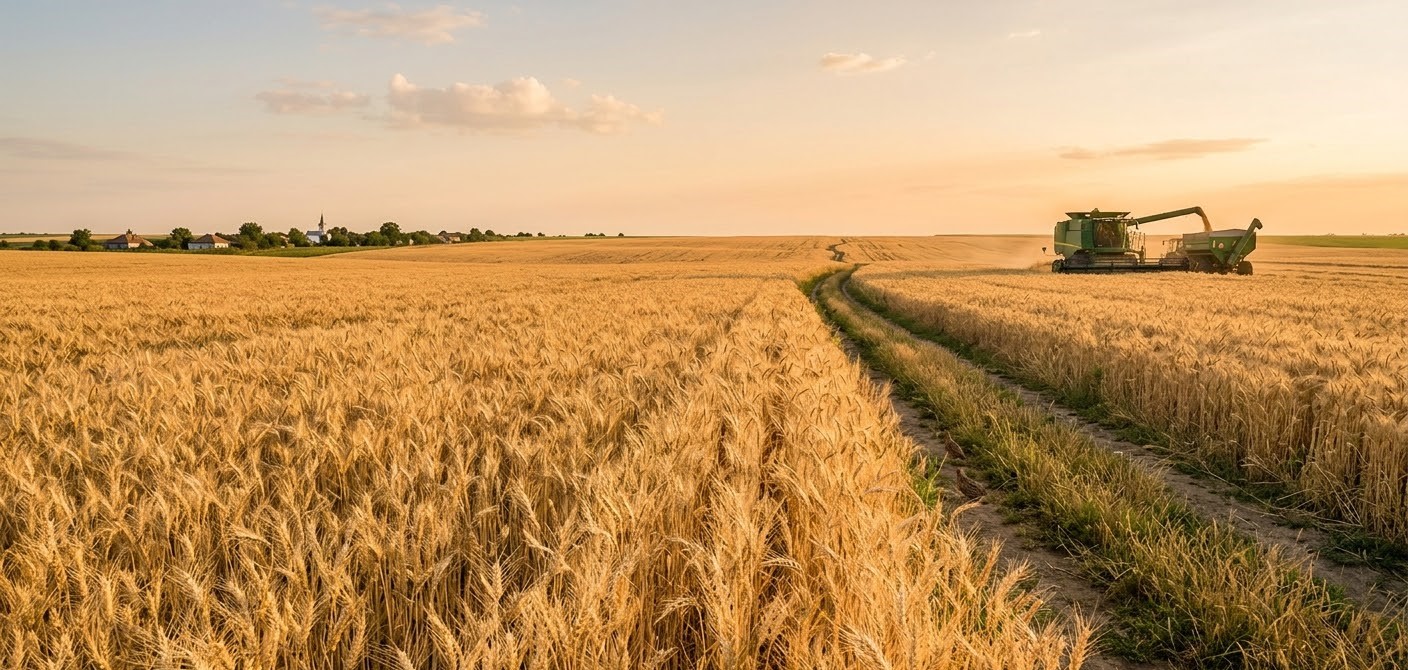
Biodiversity and the Fertile Steppe
Romania’s success as a top global wheat supplier is due to its unique geography:
- The Chernozem Soil: Much of Romania’s wheat-growing regions are covered in "black earth" (cernoziom), one of the most fertile soil types in the world, rich in humus and minerals.
- Climate Adaptation: Romanian researchers have developed local varieties that are highly resistant to drought and frost, ensuring a stable harvest even in the changing climate of the 21st century.
- The Ecosystem: Wheat fields are not just monocultures; they provide a habitat for the European Quail (Prepelitța) (see more), the Skylark (Ciocârlia) (see more), and various wildflowers like the red poppy and the blue cornflower, creating the iconic tricolor landscape of the Romanian summer.
- Global Standing: Romania consistently ranks among the top 3 exporters of wheat in the European Union and is a major player on the global market, reaching destinations from Egypt to the Middle East.
- Production: In peak years, Romania produces over 10 million tons of wheat, utilizing millions of hectares of arable land.
- Quality: Romanian wheat is highly prized for its high protein content and gluten quality, making it ideal for high-end panification and pastry industries worldwide.
- The Bărăgan's Thirst: The Bărăgan Plain, our largest wheat-producing region, is often called the "Barometer of Romanian Agriculture" because its yield determines the prosperity of the entire season.
- Ancient Traditions: The "Drăgaica" or "Sânzienele" festival in June coincides with the period when wheat begins to ripen, marking a celebration of sun, fertility, and the coming harvest.
- The Scent of the Field: There is a specific Romanian word, "pârgă," which describes the magical moment when the wheat starts to change color from green to gold.
FAQ: Romanian Wheat (Grâul Românesc) - The Golden Soul of the Granary of Europe
Q: Why is Romania called the "Granary of Europe"?
A: This title dates back to the interwar period when Romania was one of the largest grain exporters in the world. Today, the name remains relevant as Romania consistently ranks as a top producer and exporter of wheat and maize within the European Union.
Q: Which regions of Romania produce the most wheat?
A: The most productive areas are the Bărăgan Plain (in the south-east), the Danubian Plain (along the southern border), and the Western Plain (near the border with Hungary). These regions benefit from flat terrain and extremely fertile chernozem soil.
Q: What makes Romanian wheat special compared to others?
A: Due to the specific continental climate and the quality of the soil, Romanian wheat often has a high protein content and excellent gluten properties. This makes it highly sought after by international bakeries for producing high-quality bread and pasta.
Q: When is the wheat harvest season in Romania?
A: The harvest typically begins in late June or early July, depending on the weather. This period is often celebrated in Romanian villages with traditional harvest festivals, such as Drăgaica.
Q: Does Romania export most of its wheat?
A: Yes, a significant portion of the annual harvest is exported. Romania is a key supplier for the Middle East and North Africa (especially Egypt), as well as many countries within the European Union.
Q: Is Romanian wheat production sustainable?
A: In recent years, there has been a significant shift toward modernizing agriculture. Many Romanian farmers now use precision farming technologies, satellite monitoring, and drought-resistant local seed varieties to ensure high yields while protecting the soil's health.
Q: What are the main challenges for wheat farmers in Romania?
A: The primary challenge is climate change, specifically prolonged droughts and heatwaves during the spring and early summer. To combat this, there is an ongoing national effort to modernize and expand irrigation systems across the main agricultural plains.
