
A Muse of Romanian Folklore and Music
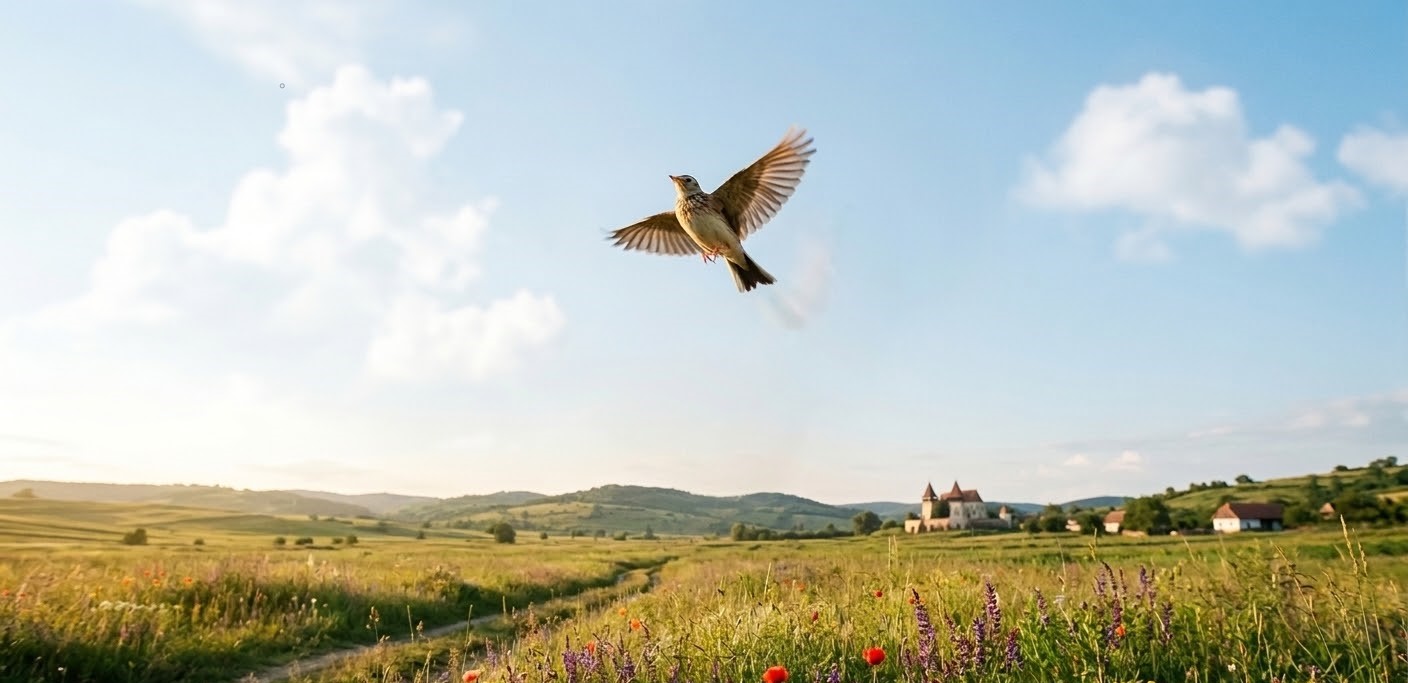
In Romanian rural tradition, the skylark is far more than just a bird; it is a muse of folklore, representing the bridge between the earth and the heavens. It is the messenger of the sun, singing its most beautiful songs while ascending invisibly into the blue sky. This ethereal, continuous, and intricate song has served as a profound source of inspiration for Romanian popular music (muzica populară) for centuries. Folk musicians, especially master țambal and vioară (fiddle) players, have always strived to emulate the skylark's trills, leaps, and cascading melodies, making "Ciocârlia" a test of skill and a staple of Romanian traditional celebration.
The skylark’s influence transcends traditional music, famously inspiring Romania’s greatest composer, George Enescu (see more), to create one of his most beloved works: the "Romanian Rhapsody No. 1," which prominently features a brilliant, stylized interpretation of the bird’s song, capturing its energy and spirit.
Technical Details
- Scientific Name: Alauda arvensis (Eurasian Skylark).
- Size: A small bird, about 16 to 18 cm long, with a wingspan of 30 to 36 cm.
- Habitat: Found throughout Romanian open countryside, meadows, agricultural fields, and steppes. They are ground-nesting birds.
- Conservation Status: While common, their populations are declining across Europe due to habitat loss from changing agricultural practices.
- Behavior: Famous for their soaring song-flights, rising vertically to great heights (up to 100 meters) while singing continuously.
Biodiversity: A Singing Ecosystem
The presence of the skylark is a sign of a healthy grassland ecosystem.
- Master of Mimicry: A single skylark song is an extraordinary display of biodiversity itself. The bird can perfectly mimic the sounds of other birds in its environment—the trill of a finch, the whistle of a plover, the chirp of a grasshopper—and weave them into its own cascading melody.
- Natural Pest Control: Beyond their beauty, they are invaluable to farmers, as their diet consists primarily of seeds and insects, naturally controlling many crop pests.
The skylark’s song is also woven into the mythological fabric of Romania.
The Sun's Messenger: One ancient legend says the skylark was once a beautiful girl who fell in love with the Sun. To be near him, she transformed into a bird. Her morning song is a greeting to her beloved, and she flies as high as she can to catch the first rays of his light.
The Healer: In some villages, it was believed that the song of a skylark, heard on a specific feast day, had the power to heal minor ailments and bring a year of good luck and happiness to the listener.
Fun Facts & Curiosities for Foreigners
- Singing Upward: It’s a true curiosity: the skylark is one of the few birds that sings while ascending. Most birds sing from a stationary position. To produce such a complex song while expending energy on a vertical flight is a physiological marvel.
- The Unseen Singer: Travelers in Romania will often hear a magnificent, overwhelming song from the sky but see nothing. The skylark flies so high that it becomes a tiny speck, often completely invisible, while its voice remains incredibly powerful and clear.
- National Icon: You will see the image of the skylark featured on Romanian postage stamps and sometimes on traditional ceramic work, emphasizing its importance as a national natural and cultural treasure.
If you want to understand the spirit of Romanian culture—its joy, its resilience, and its deep connection to the natural world—listen to the Ciocârlia. It is a small bird with a song that fills the biggest sky, teaching us that true power and beauty often lie in the most unexpected and invisible places.
A video presenting a Singing Skylark (Ciocârlia):
Frequently Asked Questions: The Skylark (Ciocârlia)
1. Why is the Skylark so important in Romanian culture?
The Skylark, or "Ciocârlia," is considered a muse of Romanian folklore and a sacred symbol of the connection between earth and sky. Its complex song has inspired generations of folk musicians and is a staple of traditional Romanian music, representing joy and spiritual freedom.
2. Is there a famous song dedicated to this bird?
Yes, the most famous musical piece is "Ciocârlia," a masterpiece of Romanian folk music that requires incredible technical skill to perform on the violin or pan flute. Additionally, Romania's greatest composer, George Enescu, famously integrated the spirit and trills of this bird's song into his "Romanian Rhapsody No. 1."
3. When is the best time to hear the Skylark in Romania?
You can hear the Skylark's song primarily in the spring and early summer. They are most active during the morning hours, often performing their singing flights as early as sunrise.
4. Where can I find the Skylark in the wild?
The Skylark is found throughout the Romanian countryside, especially in open fields, meadows, and agricultural areas. Unlike many birds that sing from trees, the Skylark prefers open spaces where it can nest on the ground and perform its vertical flight displays.
5. Why is it hard to see the bird while it is singing?
The Skylark has a unique habit of singing while flying vertically to great heights, sometimes up to 100 meters in the air. Because it is a small, brown bird, it often becomes a tiny, invisible speck against the bright sky, even though its voice remains loud and clear.
6. Is the Skylark a protected species?
While the Skylark is currently common in Romania, it is a protected species under European bird directives. This is because their populations are sensitive to modern agricultural changes, and preserving their natural meadow habitats is essential for their survival.
