
The Natural Bounty of the Carpathians
From the low-lying hills to the high alpine plateaus, the Romanian landscape offers a diverse "menu" of wild fruits:
- Wild Blueberries (Afine): Found mostly in high-altitude mountain areas. They are smaller than cultivated varieties but packed with an intense, tart flavor.
- Raspberries (Zmeură): Growing in sun-drenched forest clearings, Romanian wild raspberries are famous for their incredible fragrance.
- Blackberries (Mure): Common in the hilly regions, these dark, juicy fruits are a late-summer favorite.
- Wild Strawberries (Frăguțe): Tiny and rare, these are considered the "diamonds" of the forest due to their concentrated sweetness and intoxicating aroma.
- Rosehips (Măceșe) and Sea Buckthorn (Cătină): Often harvested later in the season, these are the vitamin C powerhouses used for medicinal teas and oils.
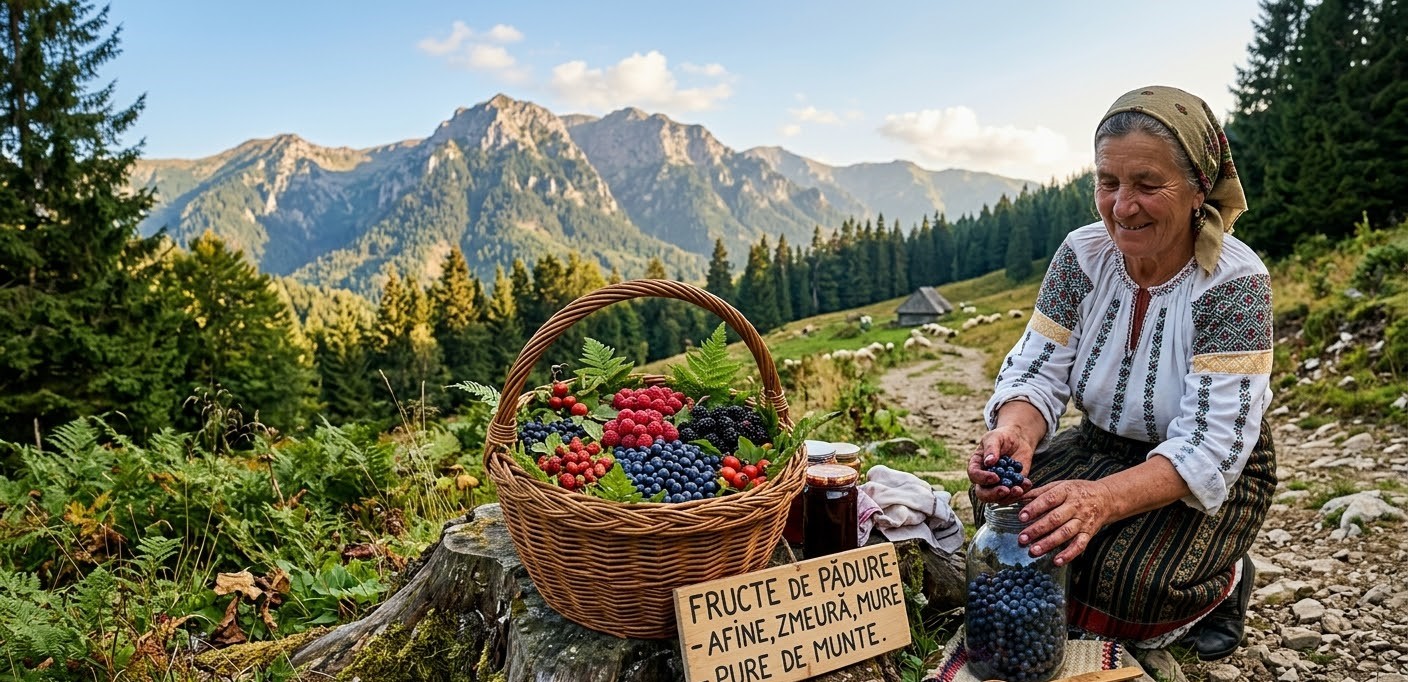
From Forest to Jar: Homemade Traditions
In Romania, wild berries are rarely just eaten fresh. They are the primary ingredient for "cămară" (the winter pantry):
- Dulceață: A traditional Romanian preserve where the fruits remain whole in a thick, translucent syrup.
- Sirop: Cold-pressed or boiled juices, mixed with honey or sugar, stored to be enjoyed as a refreshing drink throughout the year.
- Afinată & Zmeurată: Traditional alcoholic liqueurs made by fermenting the berries with sugar and then adding local brandy (țuică) (see more).
During the peak of the harvest season, you will often see local villagers and "negustori ambulanți" (street vendors) along the mountain roads (like Transfăgărășan (see more) or Transalpina (see more)). They sell freshly picked berries in hand-woven baskets or recycled jars, offering travelers a literal taste of the surrounding forest. Buying from them is not just a transaction; it is a way of supporting small local communities that still live in harmony with the seasons.
A video presenting villagers picking Wild Berries:
Frequently Asked Questions: Wild Berries of Romania
When is the best time to find wild berries in Romania?
The season begins in late June with wild strawberries (frăguțe). It continues through July and August with wild blueberries and raspberries, ending in September with blackberries, rosehips, and sea buckthorn.
Where can I buy fresh wild berries?
During the harvest season, you will find "negustori ambulanți" (roadside vendors) along major mountain passes such as Transfăgărășan, Transalpina, or in the Bran-Moieciu area. They sell freshly picked fruit in buckets, jars, or traditional baskets directly to travelers.
What are the most common products made from these fruits?
Romanian households are famous for "dulceață" (a thick fruit preserve where the berries remain whole), "sirop" (a concentrated cold-pressed or boiled juice), and "afinată" or "zmeurată" (traditional alcoholic liqueurs made by fermenting berries with sugar and local brandy).
Can I pick the berries myself in the forest?
Yes, foraging for personal use is a common practice in Romania. However, it is important to stay on marked trails and be mindful of wildlife. In many regions, wild berries are the primary food source for brown bears, so making noise to announce your presence is a safety necessity.
Why do wild berries taste different from supermarket varieties?
Romanian wild berries grow naturally in the mineral-rich soil of the Carpathian Mountains without any chemical fertilizers. They are much smaller than cultivated versions but have a far more intense aroma, higher acidity, and a much higher concentration of antioxidants.
Are the roadside berries safe to buy?
Generally, yes. These are gathered daily by locals who know the best hidden spots in the forest. It is a traditional way for mountain communities to earn seasonal income. It is always a good idea to wash the fruit before eating it, just as you would with any fresh produce.
What is "Sea Buckthorn" (Cătină) and why is it so popular?
Sea Buckthorn is often called the "Romanian Ginseng" or "Orange Gold." It is harvested later in the autumn and is highly sought after for its massive Vitamin C content. Locals often mix it with raw honey to create a powerful natural immunity booster for the winter months.
