The Legend of the "Stigmatized" Cave
Long before the monastery became a bustling site for pilgrims, the area was home to Saint John of Prislop. Legend says that in the 16th century, he carved a small cave into the rock face near the monastery with his own hands to live as a hermit.
The most famous story involves his tragic end: while he was carving a "window" into his stone cell, hunters on the opposite side of the valley mistook him for a wild animal through the thick foliage and accidentally shot him. His cave, known as "Chilia Sfântului Ioan de la Prislop," remains a place of deep silence and prayer, where visitors still feel the weight of his devotion.
Biodiversity: The Garden of Hațeg
The monastery grounds are famous for their meticulous landscaping, blending naturally with the wild flora of the Southern Carpathians:
- The Eternal Spring: The monastery is famous for its flower gardens, which are said to bloom with unusual vibrancy. In spring, the area is covered in snowdrops and wild crocuses.
- Ancient Forests: The surrounding hills are covered in centuries-old oak and beech forests, providing a habitat for diverse bird species and the occasional stag.
- The "Father Arsenie" Effect: Pilgrims often note that the flowers on Father Arsenie Boca (see more) grave remain fresh and colorful far longer than expected, even during the cold mountain winters.
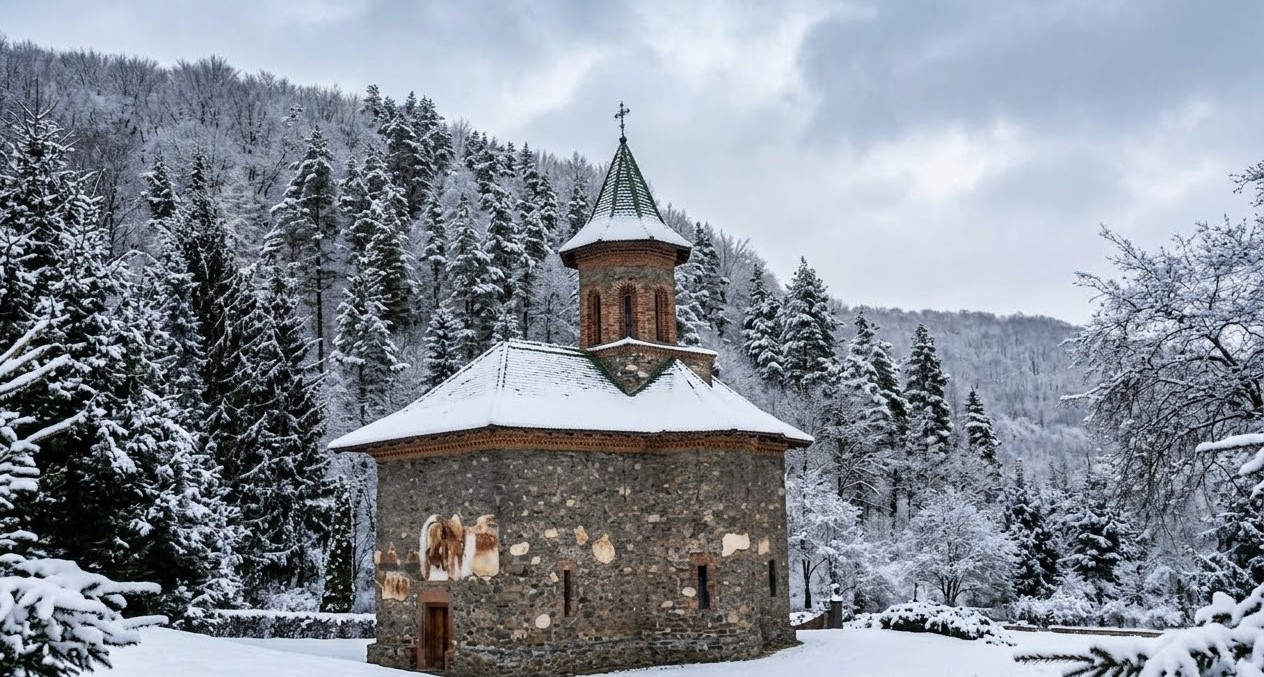
- The Third Foundation: The monastery has been built and rebuilt three times. The current stone church dates back to 1564, founded by Princess Zamfira, the daughter of the Wallachian Prince Moise Vodă.
- The "Saint of Transylvania": Father Arsenie Boca, buried here in 1989, is considered by many the greatest Romanian confessor of the 20th century. Millions of people visit his grave every year, seeking peace and healing.
- A Hidden Icon: The monastery houses a rare and beautiful icon of the Virgin Mary, which is believed by the faithful to be miracle-working.
- Location: Near the village of Silvașu de Sus, Hunedoara County.
- Architectural Style: Built in the Triconch plan (cloverleaf shape), typical of the Byzantine influence on Wallachian church architecture.
- Elevation: ~640 meters.
- Key Landmarks: The Stone Church (16th century), The Bell Tower, and Saint John’s Cave.
- Access: Easily reachable by car from Hațeg (approx. 13 km).
Frequently Asked Questions: Prislop Monastery
1. Where is Prislop Monastery located?
The monastery is located in a picturesque glade in the Hațeg region, near the village of Silvașu de Sus (Hunedoara County). It is approximately 13 km from the town of Hațeg and 20 km from Hunedoara.
2. Why is it called the "Holy Site of Transylvania"?
It earned this name primarily due to Father Arsenie Boca, one of Romania’s most beloved spiritual figures, who lived and served here. His grave has become one of the most important pilgrimage sites in South-Eastern Europe, with people believing the place has a special healing energy.
3. Is there a specific dress code for visitors?
Yes. To respect the monastic life, visitors must wear modest clothing. Women are expected to wear long skirts and cover their shoulders (a headscarf is also recommended), while men should wear long trousers. If you are unprepared, the monastery usually provides wraps at the entrance.
4. Can I visit the cave of Saint John of Prislop?
Absolutely. A small path leads from the monastery to the rock-cut cell where Saint John lived as a hermit in the 16th century. It is a place of deep silence, located just a few hundred meters from the main church.
5. What is the best time to visit to avoid crowds?
The monastery is very crowded on weekends and during major religious holidays (especially on November 28th). For a peaceful experience, it is best to visit on Tuesday, Wednesday, or Thursday mornings.
6. Are there any fees for visiting?
There is no entrance fee to visit the monastery or the grave of Father Arsenie Boca. However, you can leave donations or purchase candles and religious items from the monastery shop to support the community.
7. Can I take photographs?
You are allowed to take photos of the gardens and the exterior of the buildings. However, photography and filming are strictly prohibited inside the church and at Father Arsenie Boca’s grave out of respect for those praying.
