The Spiritual Pillars: Prislop and Sâmbăta de Sus
His life was deeply connected to two of the most beautiful spiritual retreats in the country:
- Prislop Monastery (see more): Located in a serene valley in the Hunedoara region, this is where Father Arsenie is buried. The "Path of the Flowers" leading to his grave is one of the most visited pilgrimage sites in Eastern Europe.
- Sâmbăta de Sus: Here, at the foot of the Făgăraș Mountains, he served as a priest and started a spiritual revival, teaching people how to find peace within the "Gray Giants" of the beech forests we discussed earlier.
The Artist and the Visionary
Arsenie Boca wasn't just a preacher; he was a talented artist.
- Drăgănescu Church: Often called the "Sistine Chapel of Romania," the frescoes here were painted by him. They are unique in the Orthodox world, containing modern elements and visionary scenes that continue to fascinate theologians and art lovers alike.
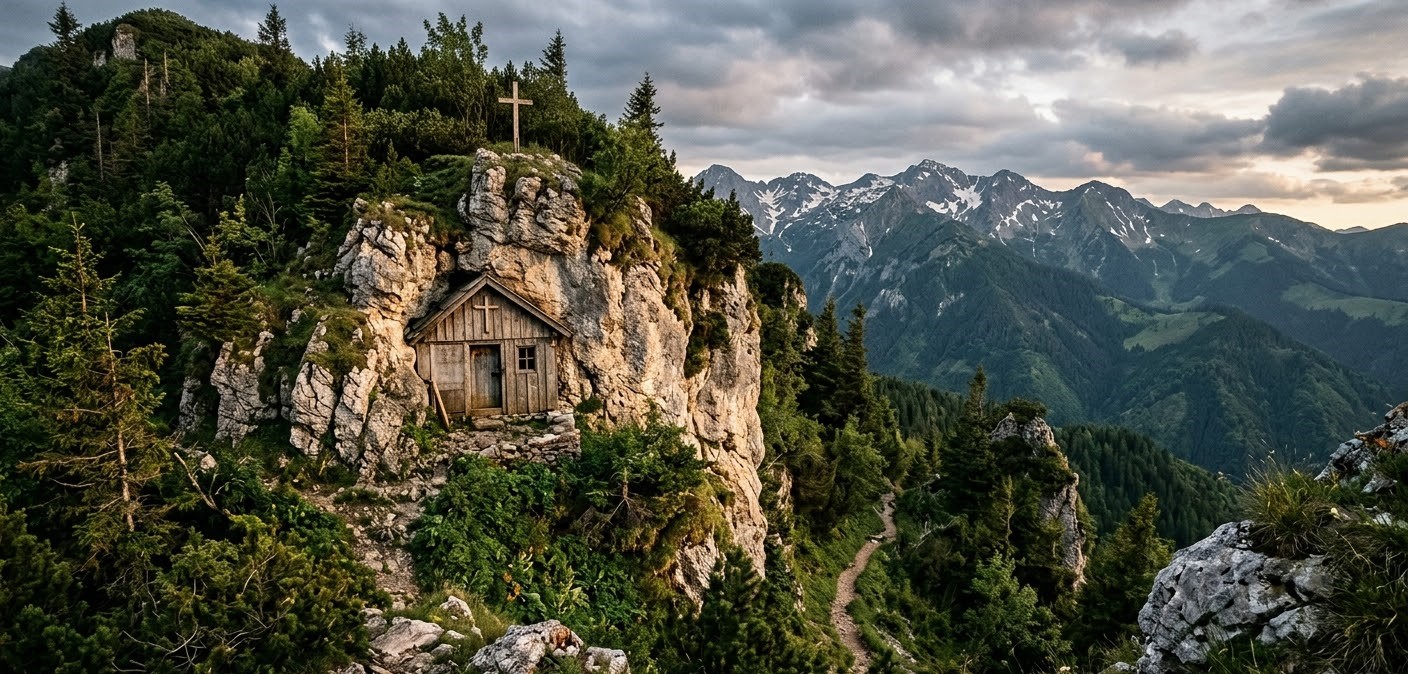
- The Cave of Arsenie Boca: High in the mountains above Sâmbăta de Sus, he carved a small stone cell by hand—a place of absolute silence and prayer that can still be visited by brave hikers today.
- The "Clear-Sighted" Monk: Many legends tell of his ability to see into people's souls or predict future events, which led to him being constantly monitored by the secret police (Securitate) during the communist regime.
- A Man of Science and Spirit: He studied medicine and fine arts in Bucharest, believing that a true priest should understand both the human body and the human soul.
- Nature Lover: He often taught that nature is "God's first book," encouraging people to respect the mountains and forests as sacred gifts.
- Details
- Born: 1910, Vața de Sus, Hunedoara
- Died: 1989, Sinaia (buried at Prislop)
- Education: Theology (Sibiu), Fine Arts and Medicine (Bucharest)
- Key Sites: Prislop Monastery, Brâncoveanu Monastery (Sâmbăta de Sus), Drăgănescu Church.
Why is Arsenie Boca called the "Saint of Transylvania"?
Although not yet formally canonized by the Orthodox Church, millions of Romanians already venerate him as a saint due to the countless stories of healings, spiritual guidance, and his unwavering courage during the communist persecution. His grave at Prislop has become a symbol of hope for the entire nation.
What is unique about his paintings at Drăgănescu Church?
His art is far from traditional. At Drăgănescu, Father Arsenie used a style that combined Byzantine iconography with modern, almost prophetic elements. You can see depictions of modern technology (like satellites or televisions) interwoven with biblical scenes, emphasizing that faith is relevant in every era.
Is it true he spent time in prison?
Yes. Because of his immense influence over the people, the communist regime considered him a threat. He was arrested multiple times, sent to the forced labor camps at the Danube-Black Sea Canal, and eventually forbidden from wearing his monastic robes and performing religious services for the last decades of his life.
Can I visit the stone cell (chilia) he carved in the mountains?
Yes, but it requires a bit of an adventure. The cell is located in the Făgăraș Mountains (see more), above Sâmbăta de Sus. It is a small, humble space carved directly into the rock. The path is steep and winds through the same ancient beech forests we discussed, offering a perfect blend of spiritual pilgrimage and mountain hiking.
What should I expect when visiting Prislop Monastery?
Expect a very peaceful but highly organized site. There is a strict dress code (shoulders and knees covered), and silence is encouraged. Many pilgrims bring flowers to place on his grave, which is famous for being covered in blooms regardless of the season.
Did he have a connection to the village of Cuib (see more) or Prahova?
While he is most famous for his work in Transylvania (Prislop and Sâmbăta), Father Arsenie spent his final years in Sinaia, Prahova County. He passed away there in 1989 at the Metocul de la Drăgănescu, a small settlement near the mountains, not far from that area.
