
What Makes Balmoș Special?
Often confused with the classic Polenta (Mămăligă), Balmoș is in a league of its own. The secret lies in the cooking liquid. While polenta is boiled in water, Balmoș is cooked in sour cream or jintiță (a thick, fatty liquid left over from making sheep cheese).
- The Texture: It is incredibly creamy, dense, and velvety.
- The "Oil" Test: A true Balmoș is only ready when the butter from the cream separates and rises to the edges of the cast-iron cauldron (ceaun).
- The Cheese: High-quality, salty sheep cheese (brânză de burduf) (see more) is folded in, melting into the golden maize to create a rich, savory explosion of flavor.
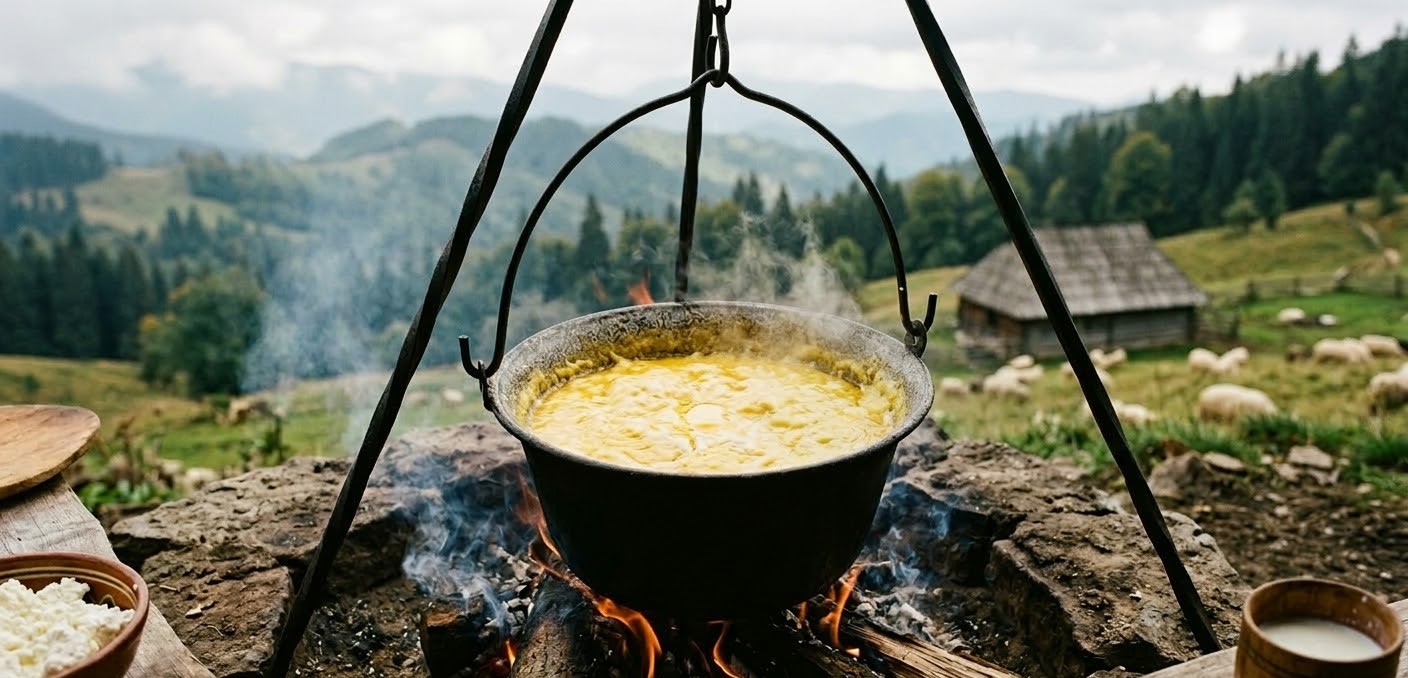
A Tradition of the Stâna (Sheepfold)
For centuries, Balmoș was the celebratory meal of the shepherds. It requires constant stirring and a very hot fire, making it a communal dish often shared directly from the cauldron in the middle of a mountain meadow.
Facts for Foodies
- The Purest Ingredients: Traditional Balmoș uses only three ingredients: sour cream (or jintiță), cornmeal (mălai), and sheep cheese.
- Energy for the Peaks: It is exceptionally high in calories—exactly what a shepherd needs for a long day of walking on the steep slopes of the Făgăraș or Retezat mountains.
- Regional Pride: While found across the Carpathians, the Balmoș from Maramureș and Bucovina is legendary for its richness.
Main Ingredients: Fresh sour cream, cornmeal, traditional sheep cheese.
Best Served With: A cold glass of sour milk (lapte bătut) or extra sheep cheese on top.
Where to Experience it: Authentic sheepfolds (stâne) or traditional restaurants in the mountain regions.
The Authentic Shepherd's Balmoș Recipe
This recipe follows the traditional method used in the Carpathian sheepfolds. The quantities are for about 4 servings.
Ingredients:
1 Liter of Sour Cream (Smântână): Use the highest fat content possible (at least 30%). In the mountains, shepherds use jintiță.
300-400g of Cornmeal (Mălai): Preferably stone-ground for a more rustic texture.
300g of Sheep Cheese (Brânză de burduf): The older and saltier, the better.
A pinch of salt: (Be careful, as the cheese is already salty).
Instructions:
Boil the Cream: Pour the sour cream into a cast-iron cauldron (ceaun). Add a pinch of salt and bring it to a boil over medium heat.
Add the Cornmeal: Once the cream starts to bubble and rise, start adding the cornmeal gradually, in a thin stream, while stirring constantly with a wooden whisk or spoon (făleșteu).
The Stirring Ritual: This is the most important part. Lower the heat and keep stirring vigorously. You want to avoid any lumps and ensure the cornmeal is perfectly hydrated by the fats in the cream.
Add the Cheese: When the mixture starts to thicken, crumble half of the sheep cheese into the cauldron. Continue to stir.
The "Golden Sign": Keep cooking and stirring for about 10-15 minutes. The Balmoș is ready when it starts to separate from the edges of the cauldron and a thin layer of melted butter (from the cream) appears on the surface.
The Finish: Turn off the heat and add the remaining cheese on top. Let it sit for 2 minutes before serving.
Pro Tip:
For the most authentic experience, serve it hot in a wooden bowl with a cold glass of lapte bătut (traditional fermented milk) on the side.
A video presenting the preparation steps of a delicious Romanian Balmoș in the nature:
Frequently Asked Questions: Balmoș
1. Is Balmoș the same as Polenta (Mămăligă) (see more)?
Not exactly. While both are made from cornmeal, Mămăligă is boiled in water and is often used as a bread substitute. Balmoș is a rich, standalone dish where the cornmeal is boiled in fatty sour cream and mixed with plenty of cheese. It is much creamier and more flavorful.
2. Why is it called "Shepherd's Gold"?
It earned this nickname due to its deep yellow color and the fact that it was the most prized meal a shepherd could prepare at a stână (mountain sheepfold). It was also considered "liquid gold" because of its high energy content, essential for life in the high mountains.
3. What kind of cheese is used in an authentic Balmoș?
The most authentic choice is Brânză de Burduf—a salty, aged sheep cheese with a strong aroma. However, in some regions, shepherds also use fresh caș or even a mix of cheeses to achieve the perfect melt.
4. Is it a heavy meal?
Yes, Balmoș is very rich in fats and calories. It is traditionally served in smaller portions because it is incredibly filling. It is the definition of "comfort food" from the Romanian mountains.
5. Can I make Balmoș at home?
You can, but you need high-quality, high-fat sour cream (minimum 30%) to get the right consistency. Without the natural fats of the cream separating into butter, it will just be a creamy polenta, not a true Balmoș.
6. Where can I try the best Balmoș?
The best place is always at a mountain sheepfold during the summer months. If you are traveling through the Apuseni, Maramureș, or the Prahova mountains, look for local guesthouses that still cook it in a traditional cast-iron cauldron over a wood fire.
