
A Wild Masterpiece
While many are familiar with garden narcissi, the wild versions found in Romania are truly special. They grow in massive colonies, often in protected areas where the soil remains moist and the air is crisp.
- The Fragrance: Unlike some cultivated varieties, the wild yellow narcissus has a delicate, honey-like scent that fills the mountain valleys during peak blooming season.
- Resilience: These flowers have adapted to the harsh mountain climate, often blooming while the highest peaks around them are still capped with snow.
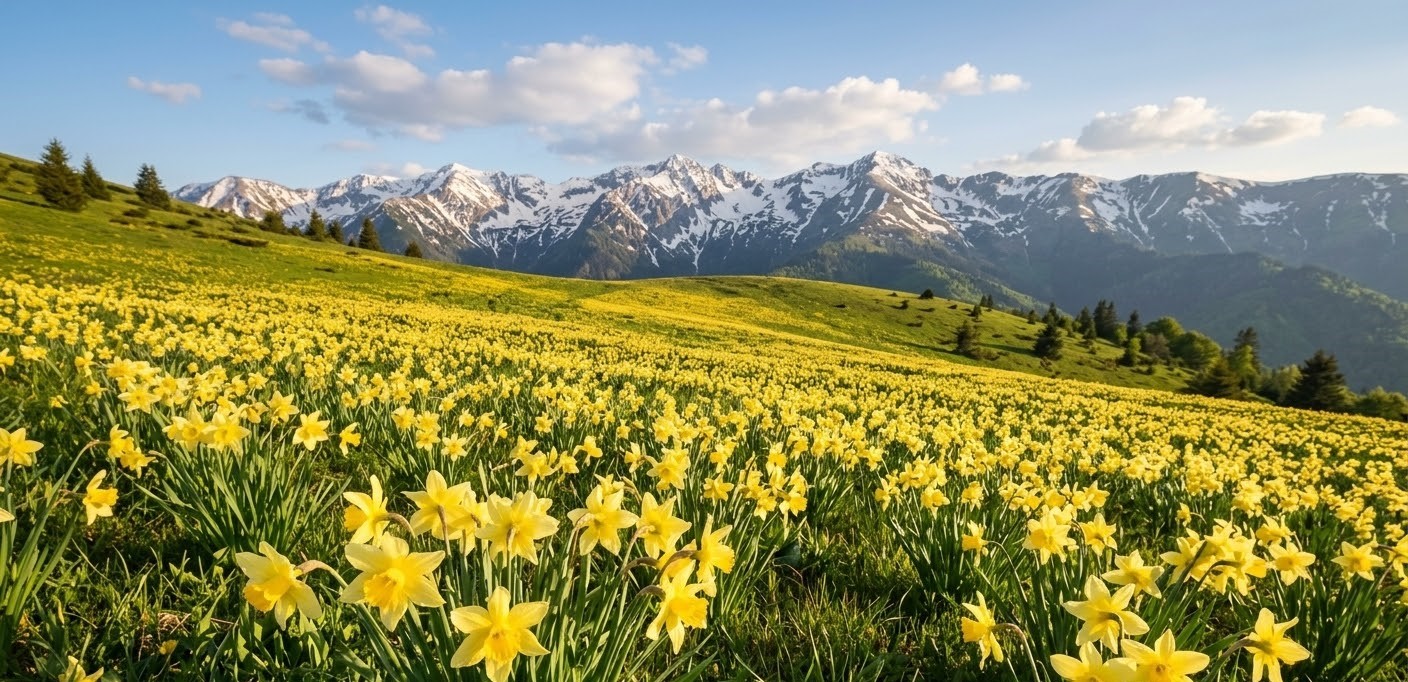
Famous "Narcissus Glades" in Romania
Romania is home to several famous "Poiana Narciselor" (Narcissus Glades). The most iconic is the Dumbrava Vadului Nature Reserve in Brașov County, the largest of its kind in Europe. Other spectacular spots include:
- The Baiului Mountains (see more): Located close to your home in Prahova, these mountains offer stunning ridges covered in yellow blooms.
- The Rodna Mountains (see more): Where the narcissi grow at impressive altitudes, creating a sharp contrast with the rugged limestone peaks.
- The Negrileasa Glade: In the Apuseni Mountains, celebrated every year with a local festival.
In Romanian rural tradition, the wild narcissus is often called "Lăcrămioara Muntelui" (The Little Tear of the Mountain) or "Copilași" (Little Children), and its presence is surrounded by poetic myths.
The Fallen Stars: A beautiful local legend tells that long ago, the stars were so enchanted by the beauty of the Carpathian peaks that some of them tried to get closer to earth to hear the shepherds' flutes (fluier). As they touched the mountain grass, they turned into golden flowers. This is why, in many areas, the yellow narcissus is seen as "star-dust" left behind to guide the souls of lost hikers.
The Maiden of the Snows: In the Apuseni Mountains, it is said that the narcissus was once a brave maiden who refused to let Winter stay forever. She stood her ground on the green slopes while the frost tried to cover her. Her golden crown remained above the snow, and wherever she stepped, the first yellow narcissi bloomed as a sign that Spring had finally won the battle.
A Symbol of Pure Love: Unlike the myth of vanity, in the Romanian countryside, giving someone a wild narcissus (long ago, when it wasn't protected) was a sign of pure, sincere intentions. It was believed that the scent of the flower had the power to clear the mind of bad thoughts and bring peace to a troubled heart.
Fun Facts & Conservation
- Strictly Protected: The wild narcissus is a protected species. Picking these flowers is strictly forbidden to ensure that future generations can enjoy the "golden seas."
- Cultural Symbol: In Romanian tradition, the narcissus is often linked to the myth of Narcissus, but it is also seen as a harbinger of luck and the definitive end of winter.
- The Festival of Narcissi: Many villages near these glades hold festivals in May, celebrating the bloom with traditional dances and crafts.
- Scientific Name: Narcissus pseudonarcissus (Wild Yellow Narcissus).
- Blooming Season: Late April to late May, depending on the altitude.
- Habitat: Moist meadows, forest edges, and mountain plateaus.
- Location: Key reserves include Dumbrava Vadului (Brașov) and Negrileasa (Alba).
Frequently Asked Questions: The Yellow Narcissus (Narcisa Galbenă)
1. Where is the most famous Narcissus glade in Romania?
The most iconic location is the Dumbrava Vadului Nature Reserve, often called "Poiana Narciselor," in Brașov County. It is the largest of its kind in Europe, covering hundreds of hectares. Other spectacular spots include the Negrileasa Glade in the Apuseni Mountains and the high ridges of the Baiului Mountains.
2. When exactly do they bloom?
The blooming season usually peaks in May. However, it varies by altitude: in lower meadows, they appear in late April, while on high mountain plateaus, you can find them blooming well into June.
3. Can I visit the glades for a photo session?
Yes, visitors are welcome! However, you must stay on the designated paths to avoid crushing the delicate bulbs. Professional photographers often visit during the "golden hour" (sunrise or sunset) to capture the flowers in the best light.
4. Is it true that picking these flowers is illegal?
Yes. The wild yellow narcissus is a protected species in Romania. Picking the flowers or digging up the bulbs is strictly prohibited and can result in significant fines. This protection ensures the glades continue to bloom for generations to come.
5. Why do they smell different from garden narcissi?
Wild narcissi (Narcissus stellaris or pseudonarcissus) have a much more subtle, fresh, and honey-like fragrance compared to the heavy, sometimes overwhelming scent of hybridized garden varieties. The scent of a whole field in bloom is a unique sensory experience.
6. Are there any festivals dedicated to this flower?
Yes! Several communities, such as those near the Negrileasa Glade in the Apuseni Mountains, celebrate the "Festival of Narcissi" every year in May. These events feature traditional music, folk costumes, and local crafts.
