
The Only Village of its Kind
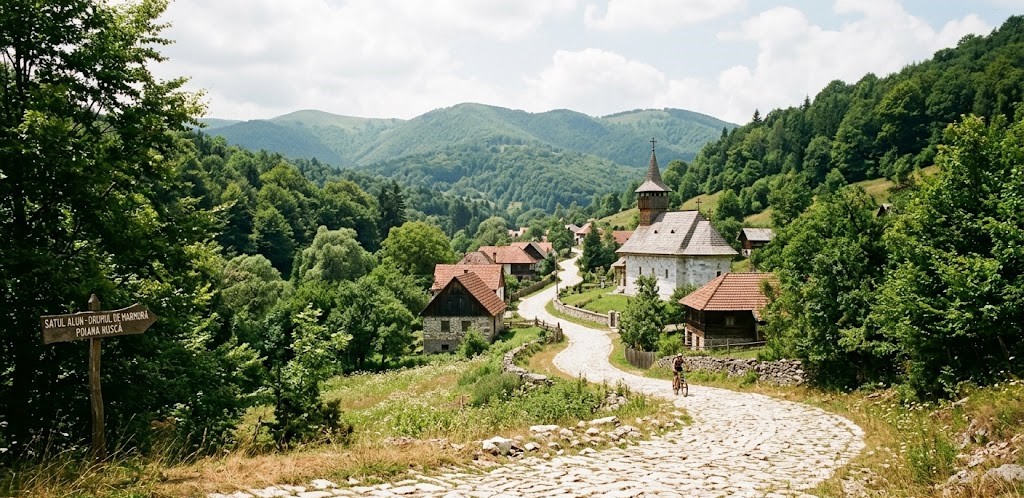
Alun is famous for one extraordinary reason: it is built almost entirely of marble. From the foundations of the houses to the fences and even the roads, the local pink and white marble from the nearby quarry was the primary building material.
- The Marble Road: One of the most surreal sights is the 10-kilometer road leading into the village, paved entirely with marble blocks. It is the only road of its kind in Romania and likely in Europe.
- The Marble Church: The village features a unique church built entirely of marble. It stands as a testament to the skill of the local craftsmen and the wealth of the local resources.
A Silent History
Once a thriving community with over 100 houses and a bustling school, Alun fell victim to the depopulation of the rural highlands.
- The Ghost Village: Today, only a handful of people still live here. Most of the houses stand silent, their marble walls hidden behind overgrown vegetation, creating a melancholic yet stunning atmosphere.
- The Quarry: The Ruschița quarry, which provided the marble for the village, is famous worldwide. It is said that marble from this area was used in the construction of the Palace of the Parliament in Bucharest and even the Milan Cathedral (see official webiste).
For an international traveler, Alun offers something that the typical tourist trail lacks:
- Absolute Silence: It is a place for contemplation, away from any modern noise.
- Photography Heaven: The contrast between the white marble ruins and the vibrant green of the surrounding forests is a dream for any photographer.
- Authenticity: This isn't a museum; it’s a real place where you can touch history and feel the passing of time.
- Pink Marble: The marble here has a distinct pinkish hue when wet, making the "Marble Road" look incredible after a light rain.
- Architecture: Even the animal stables and barns in Alun were often built with marble foundations, showing just how abundant this "precious" stone was for the locals.
FAQ: Visiting the Marble Village of Alun
Why is Alun called the "Marble Village"?
Alun earned this name because almost everything in the village—from the foundations of the houses and the fences to the main road and even the local church—is built from the high-quality marble extracted from the nearby quarry.
Can I drive on the famous Marble Road?
Yes, the 10-kilometer marble road is open to the public. However, because it is made of marble blocks and has been weathered over time, it can be quite bumpy. A vehicle with higher ground clearance (SUV or 4x4) is recommended for a comfortable trip.
Is the Marble Church open to visitors?
The Marble Church is a unique architectural monument and is usually the main highlight for visitors. While there are no fixed visiting hours, you can always admire its stunning exterior. It is one of only two churches in Europe built entirely of marble.
Is Alun really a "ghost village"?
While often called a ghost village because most of its 100+ houses are now empty, a few souls still live there year-round, along with a small community of nuns at the local monastery. It is a place of profound silence and peace.
How far is Alun from the nearest city?
Alun is located about 30 kilometers from the city of Hunedoara. The drive takes approximately 45–60 minutes due to the winding mountain roads and the unique terrain of the Marble Road.
Are there any stores or restaurants in the village?
No, there are no commercial facilities in Alun. If you plan to visit, it is essential to bring your own water and food. The nearest supplies can be found in the larger village of Ghelari.
