
Biodiversity: A Haven for the Wild
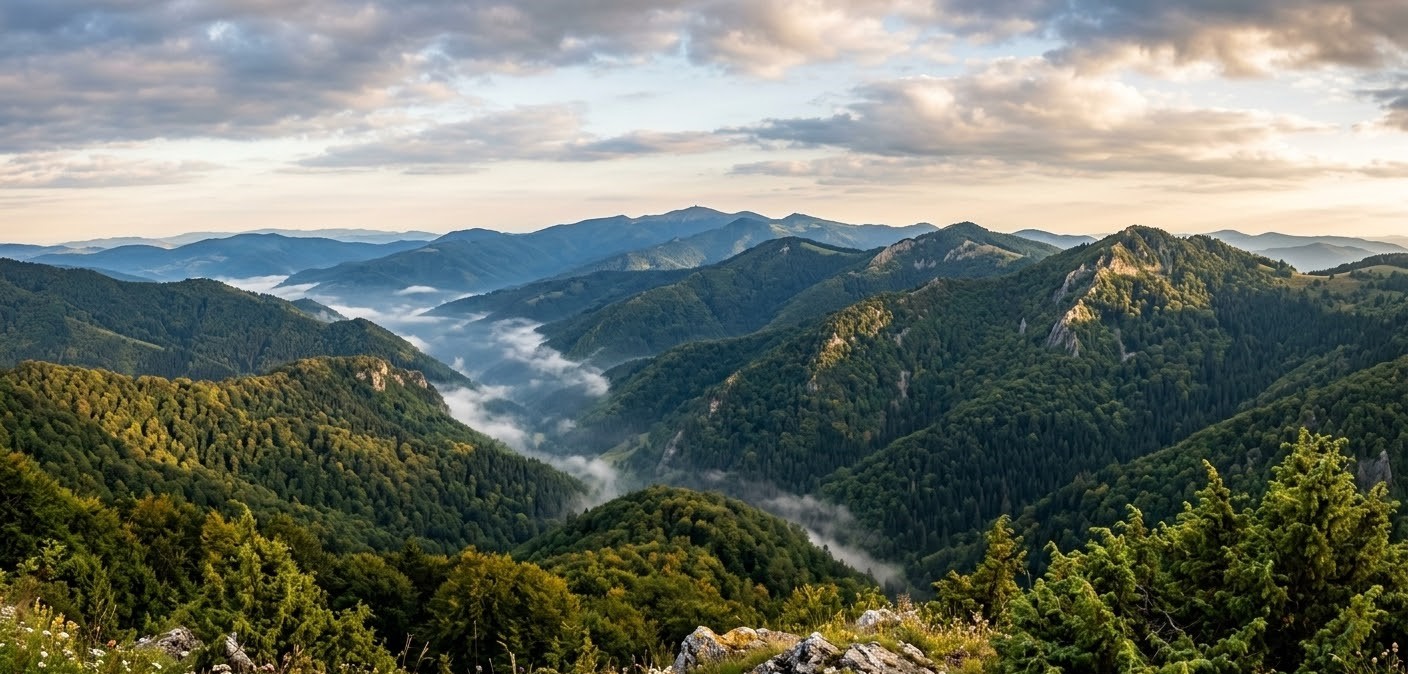
Poiana Ruscă is a powerhouse of European biodiversity. Because the human footprint is relatively small here, nature has reclaimed the landscape:
- The Big Three: These forests are home to healthy populations of Brown Bears, Wolves (see more), and Lynx.
- Botanical Rarities: You can find the rare Ruscus aculeatus (Butcher's Broom) and vibrant meadows filled with wild orchids.
- Ancient Forests: Vast stretches of beech and oak provide a dense canopy that feels like stepping back into a prehistoric era.
Legends & The "Marble" Mystery
Every peak and valley here whispers a story. One of the most famous involves the Pădureni (Forest People)—the local inhabitants known for their unique costumes and archaic traditions.
- The Legend of the Iron Giant: Local folklore speaks of giants who once lived in these woods, using the massive rocks as toys. This likely stems from the area's rich mineral history.
- The Marble of Kings: Did you know that the marble from Ruschita (located in these mountains) was used for the restoration of Milan Cathedral (Duomo di Milano) and supposedly even for parts of the White House? The pink and white marble here is world-renowned for its quality.
- The Sunken Village: Beneath the waters of Lake Cinciș (see more) lies a history of five villages that were flooded during the communist era to create a reservoir. When the water level drops, you can sometimes see the ruins of old churches poking through the surface.
- The Village of Marble: In the village of Alun (see more), there is a road literally paved with marble, and a church built entirely from the same precious stone. It is one of the most surreal sights in rural Romania.
- Highest Peak: Padeș Peak (1374 m). It’s not about the altitude here; it’s about the massive horizontal spread of the ridges.
- Geology: Primarily composed of crystalline schists and, of course, the famous limestone and marble deposits.
- Best Time to Visit: May to June for the wildflower blooms, or October for the incredible "rusty" colors of the beech forests.
- Key Entry Points: Lugoj, Hunedoara, or Caransebeș.
FAQ: Exploring the Poiana Ruscă Mountains
What is the best way to reach the Poiana Ruscă Mountains?
The most convenient entry points are through Hunedoara (for the eastern side and Lake Cinciș) or Lugoj/Caransebeș (for the western side). While many forest roads are accessible by car, a 4x4 vehicle is highly recommended if you plan to visit the remote marble village of Alun or reach the higher ridges.
Are there marked hiking trails in Poiana Ruscă?
Yes, there are several marked trails, but they are less crowded than those in the Făgăraș or Bucegi mountains. Popular routes include the ascent to Padeș Peak (1,374 m) and the trails connecting the "Pădureni" villages. Always carry a GPS map, as the dense forests can make navigation tricky.
Is it safe to hike alone given the wildlife?
As with most Romanian mountains, wild animals are unpredictable. Poiana Ruscă has a significant population of brown bears and wolves. It is best to hike in groups, make noise (talking or using a bear bell) to avoid surprising animals, and keep all food tightly sealed.
What is the "Marble Road" and where can I find it?
The "Marble Road" is a unique 10 km stretch of road paved entirely with marble blocks. It leads to the village of Alun in Hunedoara County. The village itself is famous for having a church built completely out of local marble—a sight you won't find anywhere else in Europe.
Can I swim in Lake Cinciș?
Yes, Lake Cinciș is a popular spot for swimming, fishing, and boating during the summer months. However, be aware of the local legends; the lake was created by flooding five villages, and many locals still view the "sunken churches" with a sense of mystery and reverence.
What makes the "Pădureni" region culturally significant?
The Pădureni (Forest People) have preserved archaic traditions, unique folk costumes with intricate black-and-white embroidery, and a dialect that has remained largely unchanged for centuries. Visiting their villages is like stepping back into a living museum of Romanian rural life.
