Biography: The Journey of a Prodigy
- Early Years (1881–1888): Born in Liveni, Botoșani, Enescu showed miraculous musical talent from a toddler age, beginning to play the violin at four and composing by five.
- Academic Excellence: He was the youngest student ever admitted to the Vienna Conservatory at age seven, later moving to the Paris Conservatory where he studied under greats like Gabriel Fauré and Jules Massenet.
- A Global Career: While he lived much of his life in Paris and toured the world as a virtuoso violinist, his heart remained in Romania, where he founded the National George Enescu Symphony Orchestra and spent his summers at his beloved Luminiș Villa in Sinaia.
- Teaching Legacy: He was a mentor to some of the 20th century's greatest musicians, most notably the legendary violinist Yehudi Menuhin, who described Enescu as "the most extraordinary human being".
- Enescu’s music is defined by its ability to blend the sophisticated structure of Western classical music with the "doina" and "lăutărească" traditions of his homeland.
- Romanian Rhapsodies: His most famous works, particularly Romanian Rhapsody No. 1, are vibrant celebrations of the Romanian spirit. As we discussed earlier, this piece famously mimics the complex trills and energy of the Skylark (Ciocârlia) (see more), turning a tiny bird's song into a monumental orchestral triumph.
- Oedipe: His monumental opera, Oedipe, is considered a masterpiece of 20th-century lyrical drama, taking over 20 years to complete.
- Poème Roumain: His first major orchestral work, composed when he was only 16, which ends with the majestic sounds of the Romanian Royal Anthem.
Technical Details & Legacy
- The Enescu Festival: Since 1958, Bucharest has hosted the George Enescu International Festival, one of the most prestigious classical music events in Europe, held in his honor.
- The George Enescu National Museum: Located in the beautiful Cantacuzino Palace in Bucharest, it preserves the memory of the man who said, "Music should start from the heart and return to the heart".
- Total Memory: Enescu was known for having a photographic memory for music. He reportedly knew the entire scores of hundreds of symphonies and operas by heart.
- A Gifted Artist: Beyond music, he was a talented artist and draughtsman; many of his original scores are decorated with intricate sketches.
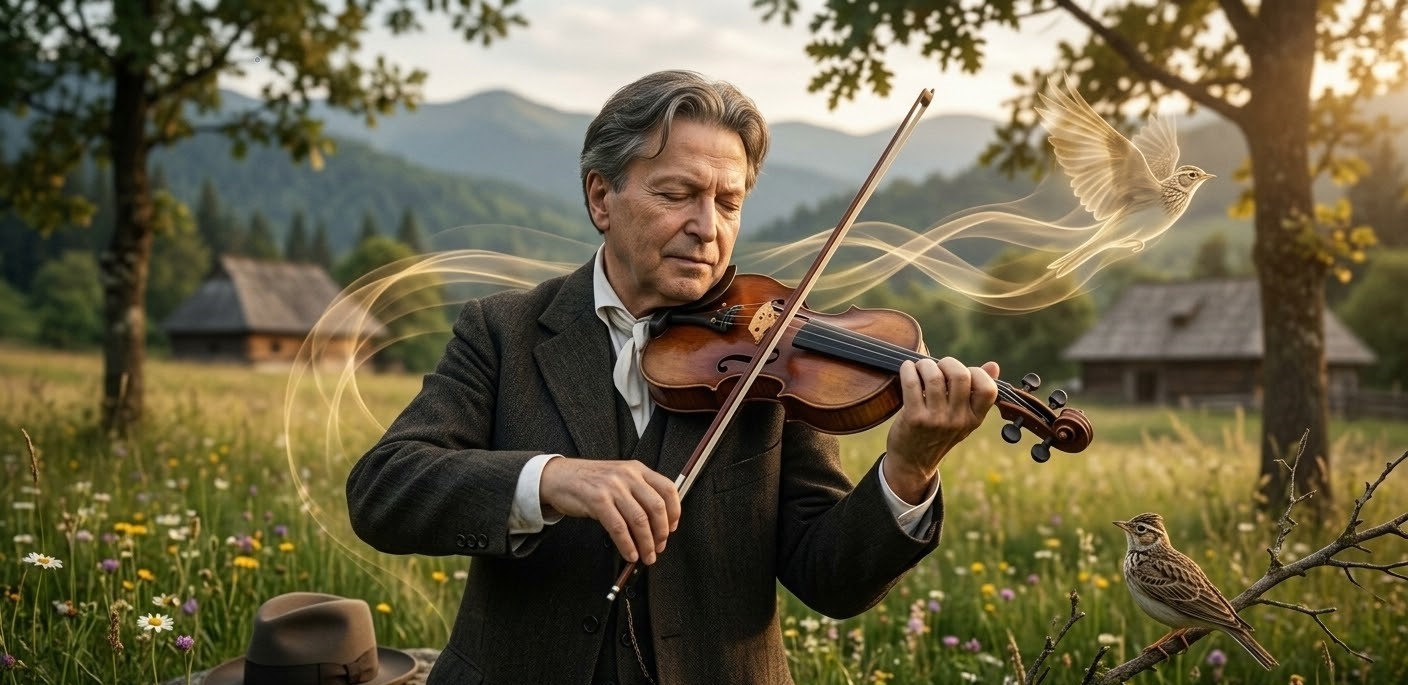
- The Legend's Violin: He famously played on a Guarneri del Gesù violin from 1731, an instrument known as "The Cathedral" for its powerful and profound sound.
Frequently Asked Questions: George Enescu
1. Was George Enescu just a composer? No, Enescu was a rare "musical trinity": a world-class virtuoso violinist and pianist, a renowned conductor, and a brilliant composer. He was also a deeply influential teacher, mentoring legends like Yehudi Menuhin.
2. What is his most famous piece of music? His most recognized work is the Romanian Rhapsody No. 1. It is beloved globally for its infectious energy and its brilliant integration of traditional Romanian folk melodies, including the famous "Ciocârlia" theme.
3. Where can I visit sites related to Enescu in Romania? The most important locations are the George Enescu National Museum (Cantacuzino Palace) in Bucharest, the George Enescu Memorial House in Sinaia (Villa Luminiș), and his birthplace in Liveni, Botoșani.
4. Why is he included in the "Icons of Romania" category? He is a central figure in The Icons of Romania because he elevated Romanian culture to an international level. Alongside great inventors like Henri Coandă or the inventor of insulin, Enescu represents the peak of Romanian creative genius.
5. How did Romanian folklore influence his work? Enescu didn't just copy folk music; he translated the Romanian soul—its longing (dor), its joy, and its rural landscapes—into a universal classical language. He often used the "Skylark" (Ciocârlia) as a symbol of this inspiration.
