
Technical Details
- Location: Geoagiu-Băi, Hunedoara County.
- Ancient Name: Germisara (meaning "warm water" in the Dacian language).
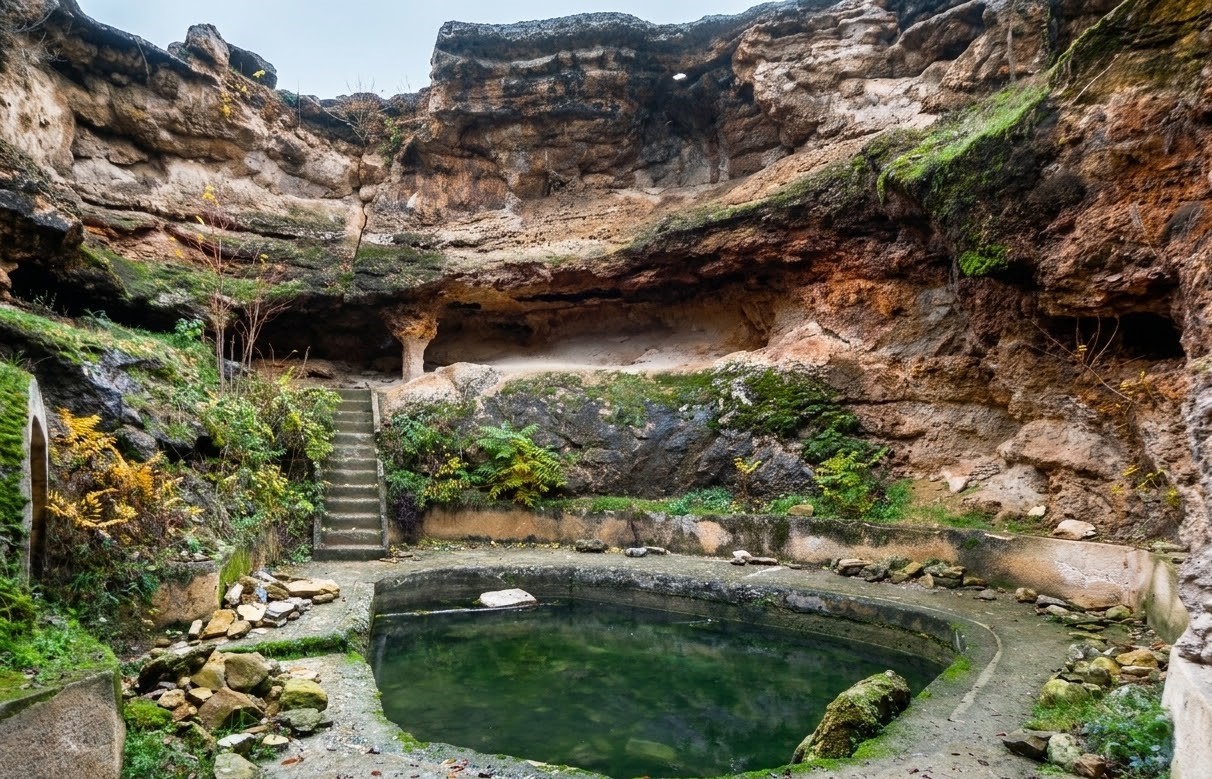
- Structure: A circular natural thermal spring basin, carved directly into the travertine rock.
- Diameter: Approximately 20 meters.
- Depth: The basin reaches a depth of about 7 meters.
- Historical Period: Used by the Dacians and later extensively developed by the Romans (1st – 2nd Century AD).
The area is shaped by its unique hydro-geology:
- Thermal Chemistry: The water is rich in calcium, magnesium, and trace minerals. These minerals have created the massive travertine deposits that form the very walls of the ancient baths.
- Micro-climate: The constant humidity and warmth around the basin support a variety of mosses and ferns that are rare for this region of Transylvania, giving the ruins a lush, "overgrown" aesthetic.
Legends and Discoveries
The Golden Offerings: During archaeological excavations in the late 20th century, scientists found 11 solid gold votive plates at the bottom of the basin. These were "thank you" gifts to the gods from ancient visitors who believed the waters had healed them.
The Sacred Spring: Legend says the spring was guarded by a mountain spirit. Ancient visitors would toss coins into the water (just like people do today at fountains) to ensure their safe return and continued health.
Diana’s Sanctuary: Nearby ruins suggest a small temple dedicated to Diana (the goddess of hunting and nature) and Hygeia (the goddess of health), showing how spiritually significant this water was to the Roman soldiers.
Fun Facts & Curiosities for Foreigners
- Two Millennia of Service: People have been bathing in exactly the same spot for 2,000 years. While the ancient Roman basin is now a protected monument, the same thermal veins feed the modern pools next door.
- The "Swiss Cheese" Rock: The surrounding area is full of caves and hollows created by the thermal waters eating away at the limestone, making it a playground for geologists.
- Roman Engineering: You can still see the original channels and pipes carved into the stone that the Romans used to direct the water flow—a testament to their incredible engineering skills.
Unlike the crowded ruins in Italy, Germisara offers a quiet, intimate look at Roman history. You can walk through the original stone enclosures and see the exact spots where Roman governors once sat to escape the pressures of the Empire.
A beautiful video presenting Roman Baths (Băile Romane Germisara):
FAQ: Roman Baths (Germisara)
1. Can I still swim in the ancient Roman basin?
No, the original Roman basin is a protected archaeological site meant for viewing only. However, the Geoagiu-Băi resort features modern thermal complexes right next to the ruins where you can enjoy the same healing waters.
2. How much does it cost to visit the ruins?
Currently, visiting the outdoor archaeological site of the Roman Baths is free of charge.
3. Is it open year-round?
Yes, the site is outdoors and can be visited in any season. It is particularly atmospheric in the morning when the steam from the warm springs meets the cool air.
4. How long does a visit take?
A thorough visit to the baths and the nearby ruins takes about 30 to 45 minutes. It is best combined with a walk to the Clocota Waterfall (see more).
5. Is there a dress code?
There is no specific dress code, but we recommend comfortable walking shoes as the stone paths and ancient steps can be uneven and sometimes slippery when damp.
