
The "Deceptive" Jewels
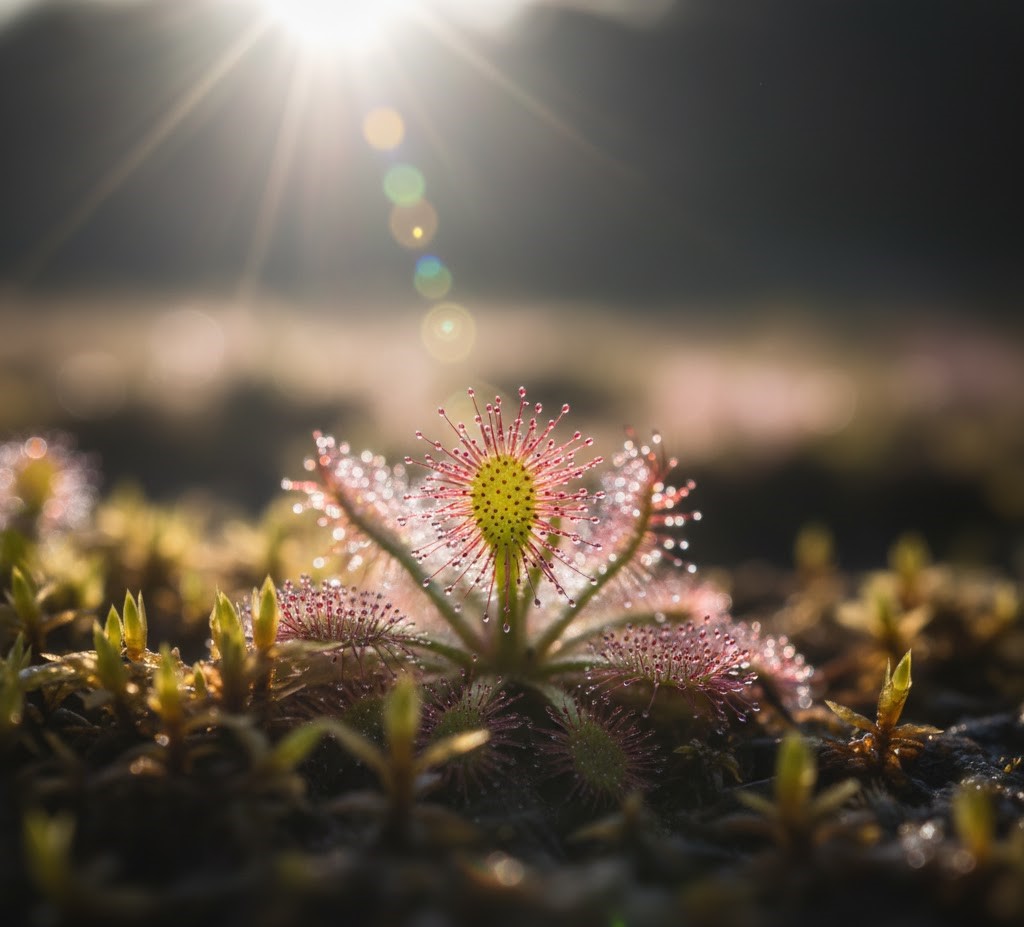
The name "Roua Cerului" comes from the glistening, glue-like droplets that cover its leaves.
- The Trap: To a passing insect, these droplets look like refreshing morning dew or sweet nectar. However, this is a deadly trap.
- The Capture: Once an insect touches the leaf, it gets stuck in the powerful adhesive. The leaf then slowly curls around its prey, and the plant begins to digest it to gain the nutrients (like nitrogen) that are missing from the poor bog soil.
The Legend of the Sun’s Tears (Lacrimile Soarelui)
In old Romanian folklore, it was believed that the Sundew (Roua Cerului) was not born from a simple seed like other plants, but from the very tears of the Sun.
-The Fallen Jewels: Legend says that during the hottest days of summer, the Sun wept as it watched the parched earth below. Its tears fell onto the mountain bogs and transformed into these tiny, glistening jewels that never dry up, no matter how fierce the heat becomes.
-The Traveler’s Charm: Because the "dew" on its leaves stays fresh even at high noon, ancient travelers believed the plant held magical powers. It was said that if you carried a dried Sundew near your heart, you would be protected from enchantments and would never feel the "thirst of the road," as the plant's eternal moisture symbolized an endless spring of life.
Where to find it in Romania
This plant is a survivor of the Ice Age and can be found in high-altitude peat bogs (tinovuri). Some of the best places to spot it are:
- Tinovul Mohoș: Located near Saint Anne Lake (Lacul Sfânta Ana) (see more), this is perhaps the most famous habitat for Drosera rotundifolia.
- The Apuseni Mountains: In various protected peat bogs throughout the natural parks.
Because it requires a very specific and fragile environment, the Sundew is a protected species in Romania. It is a reminder of the delicate balance of our ecosystems—small, beautiful, but fiercely adapted to survive where others cannot.
A nice short video presenting The Sundew (Roua Cerului) bloom:
FAQ: The Sundew (Roua Cerului)
1. Is it dangerous to humans?
Not at all! The plant is tiny, usually only a few centimeters in size. Its "tentacles" and digestive enzymes are only effective against small insects like flies or ants.
2. When is the best time to see it?
During the summer months (June to August) when the plant is most active and its glistening droplets are most visible in the sunlight.
3. Why does it eat insects?
The peat bogs where it lives are very acidic and lack essential nutrients. By "hunting" insects, the Sundew gets the minerals it needs to grow and flower.
