
Whether you are a nature enthusiast, a fan of local folklore, or a traveler looking for a serene escape, this destination offers a unique blend of geological rarity and mystical charm.
Geological Origin & Nature
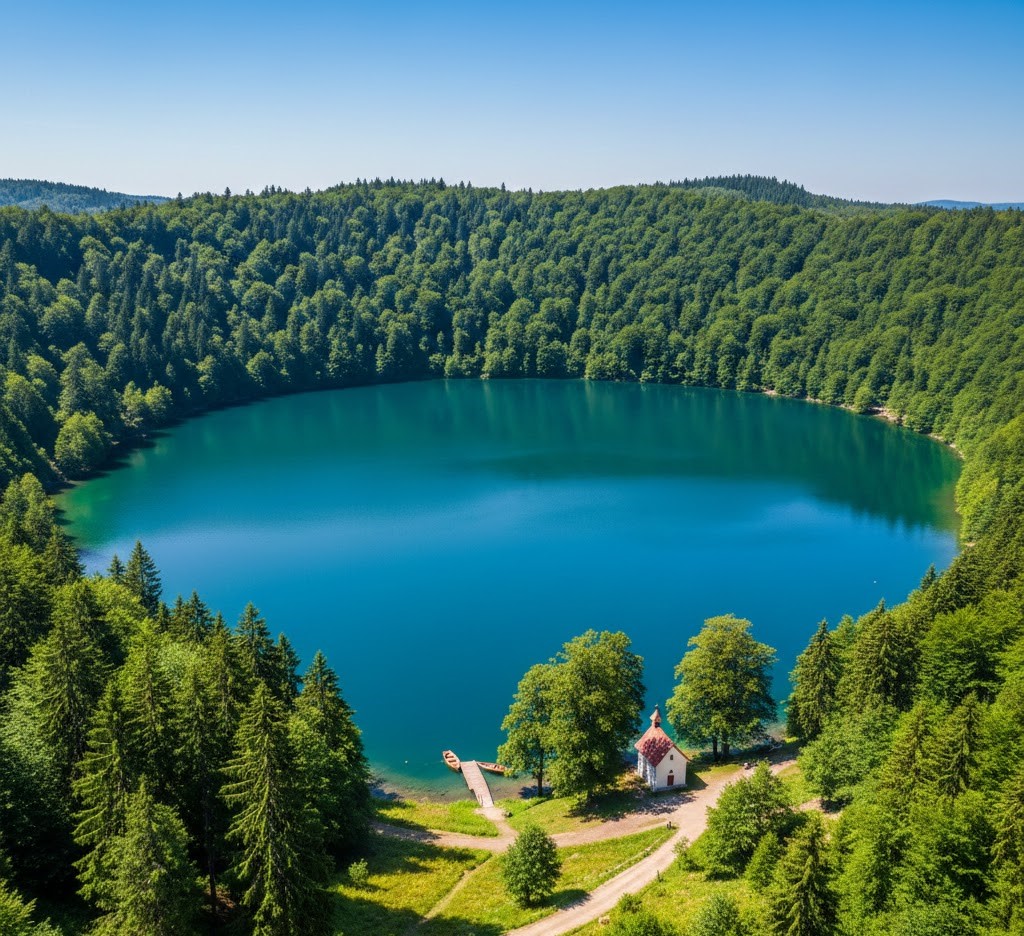
Formed approximately 30,000 years ago, the lake sits at an altitude of 946 meters. What makes it truly fascinating is that it is fed exclusively by rainwater and snowmelt; it has no direct connection to any springs. This results in water of near-distilled purity, though the lack of mineral salts means there is very little oxygen, supporting limited but specialized aquatic life.
Legends of Saint Anne
The lake’s origin is shrouded in dark and dramatic folklore that has been passed down through generations:
The Sacrifice of Anne: The most famous legend tells of two brothers, both cruel tyrants. One, jealous of the other's carriage, bet he could produce a better one. He forced twelve of the most beautiful girls in the village, including a girl named Anne, to pull his heavy coach. Unable to move it, the girls were whipped until Anne cursed the tyrant. A massive storm broke out, the castle sank, and the volcanic crater filled with the tears of the suffering girls, forming the lake.
The Prophet of Weather: Locals still use the lake as a natural barometer. Due to the volcanic activity (post-volcanic emanations like mofettes), people say that if the mountain "smells like sulfur," a storm is imminent.
Biodiversity & The "Local Residents"
The surrounding forests are part of the Mohos Nature Reserve, a lush ecosystem home to:
- Brown Bears (see more): This area has a high density of bears. While they are a sight to behold, visitors are always reminded that wild animals are unpredictable and should be observed from a safe distance.
- The Mohos Peat Bog: Located right next to the lake in a twin crater, this bog is home to rare ice-age plant species, such as the carnivorous Drosera rotundifolia (Sundew) (see more).
- Water Quality: Despite its purity, swimming is strictly regulated to preserve the delicate chemical balance of the water.
- Access: You can reach the lake by car or through several hiking trails from Balvanyos or Tușnad.
- The Chapel: On the shore, there is a small Roman Catholic chapel dedicated to Saint Anne, which remains a pilgrimage site to this day.
Frequently Asked Questions: Saint Anne Lake (Lacul Sfânta Ana)
Q: Is Saint Anne Lake really inside a volcano?
A: Yes! It is the only volcanic crater lake in Central and Eastern Europe. It formed roughly 30,000 years ago in the Ciomatu Massif. The lake sits at an altitude of 946 meters, surrounded by the steep, forested walls of the former crater.
Q: Can I swim in the lake?
A: Currently, swimming is prohibited to preserve the water's chemical purity. Because the lake is fed only by rainwater and has no drainage or springs, the ecosystem is extremely fragile. Sunscreen and lotions from swimmers were starting to affect the water quality, so the ban was implemented to protect this natural monument.
Q: Are there bears in the area?
A: Yes, the surrounding Harghita forests have a high population of brown bears. While they are a majestic part of Romania's biodiversity, please remember that wild animals are unpredictable. It is highly recommended to stay on marked paths, avoid leaving food scraps, and travel in groups.
Q: How do I get to the lake?
A: You can reach the lake by car via the road from Bixad or Balvanyos. There is a managed parking area at the top of the crater. From there, you can take a light 1.5 km walk down to the shore or use the local shuttle service. For hikers, there are several marked trails starting from Baile Tușnad (see more).
Q: What is the best time to visit?
A: Summer (June - August): Best for greenery and hiking.
Autumn (October): The foliage turning golden against the blue water is a photographer's dream.
Winter: The lake often freezes completely, creating a surreal, silent landscape.
Q: What is the "Smelling Hole" (Mofetta) nearby?
A: Near the lake, you can visit the Puturosu Cave (The Smelly Cave) (see more). It is a natural mofette that emits carbon dioxide and sulfur. While it has therapeutic properties for blood circulation, it is a reminder that the volcanic forces beneath the mountains are still technically "active" in their post-eruptive stage.
Q: Are there any entry fees?
A: There is usually a small fee for parking and a conservation tax (per person) to help maintain the Saint Anne Lake and Mohos Peat Bog protected area.
