
A Botanical Wonder
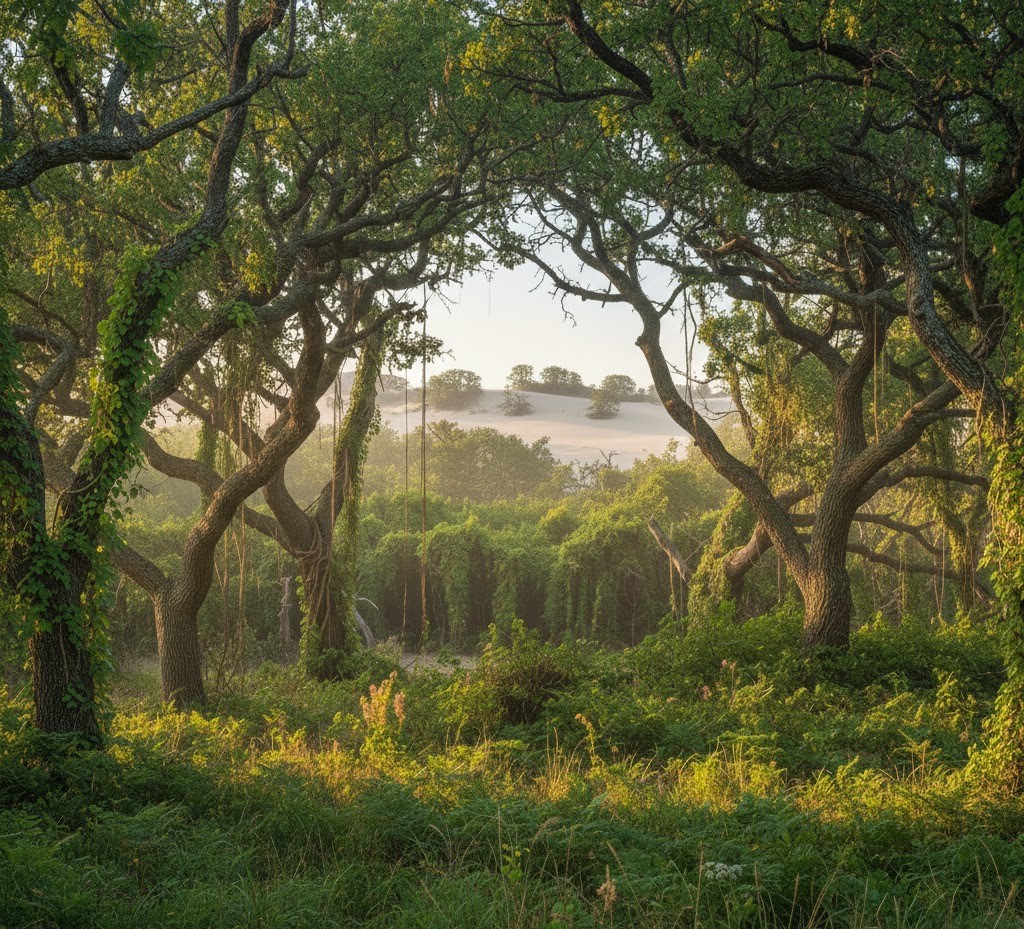
What makes Letea truly special is how the forest grows in "bands" (locally called hașmacuri) between high sand dunes. It is the only place in Romania where you can find:
- Climbing Vines: Giant creepers and wild vines (Vitis sylvestris) wrap around the trees, hanging like lianas in a tropical jungle.
- Secular Oaks: Some of the grey oaks here are over 500 years old, their twisted trunks telling stories of survival in the sandy soil.
- The Silver Poplar & Ash: These trees complete a canopy that provides shade for rare orchids and other delicate flora.
The Wild Horses of Letea (see more)
You cannot talk about Letea without mentioning its most famous inhabitants: the wild horses.
History: Descendants of horses abandoned during the communist era or left behind by locals centuries ago, these thousands of horses now roam free.
A Symbol of Freedom: Seeing a herd of wild horses galloping across the sand dunes with the forest in the background is one of the most iconic sights in Romania. However, remember that wild animals are unpredictable; they should be admired from a distance to ensure both your safety and their peace.
Legends of the Sand
Local Lipovan fishermen tell stories of how the forest was created by the sea. They say the wind and the waves fought for centuries, eventually depositing the sand that formed the dunes, while the birds brought the seeds of the forest from distant, warmer lands in their beaks.
Traveler’s Tips
- Access: You can only reach Letea by boat, usually from Tulcea or Sulina, followed by a local safari-style vehicle trip to the protected area.
- Conservation: To protect the fragile ecosystem, walking is strictly restricted to designated paths.
- The Desert Effect: Be prepared for high temperatures in the summer—the white sand dunes can get very hot!
FAQ: Letea Forest
Q: Is it really a jungle?
A: While not technically in the tropics, it has a subtropical character due to the climbing lianas and the specific microclimate of the Danube Delta (see more). It is the only forest of its kind in Romania.
Q: Can I pet the wild horses?
A: No. These are truly wild animals. For their protection and yours, you must keep a respectful distance.
Q: When is the best time to visit?
A: Late spring (May-June) is perfect to see the forest in full bloom and the horses with their foals, before the intense summer heat sets in.
