
A Masterpiece of Aquatic Adaptation
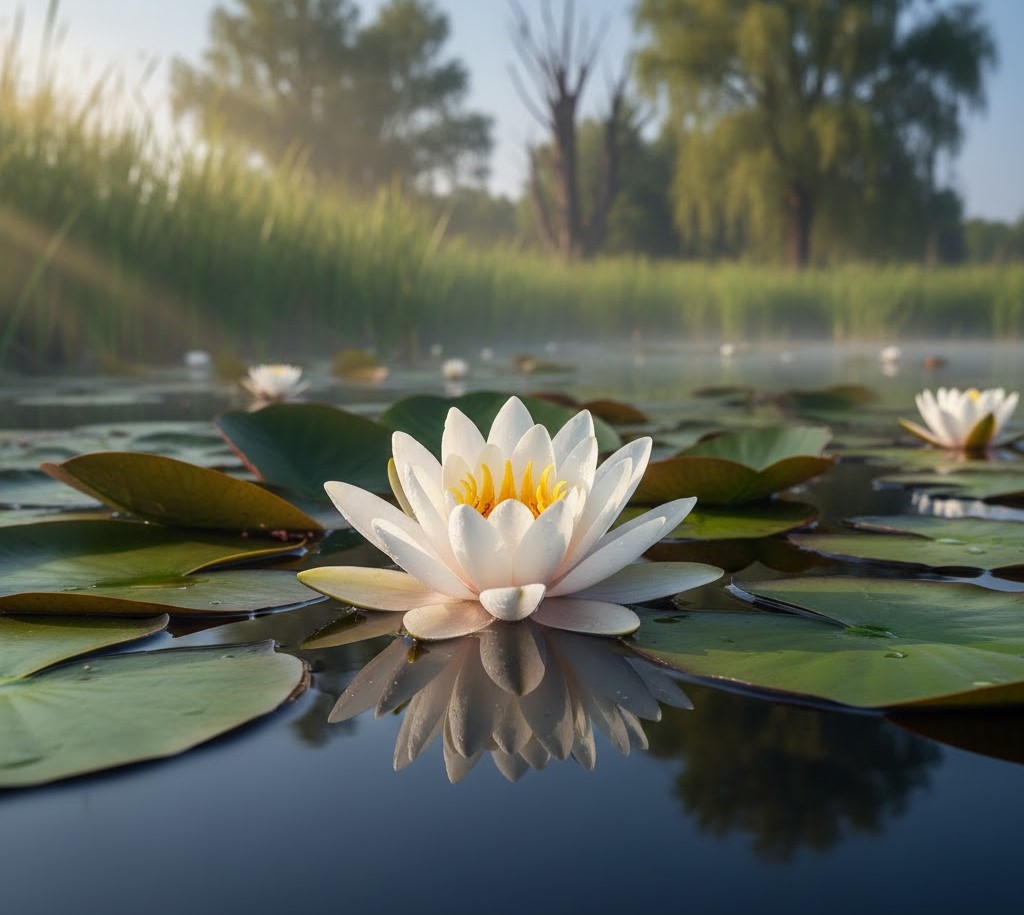
The White Water Lily is perfectly engineered for its environment. Its large, circular leaves (lily pads) can grow up to 30 cm in diameter, acting as floating platforms that provide shade for fish and resting spots for frogs and dragonflies.
- The Flower: The blossom itself can have up to 25 white petals and opens only during the day, following the sun, and closes at night or during cloudy weather.
- The Root System: Deep beneath the water’s surface, the lily is anchored in the mud by thick rhizomes, which can survive even if the pond freezes over in winter.
- Ecological Role: These plants play a vital role in the ecosystem by oxygenating the water and providing a sanctuary for aquatic life.
Myth and Legend
In Romanian folklore, water lilies are often associated with "Iele" or water nymphs. It was believed that these flowers were actually beautiful maidens who fell in love with the moon and were transformed into flowers so they could watch its reflection on the water every night.
Where to Find Them in Romania
While they can be found in various wetlands across the country, two places are iconic for their lily displays:
- The Danube Delta (see more): During the summer months, entire canals and lakes (like Lake Nebunu or Lake Baclanesti) are covered in a white carpet of thousands of lilies.
- Snagov Lake (see more): Located near Bucharest, this lake is famous for its natural reserves where the White Water Lily thrives alongside its cousin, the Yellow Water Lily (see more).
Frequently Asked Questions: The White Water Lily (Nymphaea alba)
1. Is it legal to pick White Water Lilies in Romania?
In many protected areas, such as the Danube Delta Biosphere Reserve, it is strictly forbidden to pick or damage water lilies. They are vital for the ecosystem, and removing them can disrupt the habitat. It is always best to admire and photograph them without touching.
2. At what time of day do the flowers open?
The White Water Lily is a "diurnal" flower. It typically opens its petals around 7:00 or 8:00 AM as the sun rises and begins to close in the late afternoon, usually by 4:00 or 5:00 PM. On very cloudy or rainy days, they may remain closed entirely.
3. How deep can the water be for them to grow?
They usually thrive in water depths between 30 cm and 150 cm. Their long, flexible stems allow them to reach the surface even if the water level fluctuates slightly.
4. Are White Water Lilies beneficial for the water?
Yes! Their large leaves provide essential shade, which helps keep the water temperature down during hot Romanian summers, preventing excessive algae growth. They also provide a safe hiding place for small fish and amphibians from predators like storks or egrets.
5. Can I see them in winter?
No, the leaves and flowers die back during the cold season. However, the plant is not dead; its thick roots (rhizomes) stay dormant in the mud at the bottom of the lake, protected from freezing, and sprout again every spring.
