
A Dazzling Display: The Male Pheasant
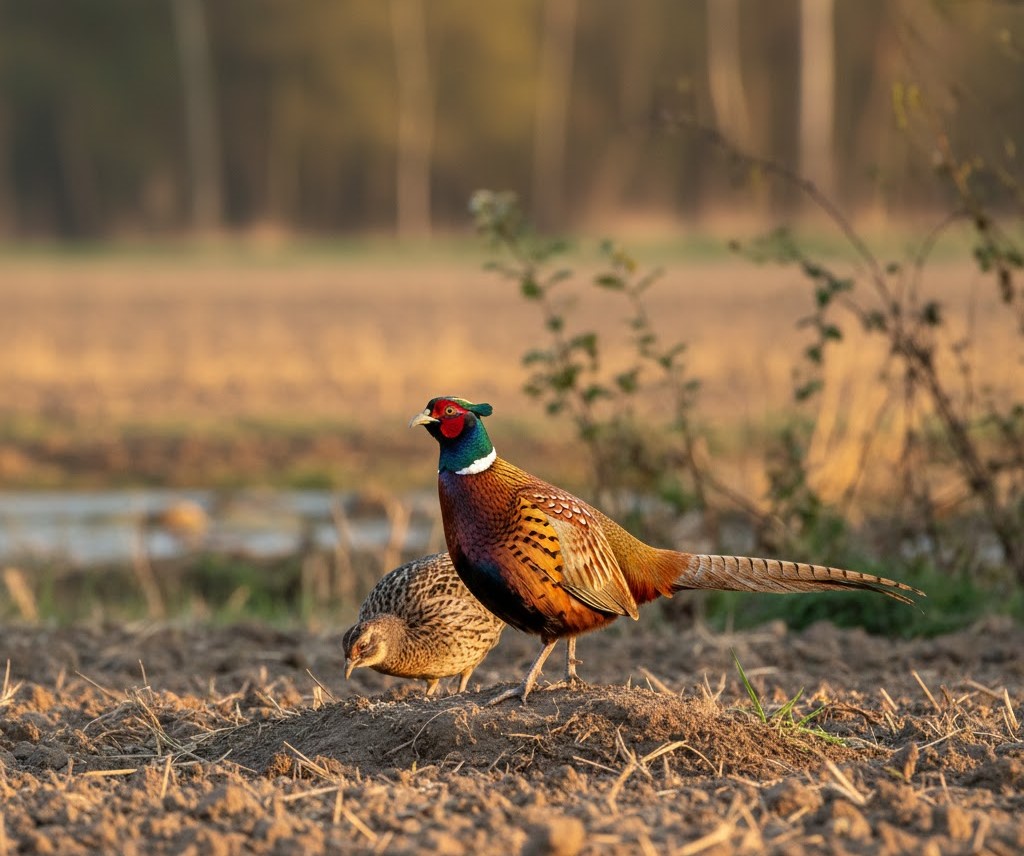
The male pheasant (cock) is unmistakable, a true showman of the avian world. His iridescent plumage features:
- Head: A glossy, dark green head with striking red wattles around the eyes.
- Neck: A distinctive white ring (hence "ring-necked") that contrasts sharply with the metallic green and blue.
- Body: A rich tapestry of golden, copper, and bronze feathers, often with intricate patterns.
- Tail: A long, elegant, barred tail that can be almost as long as his body.
Habitat and Behavior
Pheasants are highly adaptable birds, preferring a mosaic of habitats:
- Farmlands: They thrive in agricultural areas, where they can find grains, seeds, and insects.
- Forest Edges: The boundaries between forests and open fields provide both cover from predators and foraging opportunities.
- Wetlands and Hedgerows: Dense vegetation offers crucial protection and nesting sites.
A Symbol of Resilience
While populations are often augmented for hunting purposes, wild pheasant populations demonstrate remarkable resilience. They are a crucial part of the food chain, preyed upon by foxes, birds of prey, and other carnivores, reflecting the delicate balance of nature.
Spotting a male pheasant bursting from cover, with its rapid wingbeats and characteristic call, is always a thrilling moment for any nature enthusiast. It’s a reminder of the unexpected beauty hidden just beyond the roadside.
A nice short video presenting the Ring-Necked Pheasant (Fazanul):
Frequently Asked Questions: The Ring-necked Pheasant
1. Is the pheasant native to Romania?
No, the Ring-necked Pheasant was originally introduced to Europe from Asia many centuries ago. It has since naturalized and is now a common sight.
2. What do pheasants eat?
They have a varied diet, including seeds, grains, berries, roots, and a wide array of insects, slugs, and worms.
3. Are pheasants endangered?
Globally and in Romania, pheasants are not considered endangered. Their populations are stable, and they are also bred for hunting.
4. How can I spot a pheasant in the wild?
Look for them in agricultural fields, forest edges, and areas with dense undergrowth, especially at dawn or dusk. They are quite shy but their distinctive call or the sudden flight of a male can give them away.
