
The Phenomenon: Where the Sun Rises Twice
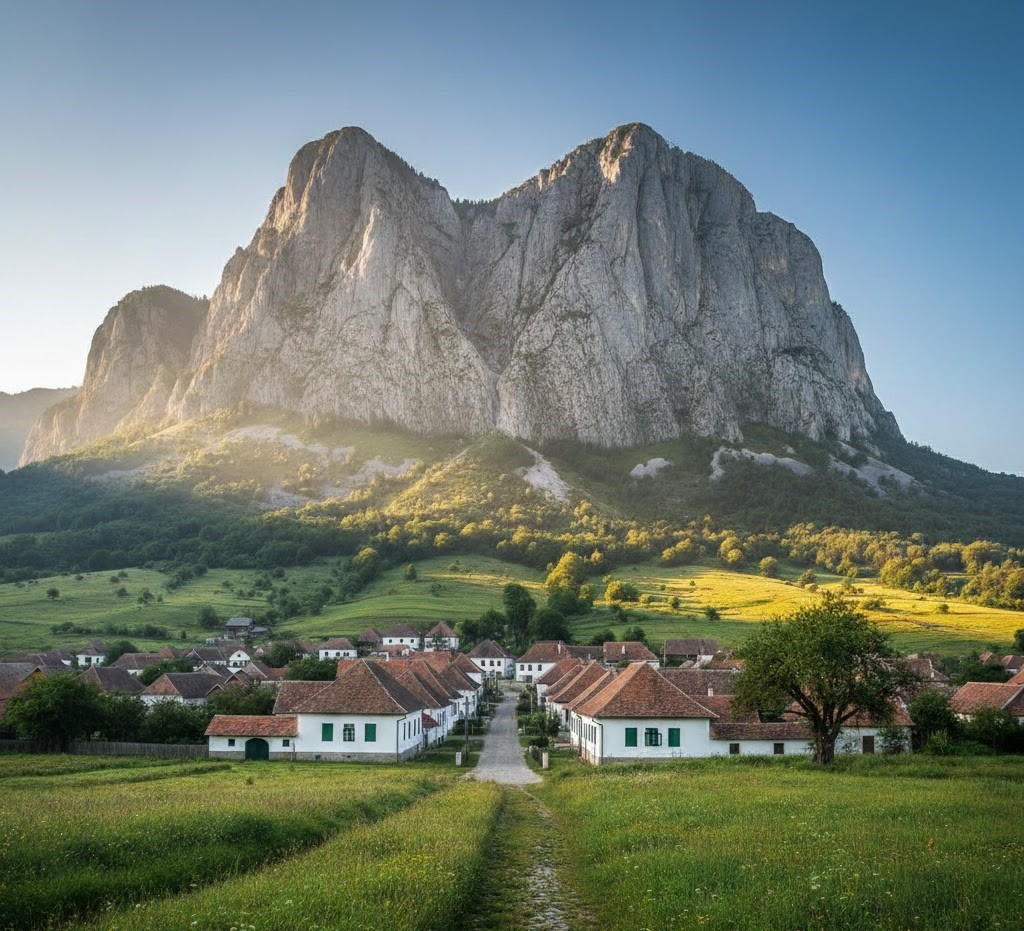
Rimetea is famous for a unique geographical phenomenon. Because the village is situated directly under the massive vertical cliffs of Piatra Secuiului, in certain parts of the village, the sun rises, then disappears behind the jagged peaks, only to "rise" again as it clears the top of the mountain. This double sunrise is a favorite highlight for photographers and early-rising travelers.
Architecture and Heritage
The village is a living museum. After a devastating fire in the 19th century, the community rebuilt the houses in a uniform, neoclassical style. These pristine white facades, adorned with traditional green window frames, have earned Rimetea international recognition for heritage preservation. Walking through the village feels like stepping back into a simpler, more harmonious era.
Biodiversity of the Trascău Mountains (see more)
The natural amphitheater surrounding the village is rich in life:
- Flora: The limestone slopes of Piatra Secuiului are home to rare species such as the Edelweiss (Floarea de Colț) (see more) and various wild orchids. In the meadows, you can find medicinal herbs like thyme and St. John's wort (see more).
- Fauna: The rocky cliffs provide ideal nesting sites for the Golden Eagle (see more) and the Peregrine Falcon (see more). In the deeper forests of the Trascău range, deer and wild boars roam freely. As a reminder for your visitors, wild animals are unpredictable, so keep a safe distance if you encounter them on the trails.
The hike to the top of Piatra Secuiului (1,129m) is the most popular activity. It is a steep but rewarding climb that offers a spectacular bird's-eye view of the village's symmetrical layout and the surrounding valley. It is also a world-renowned spot for paragliding, where the colorful canopies often dot the blue sky above the white houses.
A stunning video which presenting Rimetea Village and surroundings:
Frequently Asked Questions: Rimetea
1. How do I reach Rimetea?
The village is located about 56 km from Cluj-Napoca and 28 km from Aiud. The road is paved and offers scenic views of the Transylvanian countryside.
2. Can I visit the interiors of the houses?
Many houses are private residences, but several have been transformed into guest houses or small museums, such as the Ethnographic Museum, where you can see traditional costumes and painted furniture.
3. Is the hike to Piatra Secuiului dangerous?
The trail is marked and safe for experienced hikers, but it is very steep and can be slippery after rain. Proper hiking boots are a must.
4. What is the best time to visit?
Spring and early summer are perfect for seeing the flowers in bloom, while autumn offers a stunning contrast between the white houses and the rusty colors of the mountain.
