Mountain Peony (Bujorul de Munte): The Red Flame of the Carpathians +video and views
Posted: Wed Feb 11, 2026 11:24 am
Breathtaking and rare, the Mountain Peony (Rhododendron myrtifolium), also known locally as "Bujorul de Munte" or "Smârdar," is one of the most spectacular sights you can witness in the Romanian Carpathians. Every year, between late May and June, high-altitude alpine pastures are transformed into a vibrant sea of pink and crimson.
Where to Find Them
These delicate flowers grow at high altitudes, usually above 1,600 meters, in the subalpine and alpine zones. If you want to see them in their full glory, the best places to visit are: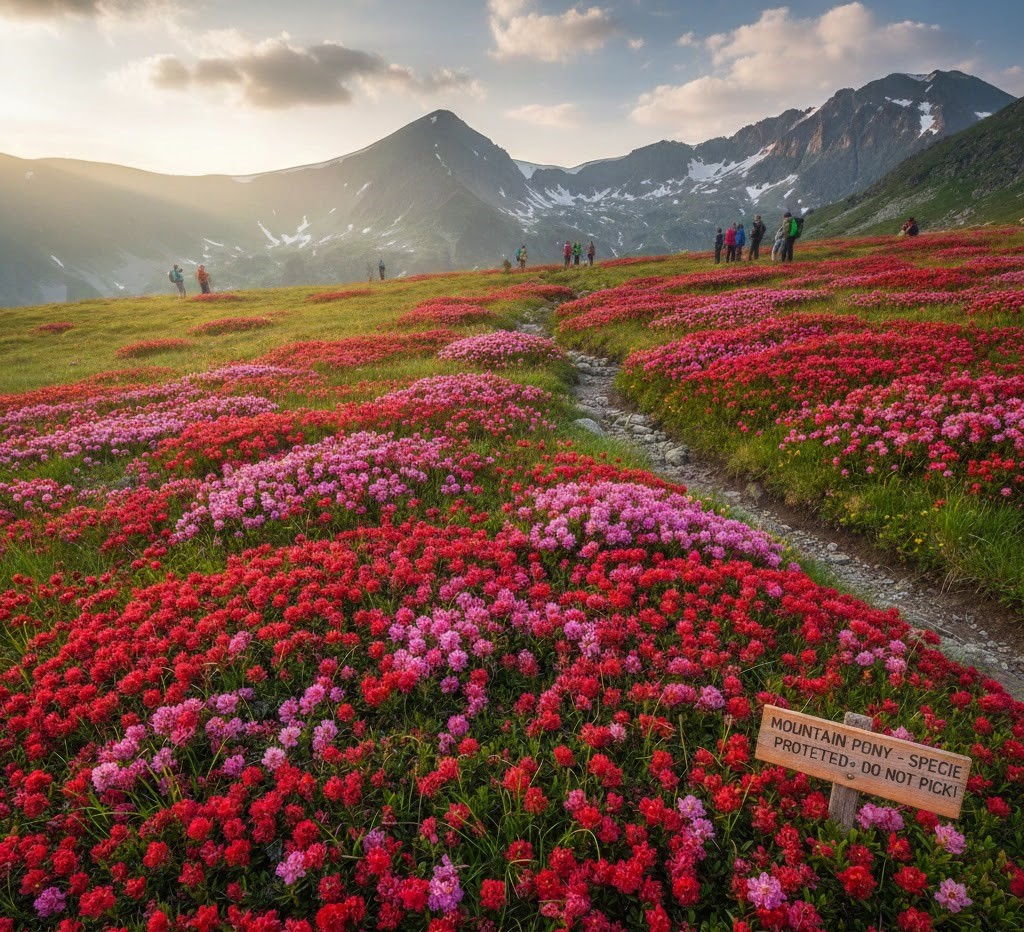 Legends and Stories
In Romanian folklore, the Mountain Peony is more than just a plant; it is a symbol of burning love and resilience.
The Maiden’s Blush: One local legend tells of a beautiful mountain maiden who fell in love with a shepherd. When he was forced to leave for the valleys, she wept on the rocky peaks. It is said that where her tears fell and her cheeks brushed against the cold stones in grief, these fiery red flowers bloomed, forever capturing the color of her blushing face and the warmth of her heart.
The Mountain’s Blood: Another old story suggests that the peonies are the drops of blood from brave heroes who fought to protect the mountains. This is why the plant is so hardy—it carries the strength of those who stood their ground against the elements and invaders alike.
A Note for Explorers
The Mountain Peony is a protected species in Romania. It is incredibly fragile and takes years to grow and bloom. If you find them, please:
A beautiful video who present Mountain Peony in Ciucas Masiff (see more), Romania:
Frequently Asked Questions: Mountain Peony (Smârdar)
When is the best time to see the Mountain Peony in bloom? The peak blooming season usually occurs between late May and late June. However, this can vary depending on the altitude and how fast the snow melts each year. At higher elevations (over 1800m), you might still find them in early July.
Is it legal to pick Mountain Peonies? No. The Mountain Peony (Rhododendron myrtifolium) is a protected species under Romanian law. Picking the flowers or uprooting the plants is strictly prohibited and can result in significant fines. Please enjoy them only through your camera lens.
Why is the plant called "Smârdar" in some regions? "Smârdar" is the traditional popular name used by locals in the Carpathian mountains. In some areas, it is also called "Bujor de munte" or "Cujbă."
Can I grow Mountain Peonies in my garden? It is extremely difficult. These plants are adapted to specific alpine conditions—high humidity, specific soil acidity, and long periods of snow cover. They rarely survive at low altitudes and, as they are protected, it is illegal to take them from the wild.
Is the Mountain Peony the same as the garden peony? No. While they share a name in Romanian, the Mountain Peony is actually a species of Rhododendron. It is a woody, perennial shrub, unlike the common herbaceous peony found in gardens.
Are there any health benefits associated with it? Traditionally, the flowers were used to make a delicate medicinal tea or syrup for respiratory issues. However, because the plant is now protected, these traditional practices are discouraged to ensure the survival of the species.
Where to Find Them
These delicate flowers grow at high altitudes, usually above 1,600 meters, in the subalpine and alpine zones. If you want to see them in their full glory, the best places to visit are:
- Rodna Mountains (see more): Famous for the vast carpets of peonies that cover the slopes.
- Bucegi Mountains (see more): Specifically in areas like the Babele or Jepii Mari plateaus.
- Făgăraș Mountains (see more): Where they cling to the rugged ridges.
- Retezat Mountains (see more): Adding a splash of color to the "Land of Blue Lakes."
Field of wild Mountain Peonies in bloom on a high alpine plateau in Romania, with rocky mountain peaks in the background.
In Romanian folklore, the Mountain Peony is more than just a plant; it is a symbol of burning love and resilience.
The Maiden’s Blush: One local legend tells of a beautiful mountain maiden who fell in love with a shepherd. When he was forced to leave for the valleys, she wept on the rocky peaks. It is said that where her tears fell and her cheeks brushed against the cold stones in grief, these fiery red flowers bloomed, forever capturing the color of her blushing face and the warmth of her heart.
The Mountain’s Blood: Another old story suggests that the peonies are the drops of blood from brave heroes who fought to protect the mountains. This is why the plant is so hardy—it carries the strength of those who stood their ground against the elements and invaders alike.
A Note for Explorers
The Mountain Peony is a protected species in Romania. It is incredibly fragile and takes years to grow and bloom. If you find them, please:
- Do not pick them: They wilt almost instantly once removed from their habitat.
- Stay on the paths: Avoid stepping on the young shoots.
- Take only photos: Capture their beauty and leave only footprints.
A beautiful video who present Mountain Peony in Ciucas Masiff (see more), Romania:
Frequently Asked Questions: Mountain Peony (Smârdar)
When is the best time to see the Mountain Peony in bloom? The peak blooming season usually occurs between late May and late June. However, this can vary depending on the altitude and how fast the snow melts each year. At higher elevations (over 1800m), you might still find them in early July.
Is it legal to pick Mountain Peonies? No. The Mountain Peony (Rhododendron myrtifolium) is a protected species under Romanian law. Picking the flowers or uprooting the plants is strictly prohibited and can result in significant fines. Please enjoy them only through your camera lens.
Why is the plant called "Smârdar" in some regions? "Smârdar" is the traditional popular name used by locals in the Carpathian mountains. In some areas, it is also called "Bujor de munte" or "Cujbă."
Can I grow Mountain Peonies in my garden? It is extremely difficult. These plants are adapted to specific alpine conditions—high humidity, specific soil acidity, and long periods of snow cover. They rarely survive at low altitudes and, as they are protected, it is illegal to take them from the wild.
Is the Mountain Peony the same as the garden peony? No. While they share a name in Romanian, the Mountain Peony is actually a species of Rhododendron. It is a woody, perennial shrub, unlike the common herbaceous peony found in gardens.
Are there any health benefits associated with it? Traditionally, the flowers were used to make a delicate medicinal tea or syrup for respiratory issues. However, because the plant is now protected, these traditional practices are discouraged to ensure the survival of the species.