Cluj-Napoca City: The Heart of Transylvania +video and landscapes
Posted: Thu Jan 22, 2026 7:18 am
Cluj-Napoca (commonly known just as Cluj) is a city where medieval history, academic prestige, and a booming tech scene collide. As Romania's second-largest city, it offers a cosmopolitan atmosphere, legendary festivals, and a gateway to the mystical landscapes of Transylvania.
 Top Experiences & Landmarks
1. Unirii Square (The Union Square)
The zero point of the city, dominated by St. Michael's Church, a gothic masterpiece with the highest church tower in Romania. In the center stands the majestic Matthias Corvinus Monument, dedicated to the great Hungarian king born in Cluj.
2. The Botanical Garden "Alexandru Borza"
One of the most beautiful in Southeastern Europe. Don't miss the Japanese Garden, the Roman Garden, and the giant water lilies in the greenhouses. It’s a perfect escape from the urban hustle.
3. Central Park & Chios Lake
A 190-year-old park perfect for a leisurely stroll. You can rent a boat on the lake in the summer or enjoy a coffee at the restored Casino building.
4. Cetățuia Hill (The Citadel)
For the best panoramic view of Cluj, hike up the steps to Cetățuia. It’s the perfect spot for sunset photography and a bird's-eye view of the Someș River.
 The Legends of Cluj-Napoca (Klausenburg):
1. King Matthias and the Marked Logs
The Legend: King Matthias Corvinus, born in Cluj, was known as "The Just." Legend has it he often disguised himself as a commoner to check if his officials were treating the people fairly. The Story: While incognito in Cluj, he was forced by corrupt guards to carry logs for the city without pay. Before leaving, he carved a secret mark under the bark of three logs: "King Matthias was here." Later, returning in his royal robes, he exposed the corrupt judges by showing them the marked logs, proving they even mistreated their own King.
2. The Secret Underground Tunnels
The Legend: Local lore claims a labyrinth of medieval tunnels lies beneath the city’s cobblestone streets. The Story: It is said that a secret passage connects the St. Michael’s Church (in Unirii Square) to the Citadel Hill (Cetățuia), passing right under the Someș River. While historians have found ancient cellars and escape routes used during sieges, the idea of a vast underground city remains one of Cluj’s most captivating mysteries.
3. St. George and the Dragon’s Map
The Legend: The statue of St. George slaying the dragon (located on Mihail Kogălniceanu Street) is more than just art. The Story: For centuries, treasure hunters whispered that a map to an ancient Dacian gold hoard was hidden inside the dragon’s body or the tip of the Saint's spear. While no gold was ever found, the statue remains a symbol of bravery and hidden secrets.
A video who present Cluj-Napoca city views:
 Culture & Festivals
Cluj-Napoca is the festival capital of Romania. Depending on when you visit, you might catch:
UNTOLD Festival: One of the world's largest electronic music festivals (August).
TIFF (Transilvania International Film Festival): The most prestigious film event in the country (June).
Electric Castle: Held just 30 km away at Bánffy Castle, blending music, heritage, and art.
 Food & Nightlife
Cluj is famous for its "Specialty Coffee" scene and bohemian cafes.
Piezișă Street: The famous student street, packed with affordable bars and high energy.
Enigma Cafe: Known as the first kinetic steampunk pub in the world.
Must-try Dish: Varză à la Cluj (the local version of stuffed cabbage, layers of cabbage, meat, and rice).
 Essential Visitor Information
Transport Excellent public bus system (pay with contactless card) & Uber/Bolt.
Airport Avram Iancu International Airport (CLJ) - 20 mins from city center.
 Day Trips from Cluj
Cluj is the perfect base to explore the region:
Salina Turda (30 km): The futuristic underground salt mine. Click HERE to discover Salina Turda
Hoia-Baciu Forest: Known as the "Bermuda Triangle of Transylvania" for those who love paranormal mysteries.
Tarnița Lake: Ideal for kayaking and mountain scenery.
Vibe Safe, youthful, and very English-friendly.
Best Time to Visit May to September (for weather and festivals).
Ready to explore the Silicon Valley of Transylvania?
And a video from persons who already visited Cluj-Napoca:
Cluj-Napoca este considerat „capitala neoficială a Transilvaniei” și un centru major pentru IT, cultură și viață de noapte. Pentru SEO, aici trebuie să te concentrezi pe festivalurile mari (Untold, TIFF), pe aeroport și pe atmosfera de oraș universitar.
Iată rubrica FAQ gata de integrat:
 Frequently Asked Questions: Exploring Cluj-Napoca
1. Is Cluj-Napoca worth visiting?
Absolutely! Cluj-Napoca is one of Romania's most vibrant cities. It offers a unique blend of Bohemian culture, Austro-Hungarian history, and a modern, high-tech vibe. It’s known for its world-class festivals, cozy coffee shops, and as a gateway to exploring the Apuseni Mountains.
2. When is the best time to visit?
-For Festivals: Early August for UNTOLD Festival (the city becomes an EDM hub) or June for TIFF (Transilvania International Film Festival).
-For Sightseeing: May to September offers the best weather for outdoor terraces and walking tours.
-For Christmas: December is magical, with one of the most beautiful Christmas Markets in Romania located in Unirii Square.
3. How do I get from the Airport to the City Center?
The Cluj Avram Iancu International Airport (CLJ) is very close to the city (~8 km).
-Bus: Take line 5 or 8 (roughly 20-30 minutes).
-Taxi/Ridesharing: Uber and Bolt are very active in Cluj. A ride to the center usually costs between 30–50 RON.
4. What are the top things to see in Cluj?
-Unirii Square (Piața Unirii): Featuring St. Michael’s Church, one of the tallest Gothic buildings in Romania.
-The Botanical Garden: One of the most diverse in SE Europe, including a Japanese garden.
-The Central Park & Casino: A beautiful green space perfect for a relaxing walk.
-Cetățuia Hill: Climb the stairs for the best panoramic view of the city, especially at sunset.
5. Is Cluj-Napoca expensive?
Compared to Western Europe, Cluj is affordable, but it is currently the most expensive city in Romania (sometimes surpassing Bucharest).
-A meal at a mid-range restaurant costs about 50–90 RON (10-18 EUROs) per person.
-A coffee is roughly 12–18 RON (2-4EUROs).
6. Is English widely spoken?
Yes! As a major university hub with thousands of international students and IT professionals, English is spoken by almost everyone in the service industry, as well as by most young locals.
7. What day trips can I take from Cluj?
Cluj is perfectly positioned for exploring Transylvania:
-Salina Turda: The world-famous salt mine (30-40 min drive).
-Turda Gorges (Cheile Turzii) (Click HERE to see more) : Great for hiking and rock climbing.
-Rimetea (see more): A stunning white village at the foot of the Piatra Secuiului rock.
Extra info:
Vibe: Young, Creative, and Tech-oriented
Transport: Excellent Bus/Trolleybus network (contactless payment)
Safety: One of the safest cities in Europe
Must-Try to eat : Varză a la Cluj (The local version of Sarmale)
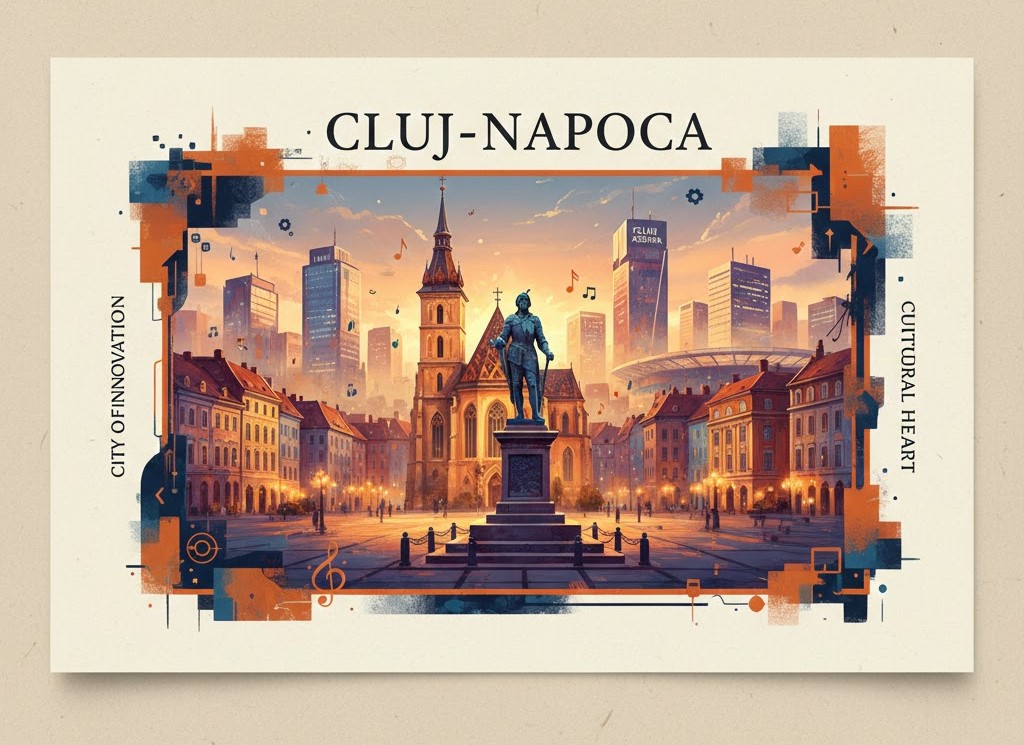
Napoca City, artistic presentation image
 Top Experiences & Landmarks
1. Unirii Square (The Union Square)
The zero point of the city, dominated by St. Michael's Church, a gothic masterpiece with the highest church tower in Romania. In the center stands the majestic Matthias Corvinus Monument, dedicated to the great Hungarian king born in Cluj.
2. The Botanical Garden "Alexandru Borza"
One of the most beautiful in Southeastern Europe. Don't miss the Japanese Garden, the Roman Garden, and the giant water lilies in the greenhouses. It’s a perfect escape from the urban hustle.
3. Central Park & Chios Lake
A 190-year-old park perfect for a leisurely stroll. You can rent a boat on the lake in the summer or enjoy a coffee at the restored Casino building.
4. Cetățuia Hill (The Citadel)
For the best panoramic view of Cluj, hike up the steps to Cetățuia. It’s the perfect spot for sunset photography and a bird's-eye view of the Someș River.
 The Legends of Cluj-Napoca (Klausenburg):
1. King Matthias and the Marked Logs
The Legend: King Matthias Corvinus, born in Cluj, was known as "The Just." Legend has it he often disguised himself as a commoner to check if his officials were treating the people fairly. The Story: While incognito in Cluj, he was forced by corrupt guards to carry logs for the city without pay. Before leaving, he carved a secret mark under the bark of three logs: "King Matthias was here." Later, returning in his royal robes, he exposed the corrupt judges by showing them the marked logs, proving they even mistreated their own King.
2. The Secret Underground Tunnels
The Legend: Local lore claims a labyrinth of medieval tunnels lies beneath the city’s cobblestone streets. The Story: It is said that a secret passage connects the St. Michael’s Church (in Unirii Square) to the Citadel Hill (Cetățuia), passing right under the Someș River. While historians have found ancient cellars and escape routes used during sieges, the idea of a vast underground city remains one of Cluj’s most captivating mysteries.
3. St. George and the Dragon’s Map
The Legend: The statue of St. George slaying the dragon (located on Mihail Kogălniceanu Street) is more than just art. The Story: For centuries, treasure hunters whispered that a map to an ancient Dacian gold hoard was hidden inside the dragon’s body or the tip of the Saint's spear. While no gold was ever found, the statue remains a symbol of bravery and hidden secrets.
A video who present Cluj-Napoca city views:
 Culture & Festivals
Cluj-Napoca is the festival capital of Romania. Depending on when you visit, you might catch:
UNTOLD Festival: One of the world's largest electronic music festivals (August).
TIFF (Transilvania International Film Festival): The most prestigious film event in the country (June).
Electric Castle: Held just 30 km away at Bánffy Castle, blending music, heritage, and art.
 Food & Nightlife
Cluj is famous for its "Specialty Coffee" scene and bohemian cafes.
Piezișă Street: The famous student street, packed with affordable bars and high energy.
Enigma Cafe: Known as the first kinetic steampunk pub in the world.
Must-try Dish: Varză à la Cluj (the local version of stuffed cabbage, layers of cabbage, meat, and rice).
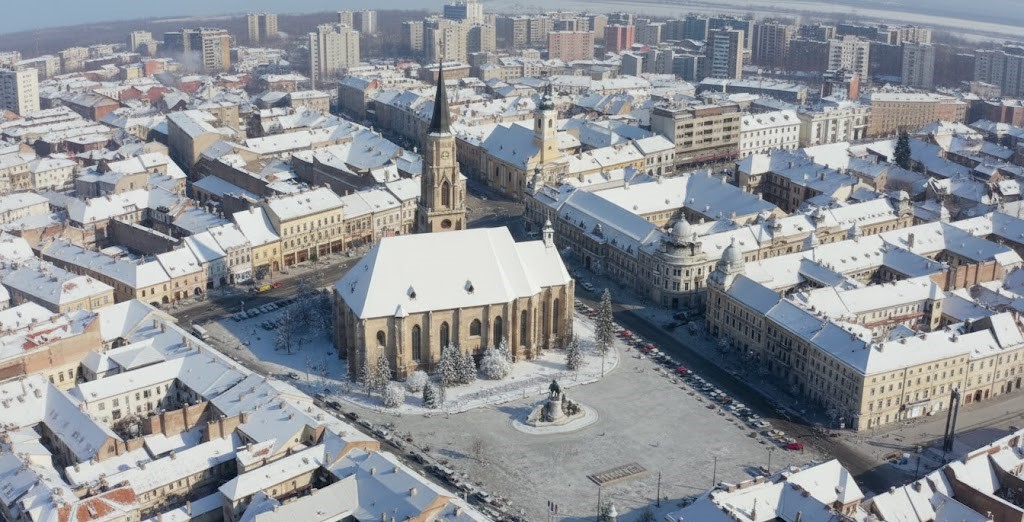
Ultra-wide aerial view of Cluj-Napoca city center in winter, featuring the snow-covered St. Michael's Church and Unirii Square under a clear sky.
 Essential Visitor Information
Transport Excellent public bus system (pay with contactless card) & Uber/Bolt.
Airport Avram Iancu International Airport (CLJ) - 20 mins from city center.
 Day Trips from Cluj
Cluj is the perfect base to explore the region:
Salina Turda (30 km): The futuristic underground salt mine. Click HERE to discover Salina Turda
Hoia-Baciu Forest: Known as the "Bermuda Triangle of Transylvania" for those who love paranormal mysteries.
Tarnița Lake: Ideal for kayaking and mountain scenery.
Vibe Safe, youthful, and very English-friendly.
Best Time to Visit May to September (for weather and festivals).
Ready to explore the Silicon Valley of Transylvania?
And a video from persons who already visited Cluj-Napoca:
Cluj-Napoca este considerat „capitala neoficială a Transilvaniei” și un centru major pentru IT, cultură și viață de noapte. Pentru SEO, aici trebuie să te concentrezi pe festivalurile mari (Untold, TIFF), pe aeroport și pe atmosfera de oraș universitar.
Iată rubrica FAQ gata de integrat:
Frequently Asked Questions: Exploring Cluj-Napoca1. Is Cluj-Napoca worth visiting?
Absolutely! Cluj-Napoca is one of Romania's most vibrant cities. It offers a unique blend of Bohemian culture, Austro-Hungarian history, and a modern, high-tech vibe. It’s known for its world-class festivals, cozy coffee shops, and as a gateway to exploring the Apuseni Mountains.
2. When is the best time to visit?
-For Festivals: Early August for UNTOLD Festival (the city becomes an EDM hub) or June for TIFF (Transilvania International Film Festival).
-For Sightseeing: May to September offers the best weather for outdoor terraces and walking tours.
-For Christmas: December is magical, with one of the most beautiful Christmas Markets in Romania located in Unirii Square.
3. How do I get from the Airport to the City Center?
The Cluj Avram Iancu International Airport (CLJ) is very close to the city (~8 km).
-Bus: Take line 5 or 8 (roughly 20-30 minutes).
-Taxi/Ridesharing: Uber and Bolt are very active in Cluj. A ride to the center usually costs between 30–50 RON.
4. What are the top things to see in Cluj?
-Unirii Square (Piața Unirii): Featuring St. Michael’s Church, one of the tallest Gothic buildings in Romania.
-The Botanical Garden: One of the most diverse in SE Europe, including a Japanese garden.
-The Central Park & Casino: A beautiful green space perfect for a relaxing walk.
-Cetățuia Hill: Climb the stairs for the best panoramic view of the city, especially at sunset.
5. Is Cluj-Napoca expensive?
Compared to Western Europe, Cluj is affordable, but it is currently the most expensive city in Romania (sometimes surpassing Bucharest).
-A meal at a mid-range restaurant costs about 50–90 RON (10-18 EUROs) per person.
-A coffee is roughly 12–18 RON (2-4EUROs).
6. Is English widely spoken?
Yes! As a major university hub with thousands of international students and IT professionals, English is spoken by almost everyone in the service industry, as well as by most young locals.
7. What day trips can I take from Cluj?
Cluj is perfectly positioned for exploring Transylvania:
-Salina Turda: The world-famous salt mine (30-40 min drive).
-Turda Gorges (Cheile Turzii) (Click HERE to see more) : Great for hiking and rock climbing.
-Rimetea (see more): A stunning white village at the foot of the Piatra Secuiului rock.
Extra info:
Vibe: Young, Creative, and Tech-oriented
Transport: Excellent Bus/Trolleybus network (contactless payment)
Safety: One of the safest cities in Europe
Must-Try to eat : Varză a la Cluj (The local version of Sarmale)