
A Glimpse into the Past: History and Architecture
Founded in the early 16th century, the current monastery complex, primarily dating back to the mid-17th century, stands as a magnificent example of Brâncovenesc style architecture. As you step through its grand wooden gates, intricately carved with traditional motifs, you're transported to another era.
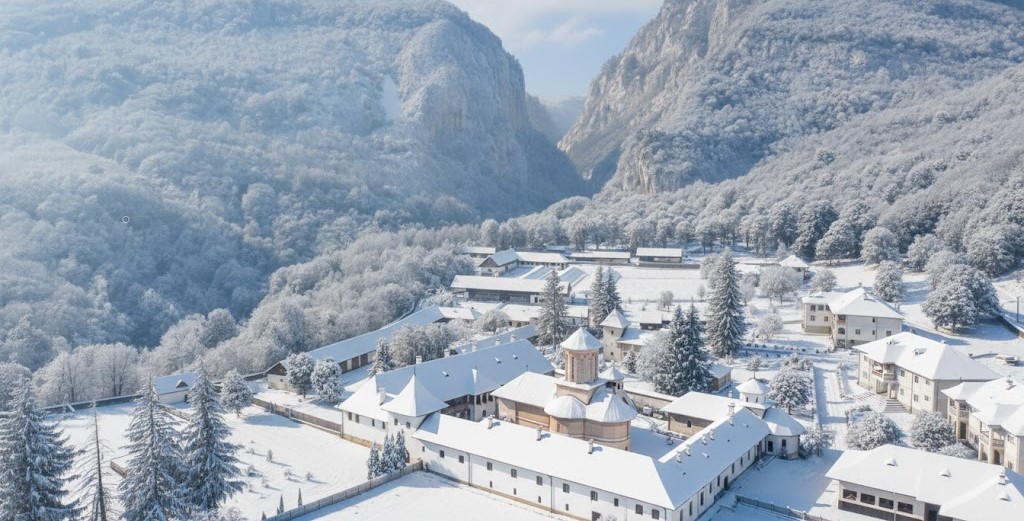
The main church, dedicated to the Dormition of the Mother of God, boasts:
- Exquisite Frescoes: Its interior is adorned with stunning original frescoes, painted by master artists from the Hurezi school. The vibrant, naturally sourced pigments have remarkably stood the test of time, depicting biblical scenes and saints with breathtaking detail.
- Ornate Carvings: The stone columns and wooden elements throughout the complex are a testament to the skilled craftsmanship of the era, reflecting the distinct elegance of the Brâncovenesc style.
- Peaceful Courtyard: The meticulously kept courtyard, often bursting with colorful flowers, invites contemplation and offers a tranquil escape from the bustling world outside.
Just like its neighbor, Polovragi Cave (see more), the monastery is steeped in local folklore. While the cave is directly linked to the Dacian god Zamolxis, legends also connect the monastery to this ancient past.
It is said that in times of great peril, or to guard sacred knowledge, the monks would use secret tunnels that linked the monastery directly to the depths of Polovragi Cave. These subterranean passages were believed to have been part of Zamolxis's own network, allowing for safe passage and the concealment of valuable treasures or spiritual texts during invasions. Some even claim that the very location of the monastery was chosen for its spiritual proximity to the cave, a site of immense power for the Dacians.
The Sacred Connection: Polovragi Monastery and Polovragi Cave
The geographical and spiritual closeness between the monastery and Polovragi Cave is undeniable. They are twin attractions, each enriching the experience of the other. Located just a short, scenic walk from the cave entrance, the monastery offers a perfect complement to your underground adventure.
After exploring the mystical chambers of the cave, a visit to the monastery provides a serene contrast, allowing you to reflect on the ancient history and profound spirituality of the region. Many pilgrims and tourists choose to visit both sites, experiencing the full spectrum of legend, history, and natural beauty that Polovragi has to offer.
Plan Your Visit
- Location: Gorj County, near the village of Polovragi, at the entrance to the Olteț Gorges.
- Visiting Hours: Generally open daily, but it's advisable to check specific times, especially during religious holidays or off-season.
- Dress Code: As a place of worship, respectful attire is appreciated (shoulders and knees covered).
A 4K aerial video which present Polovragi Monastery (Manastirea Polovragi):
Frequently Asked Questions (FAQ) – Polovragi Monastery
1. Is there an entrance fee to visit the monastery?
No, visiting the monastery grounds and the church is generally free of charge. However, as it is a working convent, small donations for the maintenance of the frescoes and gardens are always appreciated by the community.
2. What is the dress code for visitors?
Since this is an active place of worship, a respectful dress code is required. Visitors should have their shoulders and knees covered. If you are wearing shorts or a tank top, the monastery often provides wrap-around skirts or shawls at the entrance for guests to use.
3. How far is the monastery from Polovragi Cave?
They are incredibly close! The monastery is located at the very beginning of the forest road that leads into the Olteț Gorges. You can reach the cave from the monastery in about 10–15 minutes on foot or just 2 minutes by car.
4. Can I take photos inside the church?
While photography in the courtyard is usually allowed and encouraged, taking photos inside the church (where the 300-year-old frescoes are) is often restricted to protect the pigments from camera flashes. Always check for signs or ask one of the nuns for permission first.
5. What is the best time of year to visit?
The monastery is beautiful year-round, but late spring (May-June) and autumn (September-October) are spectacular. In spring, the gardens are in full bloom, and in autumn, the surrounding Carpathian forests turn vibrant shades of gold and red.
6. Is the "secret tunnel" to the cave real?
While it is one of the most popular local legends, there is no official scientific evidence of a traversable tunnel today. However, the spiritual and historical link between the two sites is very real, and the story adds to the mystical atmosphere of the area!
7. Can I buy traditional souvenirs there?
Yes! The monastery has a small shop where you can find locally made icons, religious books, herbal teas, and honey produced by the nuns. It’s a great way to support the monastery and take a piece of Polovragi home with you.
