
Unlike many other medieval sites, Sighișoara isn't a silent museum—it is a living city where people still inhabit centuries-old houses, making it the last inhabited medieval citadel in Europe.
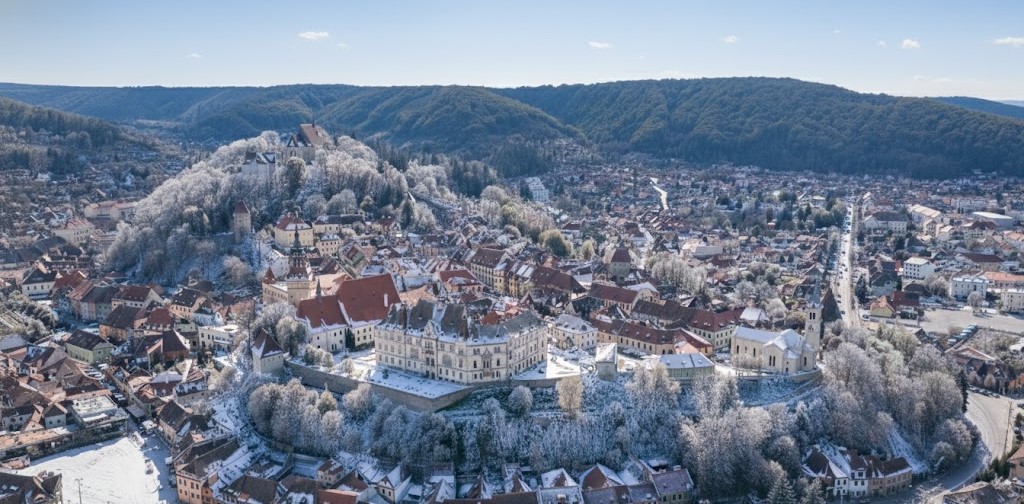
 Sighișoara: The Living Heart of Transylvania - Legends
1. The Birthplace of the Dragon (Vlad Dracula)
The Legend: Beyond the movies, there is the history. The Story: In a small yellow house near the Clock Tower, Vlad Tepes (Dracula) was born in 1431. The legend says that on the night of his birth, a fierce storm swept through the citadel, and the dragons carved into the city's crest seemed to come to life.
2. The Scholar's Stairs and the Ghostly Guardian
The Legend: The covered wooden staircase (176 steps) built in 1642. The Story: It was built to protect schoolchildren and churchgoers from the harsh winter snows. But legend has it that the stairs are guarded by the spirit of an old scholar who ensures that only those with "pure thoughts" reach the Church on the Hill. Students still believe that if they count the steps correctly while thinking of an exam, they will pass with flying colors. If they miss a step... well, the "mountain spirit" might have other plans!
3. The Giants of the Clock Tower
The Legend: The iconic Clock Tower (Turnul cu Ceas) with its rotating figurines. The Story: Each figurine represents a day of the week or a pagan god (Mars, Mercury, Jupiter, etc.). Local folklore says that at midnight, when the figures change, they whisper the secrets of the town to each other. It is believed that as long as the clock keeps ticking, the citadel is protected by an ancient spell that keeps invaders and "evil spirits" away from the city walls.
What to Discover in the Citadel
1. The House of Dracula (Casa Vlad Dracul)
Right in the heart of the citadel, you’ll find an ochre-yellow building. This is where Vlad the Impaler was born in 1431. Today, the house serves as a restaurant and a small museum, allowing you to dine within the very walls where the "Son of the Dragon" spent his early years.

2. The Iconic Clock Tower
Standing guard at the citadel’s entrance, the 64-meter-tall Clock Tower is an architectural masterpiece. Be sure to climb to the balcony for a stunning 360-degree view of the city’s red-tiled roofs and the surrounding Carpathian forests.
3. The Scholars' Stairs & The Church on the Hill
For a touch of mystery, walk up the Scholars' Stairs—a covered wooden staircase built in 1642 to protect students on their way to school during winter. It leads you to the Church on the Hill, a beautiful Gothic structure surrounded by an ancient, atmospheric Saxon cemetery.
4. A Rainbow of Medieval Streets
Sighișoara is arguably the most "Instagrammable" city in Romania. Every street is lined with houses painted in vibrant shades of pink, blue, and green. Exploring the narrow cobblestone alleys is like wandering through a dream.

Plan Your Visit: Essential Tips
- Location: Mureș County, Transylvania (approx. 1.5 hours from Brașov or Sibiu (see more)).
- The Best Time to Visit: May to September for the best weather, or late July for the Medieval Festival, when knights and troubadours take over the streets.
- Stay Overnight: To truly feel the magic, stay at one of the boutique hotels inside the citadel. Once the day-trip crowds leave, the moonlit streets feel incredibly haunting and beautiful.
A beautiful 4K Aerial video witch presents the amazing Citadel of Sighisoara (Cetatea Sighișoara):
Frequently Asked Questions about Sighișoara:
1. Where was the real Dracula born?
The historical figure who inspired Dracula, Vlad the Impaler (Vlad Țepeș), was born in the city of Sighișoara, Transylvania, in 1431. You can still visit his birth house, which is located in the Citadel Square, marked with a commemorative plaque.
2. Is Sighișoara the only inhabited medieval citadel in Europe?
Sighișoara is often called the last inhabited medieval citadel in Europe. While there are other fortified towns, Sighișoara is unique because its UNESCO-protected medieval center has remained almost entirely intact and continues to function as a living community with homes, schools, and shops.
3. How many steps are in the Scholars' Stairs in Sighișoara?
There are 176 wooden steps remaining today (originally there were 300). The covered staircase, known as Scara Școlarilor, was built in 1642 to help students reach the school on the hill safely during harsh winters.
4. What is the best way to get to Sighișoara?
Sighișoara is easily accessible by train (on the main line between Bucharest and Vienna) or by car. It is located approximately 1.5 hours from Brașov, 1.5 hours from Sibiu, and 2 hours from Cluj-Napoca, making it a perfect stop on any Transylvanian road trip.
5. Do you have to pay to enter the Sighișoara Citadel?
No, entry to the Sighișoara Citadel is free. You can walk the medieval streets and admire the architecture at any time. However, individual attractions like the Clock Tower Museum, the Church on the Hill, and the Weapon Museum require a small entrance fee (usually between 10-25 RON).
6. Is Sighișoara safe for tourists?
Yes, Sighișoara is considered very safe for international travelers. It is a peaceful, walkable city with a friendly atmosphere. As with any tourist destination, just be mindful of your belongings in crowded areas.
