
The Legend of the Bridge of Lies
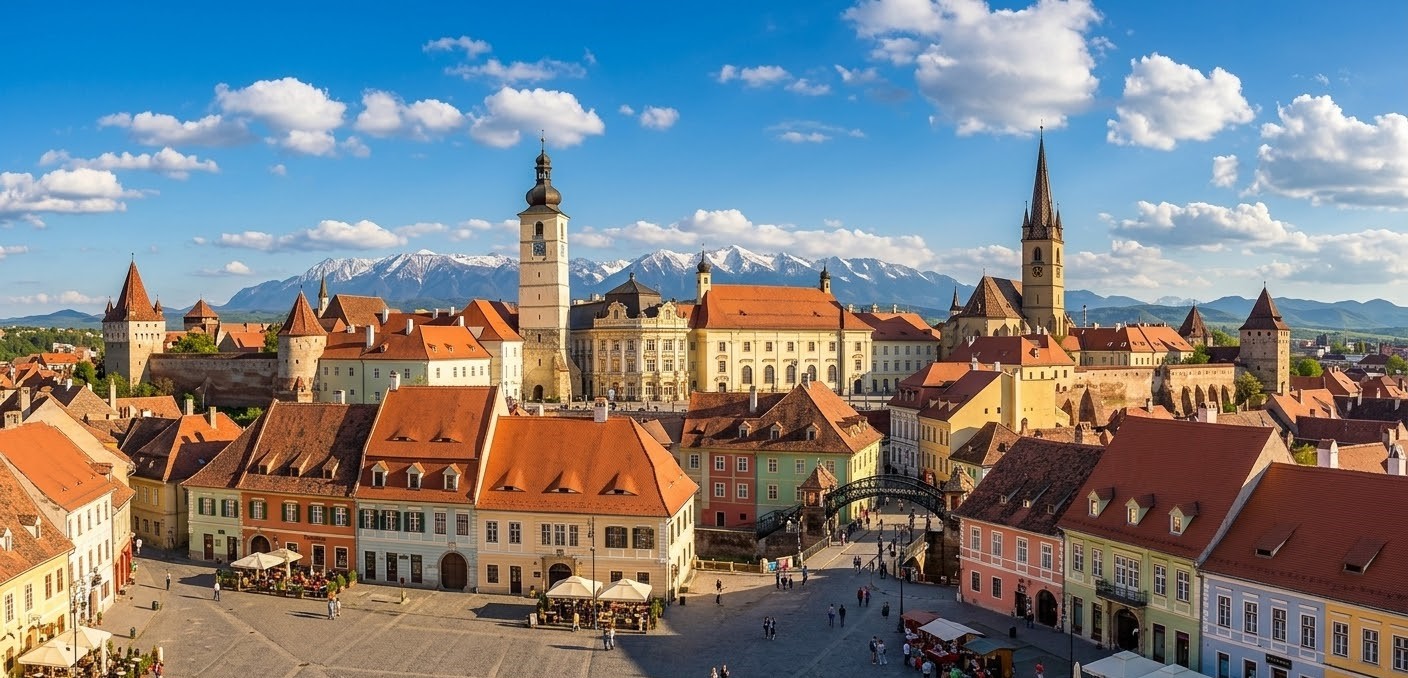
The most iconic landmark in Sibiu, the Bridge of Lies (Podul Minciunilor), is steeped in legends. The most popular tale says the bridge has "ears" and supernatural powers: if someone tells a lie while standing on it, the bridge will start to creak and groan, eventually collapsing to punish the liar.
- The Merchants' Version: It is said that dishonest traders in the Small Square were often thrown off the bridge to discourage cheating.
- The Lovers' Vow: Another legend tells of young couples who swore eternal love on the bridge. If the promises were false, the bridge would "shudder," exposing the deceit.
The Cunning of Hermann: How the City Began
Legend says that Hermann, the leader of the first Saxon settlers, asked the Hungarian King for only as much land as a "bull's hide" could cover. The King smiled and agreed. Hermann then took a single hide and cut it into an incredibly thin, miles-long strip, using it to encircle a massive area on the hill. Impressed by his wit, the King kept his word, and thus the foundations of Hermannstadt were laid.
Biodiversity & Green Spaces
While Sibiu is a bustling urban center, it is surrounded by remarkable natural beauty:
- Dumbrava Sibiului Natural Park: Located just outside the city, this oak forest is home to deer, foxes, and wild boars. It also hosts the ASTRA Museum, one of the largest open-air museums in the world, perfectly blending traditional architecture with nature.
- Sub Arini Park: One of Romania's oldest and largest urban parks, it serves as a green corridor for over 68 species of birds and several rare tree species.
- Proximity to the Carpathians: The city is a gateway to the Cindrel and Făgăraș Mountains, where the biodiversity of the Romanian wilderness—including chamois and brown bears—remains largely untouched.
- The "Eyes" of the City: The famous "eyes" on the roofs are actually cooling vents for the attics, designed to provide ventilation for stored goods while preventing the accumulation of heat.
- Historical Firsts: Sibiu is a city of pioneers. It hosted the first hospital in Romania (1292), the first pharmacy (1494), the first museum (Brukenthal, 1817), and even the first multi-stage rocket experiments by Conrad Haas in the 16th century.
- The Red City: In the Middle Ages, Sibiu was nicknamed the "Red City" because of the color of its massive brick defense walls and towers.
- Architecture: The city is divided into the Upper Town (traditionally for the wealthy and administrative) and the Lower Town (home to craftsmen and merchants), connected by the spectacular Passage of Steps.
FAQ: Exploring Sibiu (Hermannstadt)
Why do the houses in Sibiu have "eyes"? The famous "eyes" of Sibiu are actually eyelid-shaped ventilation slots built into the steep roofs of medieval houses. They were designed to provide airflow to the attics, which were used to store grain, meat, and other provisions. Today, they give the city a unique, watchful character that fascinates photographers.
Is the Bridge of Lies safe to cross? Absolutely! While the legend says the bridge will collapse if you tell a lie while standing on it, it is a sturdy iron structure (the first of its kind in Romania, cast in 1859). It remains one of the most romantic and safe spots in the city for a walk or a photo.
What is the best way to explore the historic center? Sibiu’s Old Town is best explored on foot. The city is divided into the Upper Town and Lower Town, connected by charming stone stairs and narrow passages. Most of the main attractions, including the three major squares (Great, Small, and Huet), are in a pedestrian-friendly zone.
When is the best time to visit Sibiu? * Summer (June - August): Ideal for outdoor festivals, including the world-famous Sibiu International Theatre Festival (FITS).
- Winter (Late November - December): Sibiu hosts one of the most beautiful Christmas Markets in Europe, turning the Great Square into a winter wonderland.
Is Sibiu a good destination for food lovers? Definitely. In 2019, Sibiu was the "European Region of Gastronomy." You can find a mix of traditional Romanian, Saxon, and Hungarian influences. Don't miss the local cheeses from the Mărginimea Sibiului region or the famous "Ciorbă în pâine" (soup served in a bread bowl).
What are the main landmarks I shouldn't miss? Make sure to visit the Brukenthal National Museum (the oldest in Romania), the Evangelical Cathedral with its massive organ, the Council Tower for a panoramic view of the city, and the ASTRA Museum of Traditional Folk Civilization, located in a beautiful forest just outside the city.
