
The Sacred Alliance: The Romanian and the Apple Tree
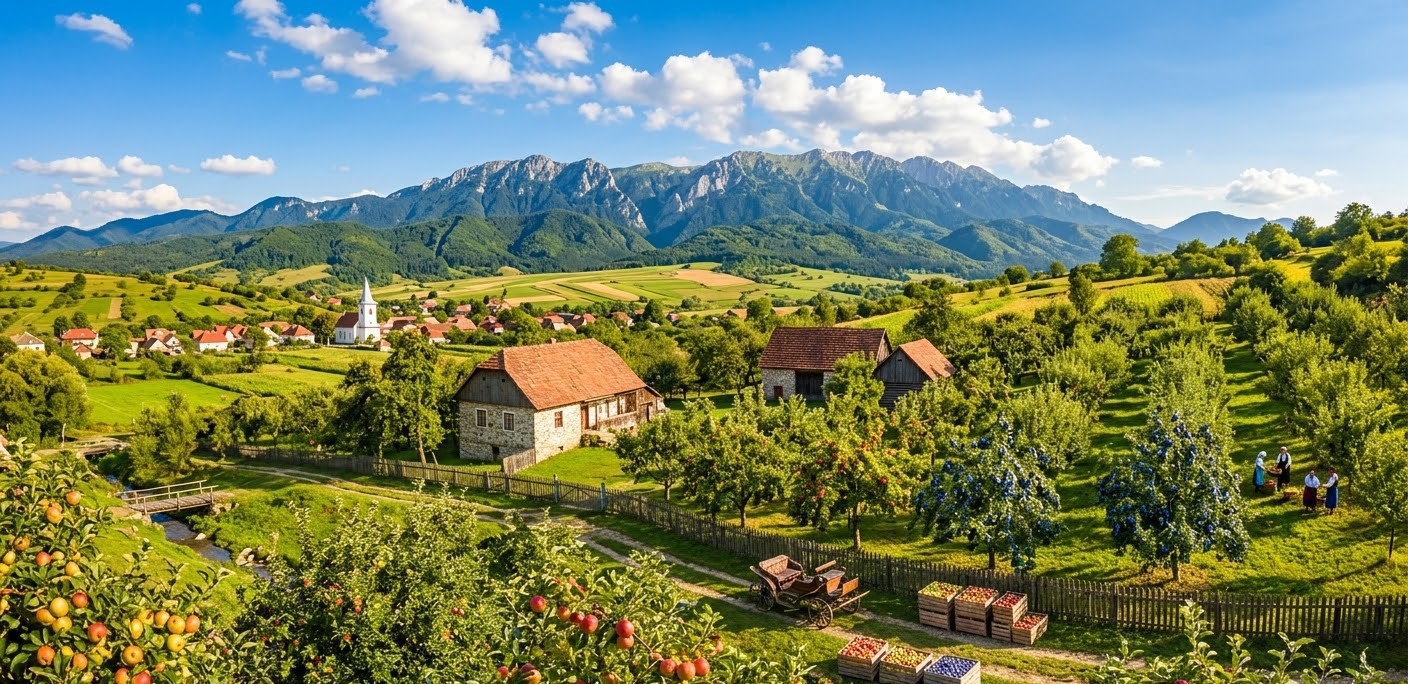
While the apple is global, in Romania, it holds a special, almost sacred place. The Apple Tree (Mărul) is a symbol of life, knowledge, and hospitality.
- Folklore: In traditional songs and stories, the apple often represents beauty or the perfect gift between lovers. A traditional gift to guests, especially during winter holidays, is a red apple.
- Cultural Symbol: The town of Fălticeni, known as the "city of apples," is famous for its extensive orchards and its history of cultivating hundreds of unique varieties, making it a place of pride for Romanian horticulture.
Traditions Rooted in Fruit
Fruit trees in Romania are not just about agriculture; they are part of ancient rituals:
- The "Lăsatul Secului" Offering: In some regions, before the spring fasting period, villagers hang painted wooden apples or tiny food offerings on the branches of the fruit trees to ensure a bountiful harvest.
- The New Year's Branch (Sorcova): One of the oldest traditions involves cutting a branch from an apple or pear tree on St. Andrew's Day (November 30) and keeping it in water. If it blooms by New Year's Eve, it is considered a sign of a lucky and prosperous year.
- The Sacred Plum: The Plum Tree (Prunul) (see more) is legendary because it provides the fruit for Romania’s national drink: Țuică (a strong plum brandy) (see more). In some regions, like Bucovina, it is said that every family must plant at least one plum tree to honor their ancestors.
Because of its diverse climate—from sunny plains to cool hills—Romania is a treasure trove of heirloom fruit varieties that you will rarely find in commercial supermarkets.
- Plums (Prune): Romania is a top global producer. Key varieties include the Ana Späth (large and dark) and the local Vânăt de Bistrița, prized for its intense flavor, perfect for jam or ţuică.
- Apples (Mere): Look for local varieties like Domnesc (large and noble) or Florina, known for their balance of sweetness and tartness.
- Pears (Pere): From the summer's small, juicy Văratice to the winter's durable varieties, Romanian pears are prized for dessert.
- Sour Cherries (Vișine): While sweet cherries (cireșe) are common, sour cherries are a Romanian specialty, essential for the famous Vișinată (a sour cherry liqueur) and traditional pies.
- Walnuts (Nuci): Walnut trees are so respected that it is traditional (and in some cases required) to plant a new one for every generation. Their wood is highly valued, and the kernels are vital for cozonac (traditional sweet bread) (see more).
- Technical Details & Fun Facts
- "Orchard Hills": The foothills of the Carpathians, particularly in Subcarpații Moldovei and the Mureș Valley, are where the largest and most famous commercial orchards are located.
- Heirloom Varieties: Romania is part of global genetic bank projects to preserve ancient fruit varieties that are resilient and flavorful, often grown without pesticides in traditional home gardens.
- The Plum Capital: While the whole country loves plums, Măgura Codlei near Brașov is famous for its vast, historical plum orchards.
FAQ: Fruit Trees and Orchards in Romania
Which fruit tree is most common in Romania?
The Plum tree (Prunul) is the national favorite. Romania is one of the top plum producers globally. You will find plum trees in almost every rural backyard, as they provide the essential ingredient for Romania’s famous traditional spirit, țuică.
Are Romanian fruits genetically modified (GMO)?
In traditional peasant gardens and small-scale orchards, fruits come from heirloom varieties passed down through generations. These are natural, non-GMO, and often grown without intensive chemical treatments, which is why Romanian apples or pears might look less "perfect" but have an incredibly intense flavor and fragrance.
When is the best time to enjoy fresh Romanian fruit?
- Late May – June: Cherries (Cireșe) and Sour Cherries (Vișine).
- July – August: Apricots (Caise), Peaches (Piersici), and early Pears.
- September – October: The peak season for Apples (Mere), Plums (Prune), Walnuts (Nuci), and Grapes (Struguri).
The Walnut tree (Nucul) is protected by law in Romania due to its high value. It takes many years to mature, and cutting one down often requires a special permit. Walnuts are a staple in Romanian desserts, especially in the traditional Christmas sweet bread, Cozonac.
Can tourists visit orchards in Romania?
Yes! Many agritourism guesthouses (pensiuni) in regions like Maramureș, Bucovina, or the Argeș Valley have their own private orchards. Guests are often invited to help with the harvest in autumn or simply enjoy picking a fresh apple straight from the tree.
What are "Wild Fruits" in Romania?
Besides cultivated trees, Romania’s mountains are famous for wild berries. Locals harvest wild raspberries, blackberries, blueberries, and sea buckthorn (cătină) from the forests. These are used to make some of the best organic jams and syrups you can find in Europe.
