
The Legend of the Whispering Waters
Local shepherds from the nearby stâne speak of "The Daughter of the Mist." Legend says that a young woman, lost in the mountains during a heavy storm, was transformed by the mountain spirit into a waterfall to guide other lost travelers with the sound of her falling water. Even today, locals claim that if you listen closely during the quiet hours of dawn, the waterfall doesn't just splash; it whispers directions to those who are pure of heart.
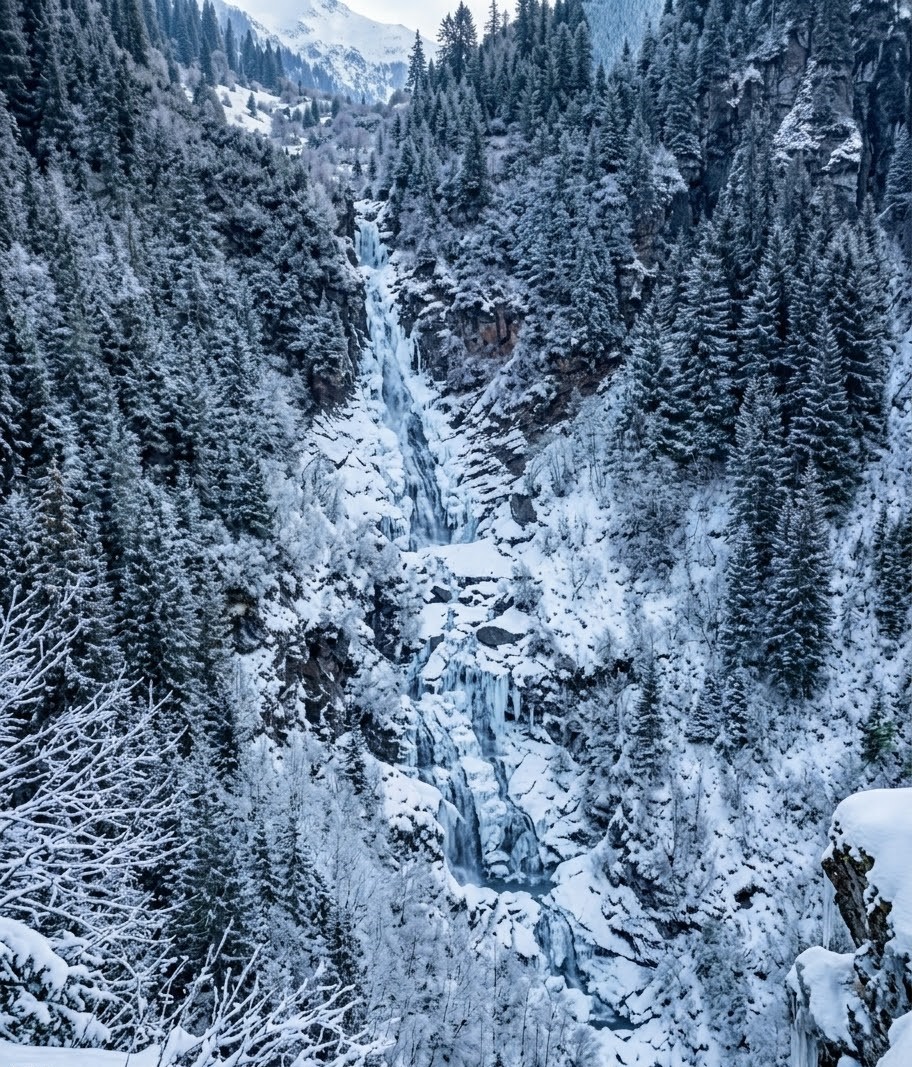
Biodiversity & The Wild Valley
The area surrounding the Scurtele stream is a micro-ecosystem of its own:
- Flora: Because the valley is more humid and sheltered than the windy ridges, you will find lush moss carpets and a variety of wild orchids during early summer.
- Fauna: This is a quiet corridor for Chamois (Capra Neagră) (see more) which occasionally descend from the higher rocky patches of the neighboring Neamțu Peak. The dense forest at the base of the waterfall is also home to the Black Grouse (Cocoșul de Munte) (see more).
- Location: Situated on the Scurtele Valley, on the eastern slopes of the Baiului (Gârbova) Massif.
- Height: The waterfall has a cumulative drop of approximately 15-20 meters, falling in a series of elegant steps over the dark flysch rock.
- Access: The trail usually starts from the Azuga Valley or via the ridge from Neamțu Peak. It is a wilder trail, often unmarked or poorly marked, requiring basic orientation skills.
- Best Time to Visit: May or June, when the snow melting on the high plateaus gives the waterfall its maximum volume and power.
- The "Invisible" Cascade: Unlike the famous Urlătoarea in Bucegi, you cannot see Scurtele from any main road. You have to truly "earn" the view by hiking deep into the valley.
- A Natural Shower: The water is incredibly pure and cold even in August, as it originates from the high alpine springs of the Neamțu-Stevia ridge.
- Photographer's Dream: Due to its orientation and the surrounding forest, the light hits the waterfall in a spectacular way around midday, creating tiny rainbows in the mist.
FAQ: Visiting Scurtele Waterfall (Cascada Scurtele)
How difficult is the hike to Scurtele Waterfall?
The hike is considered moderate to difficult, not because of the steepness, but because the trail is "wilder" than the main routes in the Prahova Valley. The path through the Scurtele Valley can be overgrown or muddy, and orientation skills are required as markings can be scarce in certain sections.
Is there a direct cable car to the waterfall?
No. While you can take the Azuga Telegondola to reach the Baiului ridge and then descend towards the waterfall, there is no direct mechanical access. It remains a destination for dedicated hikers who enjoy untouched nature.
Can I visit the waterfall in winter?
It is possible, but not recommended for casual hikers. The valley becomes very icy, and the steep slopes nearby are prone to avalanches or dangerous slips. The best time for a safe visit is from late May to October.
Is the water drinkable?
The water of the Scurtele stream is generally very pure, coming from high-altitude springs. However, as there are active sheepfolds (stâne) on the ridges above, it is always safer to use a water filter or carry your own supply of drinking water.
Are there bears in the Scurtele Valley?
Yes. Because this valley is much quieter and less traveled than the Bucegi side, it is a preferred corridor for Brown Bears. Always hike in a group, talk loudly to make your presence known, and avoid hiking at dawn or dusk when animals are most active.
Do I need special equipment?
- Standard hiking gear is essential:
- Waterproof hiking boots with good grip (the stones near the waterfall are very slippery).
- Trekking poles to help with the uneven terrain in the valley.
- A GPS or a reliable map app, as mobile signal can be intermittent deep in the valley.
Depending on your starting point (Azuga or the Baiului ridge), a round trip usually takes between 4 to 6 hours. It is best to start early in the morning to ensure you return before sunset.
