
A Royal Journey: From Windsor to Bucharest
Born Marie Alexandra Victoria of Edinburgh, she was the granddaughter of both Queen Victoria of the United Kingdom and Tsar Alexander II of Russia. In 1893, she married Crown Prince Ferdinand of Romania, embarking on a journey that would transform both her life and her adopted country.
- The Heart of a Nation: Unlike many royal consorts of her time, Marie deeply immersed herself in Romanian culture, learning the language and frequently wearing the traditional Romanian peasant costume (ia), which she helped popularize worldwide.
- The "Soldier Queen": During World War I, she displayed extraordinary courage. When the government retreated to Moldova, she served as a Red Cross nurse in frontline hospitals, tending to wounded soldiers and typhus patients, earning her the nickname "Mama Răniților" (The Mother of the Wounded).
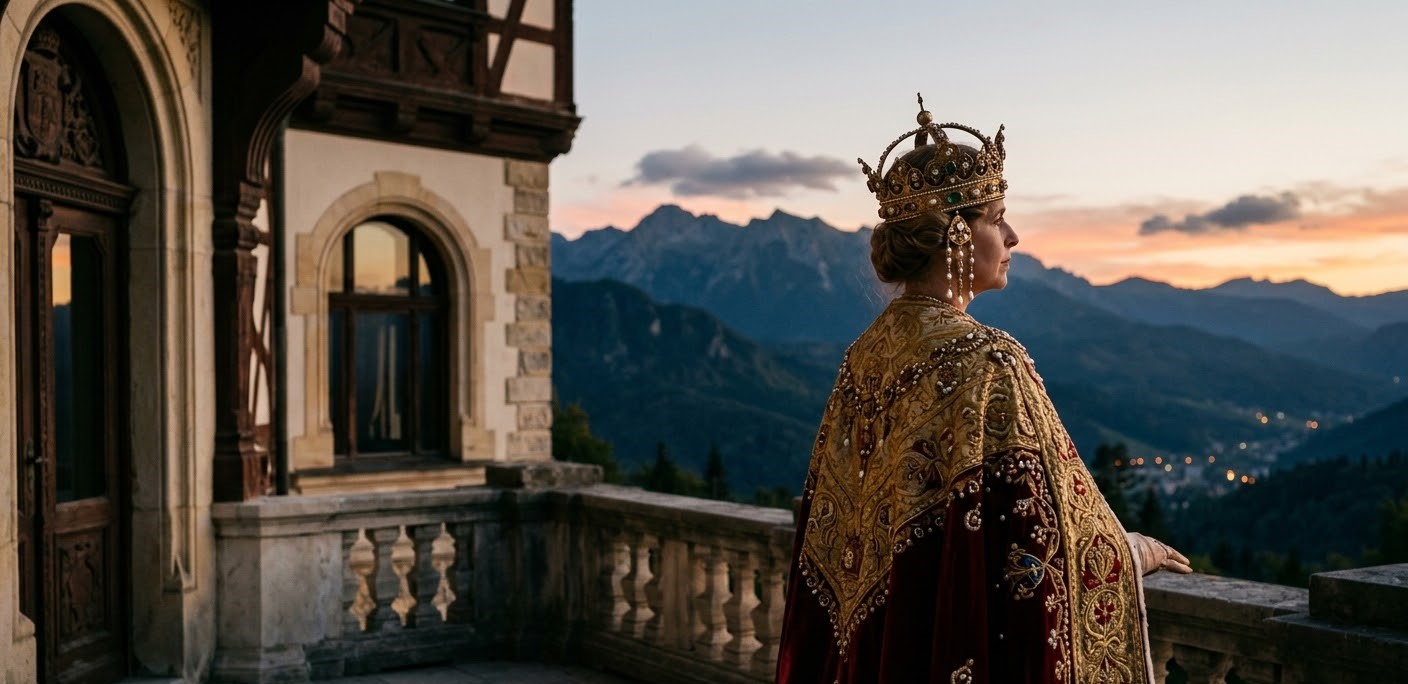
The Diplomat of Great Romania
Marie’s greatest political triumph came during the 1919 Paris Peace Conference. When the Romanian delegation hit a stalemate, she traveled to Paris and London to charm and negotiate with world leaders like Georges Clemenceau and Woodrow Wilson.
Her charisma and persistent lobbying were instrumental in gaining international recognition for Greater Romania (România Mare), the unification of all Romanian provinces."Romania needs a face, and I will be that face," she famously declared.
Architectural Legacy and Art
Queen Marie was a visionary decorator and architect at heart. She transformed several royal residences into unique masterpieces of "Néo-Roumain" and Art Nouveau styles:
- Bran Castle (see more): Given to her as a gift by the city of Brașov, she turned this medieval fortress into a cozy, fairy-tale summer residence.
- Pelișor Castle (see more): Part of the Peleș Royal Estate, she personally designed its interior, blending Celtic and Byzantine elements with Romanian folk art.
- Balchik Palace (The Quiet Nest): Located on the Black Sea coast (now in Bulgaria), this was her most personal retreat, featuring beautiful botanical gardens and a mix of architectural influences.
- The First Female Member of the French Academy of Fine Arts: She was recognized for her literary work and her contribution to the arts.
- A Talented Writer: She wrote numerous books, including her famous "Story of My Life" and several children's fairy tales inspired by Romanian folklore.
- The Golden Heart: According to her final wish, her body was buried at the Curtea de Argeș Monastery (see more), but her heart was placed in a golden casket and kept at her beloved Balchik, and later moved to Bran Castle.
- Reign: 1914 – 1927 (as Queen Consort).
- Birth/Death: 1875 (Eastwell Park, UK) – 1938 (Pelișor Castle, Romania).
- Family: She had six children, including King Carol II and Queen Elisabeth of Greece.
Was Queen Marie actually Romanian by birth?
No, she was born Princess Marie of Edinburgh in Kent, England. She was the granddaughter of Queen Victoria of the United Kingdom and Tsar Alexander II of Russia. She became Romanian by marriage to Crown Prince Ferdinand in 1893 and devoted the rest of her life to her adopted country.
Why is she called "The Mother of the Wounded"?
During World War I, when the Romanian government was forced to retreat to Iași, Queen Marie refused to leave the country. She worked as a Red Cross nurse in frontline hospitals, personally tending to soldiers and those suffering from the typhus epidemic. Her presence on the front lines was a massive boost to national morale.
What was her role in the Unification of Romania (1918)?
Queen Marie was a brilliant diplomat. After the war, she traveled to the Paris Peace Conference in 1919. Her charisma and personal connections with Western leaders were crucial in securing international recognition for "Greater Romania" (România Mare), which brought Transylvania, Bessarabia, and Bukovina into the fold.
Why did she often wear traditional Romanian peasant clothes?
Queen Marie was a pioneer of cultural branding. By wearing the "ia" (traditional blouse) and folk costumes, she helped elevate Romanian peasant art to a level of international prestige. She wanted to show the world the beauty of Romanian identity and bridge the gap between the monarchy and the common people.
Which castles are most associated with her?
While the royal family lived in several palaces, Queen Marie’s personal touch is most evident at:
- Pelișor Castle (Sinaia): Her primary residence, which she decorated in a unique Art Nouveau style.
- Bran Castle: Gifted to her by the city of Brașov in 1920, which she transformed from a fortress into a fairytale summer home.
- Balchik Palace (Bulgaria): Her "Quiet Nest" on the Black Sea coast, famous for its world-class botanical gardens.
Yes. According to her final wish, her body was laid to rest at the Curtea de Argeș Monastery, but her heart was placed in a silver casket and kept in a chapel at her Balchik residence. After the territory was returned to Bulgaria in 1940, her heart was moved to Bran Castle and eventually to Pelișor Castle.
What happened to her crown?
Her coronation crown, made entirely of Transylvanian gold and decorated with semi-precious stones in an Art Nouveau style, is now a national treasure. You can see it on display at the National History Museum of Romania in Bucharest.
