
Biodiversity: Where the Balkans Meet the Carpathians
Due to its southern position and the influence of sub-Mediterranean currents, the Almăj Mountains host a unique ecosystem.
- The Banat Pine: You can find the rare Pinus nigra banatica clinging to the limestone cliffs.
- Wildlife: This is one of the few places in Europe where you might spot the Horned Viper (Vipera ammodytes) or the Hermann’s Tortoise basking in the sun.
- Flora: In spring, the slopes are covered in wild peonies and rare orchids, giving the air a scent you won't find anywhere else in the Carpathians.
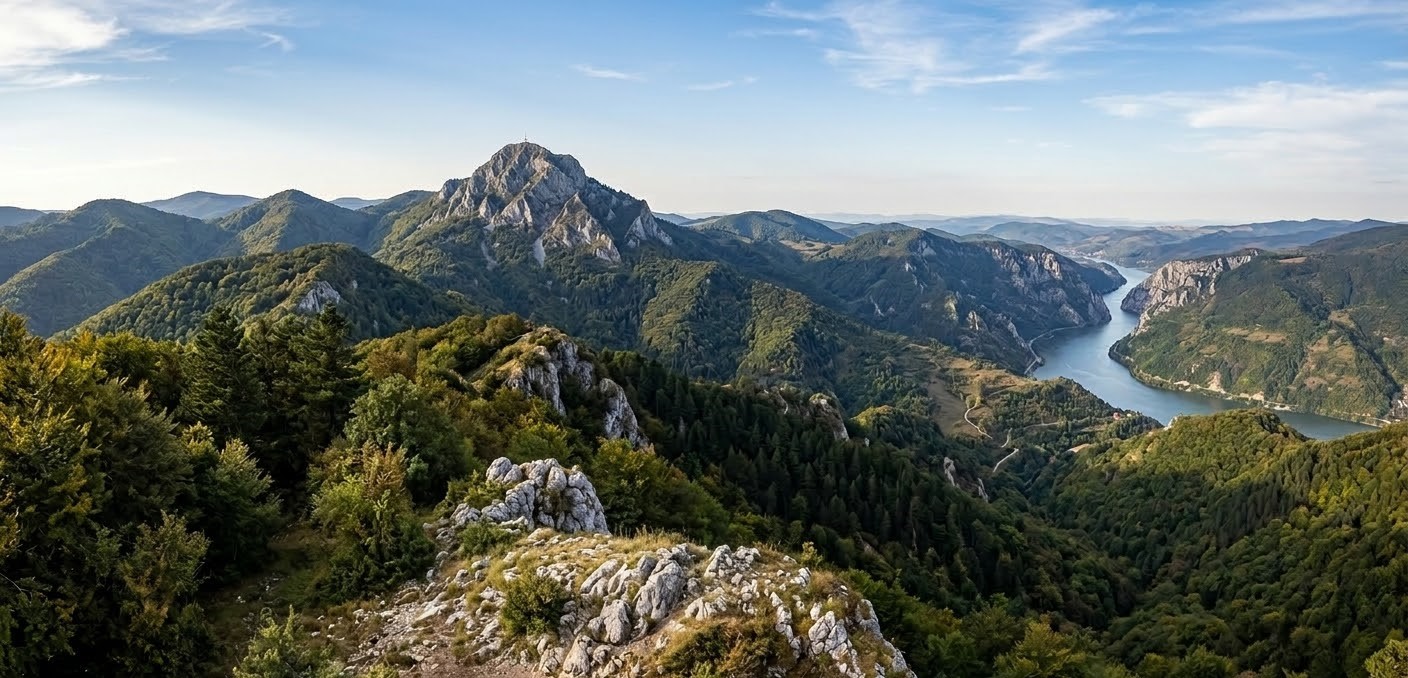
Legends and Stories: The Giants of the Danube
The most famous legend of the area is tied to the Danube Gorges (Cazanele Dunării) (see more). Local lore says that the narrowing of the river was the work of giants who tried to block the water to create a bridge.
Another haunting story belongs to the Ponicova Cave (see more). It is said that during the Ottoman wars, locals hid their treasures in the deep galleries of the Almăj mountains. Some say the "spirit of the mountain" still guards these gold coins, and only those with a pure heart can find the path to the hidden chambers during the night of Sanziene (the Romanian midsummer).
Fun Facts for Curious Travelers
- The Rock Sculpture: The Almăj Mountains provide the backdrop for the Statue of Decebalus, the tallest rock relief in Europe (42.9 meters). It’s carved directly into the mountain face!
- The Watermills: Not far from the ridges, in the Almăj Valley, lies Eftimie Murgu (Rudăria), home to the largest complex of wooden watermills in Southern Europe. They are still functional today!
- A Climate "Anomaly": Because of the Mediterranean influences, winters here are much milder than in the rest of Romania, allowing figs and almonds to grow in some local gardens.
- For those planning a hike or a professional visit, here are the essentials:
- Highest Peak: Svinecea Mare (1224 meters).
- Geology: A complex mix of crystalline schists, granite, and limestone, which explains the numerous caves and steep ravines.
- Key Access Points: Orșova, Dubova, or Bozovici.
- Difficulty: Moderate. Most trails are accessible but require good orientation as the vegetation is very dense (it’s a true wilderness).
Frequently Asked Questions: Almăj Mountains (Munții Almăjului)
1. Where are the Almăj Mountains located?
The Almăj Mountains are situated in southwestern Romania, in Caraș-Severin County. They form part of the Banat Mountains and are bordered by the Danube River to the south (The Danube Gorges) and the Almăj Valley to the north.
2. What is the highest point in the range?
The highest peak is Svinecea Mare, reaching an altitude of 1,224 meters. While not as high as the Făgăraș or Retezat Mountains, the elevation gain from the Danube level (near 0m) makes the climbs feel quite steep and rewarding.
3. Is it safe to hike there?
Yes, but with precautions. These mountains are wilder and less "manicured" than the Bucegi or Brașov areas.
Wildlife: Be aware that this region has a significant population of brown bears and wild boars.
The Horned Viper: Since the climate is sub-Mediterranean, the Horned Viper (Vipera ammodytes) lives here. Always wear high trekking boots and long trousers, and watch where you step on sunny limestone rocks.
4. What is the best time to visit?
Late Spring (May-June): Best for seeing wild peonies and rare orchids in bloom.
Autumn (September-October): The foliage change is spectacular, especially where the yellow beech forests meet the turquoise waters of the Danube.
Note: Summer can be very hot due to the Mediterranean influences.
5. Can I see the Danube Gorges from the mountains?
Absolutely. One of the most iconic views in Romania is from the Ciucaru Mare or Trescovăț peaks. From these heights, you can see the "Cazanele Dunării" (Danube Cauldrons), where the river narrows to its tightest and deepest point.
6. Are there any unique cultural sites nearby?
Yes! Don't miss the Rudăria Watermills (in Eftimie Murgu village) on the northern edge of the mountains. It is the largest complex of functional wooden watermills in Southern Europe, still used by locals to grind flour today.
7. Do I need a guide?
For the main marked trails (like the one to the Decebalus Statue view or Trescovăț), you can manage with a good GPS map. However, for deep forest exploration or finding hidden caves like Ponicova, a local guide is highly recommended due to the dense vegetation and lack of phone signal in certain valleys.
