
The Story of the Sunken Villages
In 1962, during the communist era, the valley was flooded to create a reservoir meant to supply the massive steel mills of Hunedoara. This project came at a high cost: five ancient villages (Cinciș-Cerna, Valea Ploștii, Baia lui Crai, Moara Ungurului, and Ciuleni) were swallowed by the rising waters.
- The Drowned Church: Before the flooding, residents were forced to relocate, but many of the structures remained. The ruins of the old village churches still stand on the lake floor.
- The Spectral Tower: On rare occasions, during extremely dry summers when the water level drops significantly, the stone tower of the former Cinciș church emerges from the depths—a hauntingly beautiful sight for photographers and history enthusiasts.
- The Relocation: The current village of Cinciș was built on the hill overlooking the lake, where the inhabitants moved their belongings, and in some cases, even the remains of their ancestors from the local cemeteries.
Biodiversity & Recreation
Beyond its history, Lake Cinciș is an ecological oasis:
- Aquatic Life: The lake is famous for its massive catfish and carp, making it a premier destination for local fishermen.
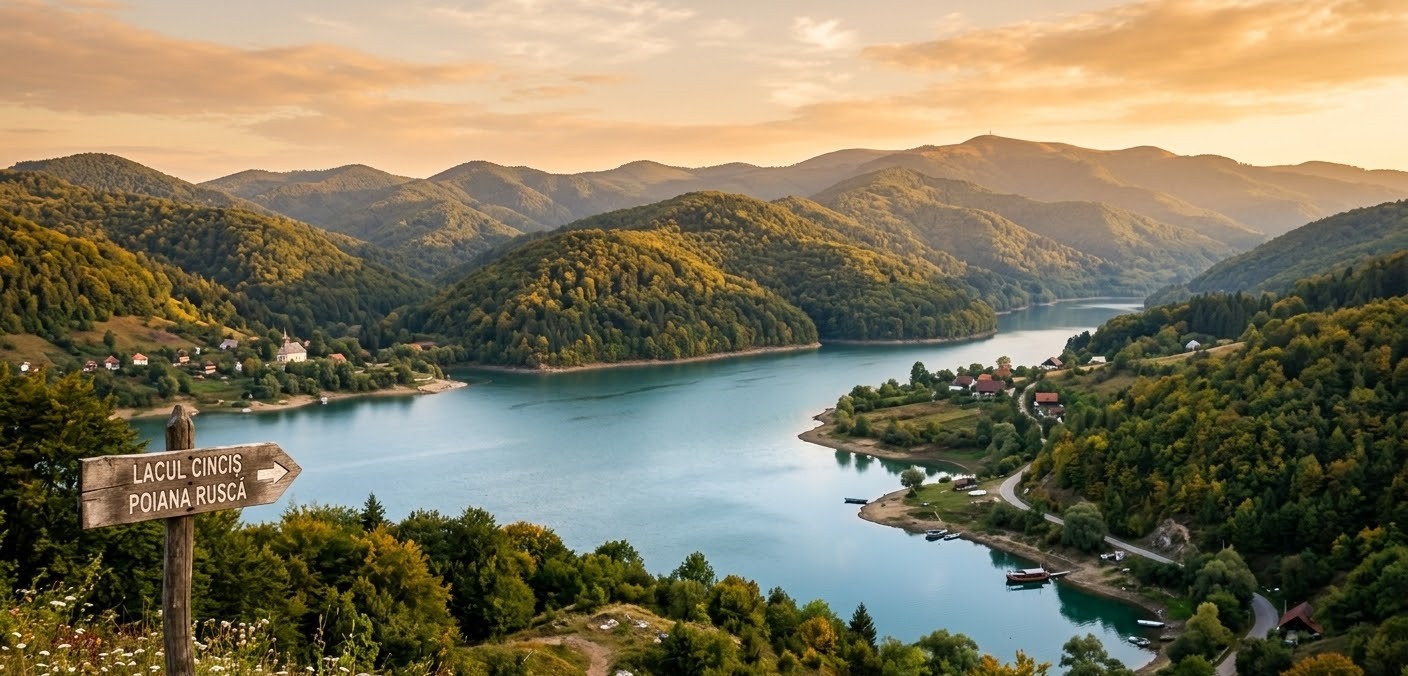
- Surrounding Landscape: The shore is lined with dense forests, providing a perfect habitat for deer (see more) and various bird species that come to the water’s edge.
- Activities: It is a hub for swimming, sailing, and kayaking. The "Sea of Hunedoara," as locals call it, offers some of the best sunset views in the region.
- Cursed Waters: Local folklore says the lake is "cursed" because of the flooded cemeteries. Divers and locals often speak of a mysterious energy felt near the dam area.
- Giant Fish: Legends circulate about giant catfish that have lived in the depths since the 1960s, supposedly large enough to disturb small boats.
- Proximity to History: The lake is only a short drive (about 10 km) from the famous Corvin Castle, making it a perfect natural escape after a day of visiting medieval fortresses.
- Surface Area: Approximately 8.6 square kilometers.
- Maximum Depth: Around 30 meters.
- Accessibility: Easily reached by car from Hunedoara. The road circles part of the lake, offering numerous camping spots and guest houses (pensiuni).
FAQ: Visiting Lake Cinciș
Can you see the sunken churches of Lake Cinciș?
The ruins of the flooded churches are normally submerged. However, during periods of extreme drought when the water level drops significantly, the stone tower of the former Cinciș church can sometimes be seen rising above the surface.
Is it safe to swim in Lake Cinciș?
Yes, swimming is permitted and the lake is a very popular spot during the summer months. There are several designated beaches and resort areas along the shore that offer safe access to the water.
What activities are available at the lake?
Visitors can enjoy a wide range of activities including fishing, kayaking, stand-up paddleboarding, and boat trips. The surrounding hills also offer excellent trails for light hiking and mountain biking with panoramic views of the water.
How far is Lake Cinciș from Corvin Castle?
The lake is located only about 10–12 kilometers from the city of Hunedoara and the famous Corvin Castle (Castelul Corvinilor), making it an ideal destination for a relaxing nature break after visiting the fortress.
Are there camping spots or accommodation nearby?
Yes, the shores of Lake Cinciș are well-equipped with numerous campsites, guest houses (pensiuni), and even small hotels. Whether you prefer a tent or a comfortable room, there are plenty of options for staying overnight.
Is fishing allowed on the lake?
Fishing is allowed but requires a valid permit. The lake is well-known among enthusiasts for its large catfish, carp, and pike.
