
Biodiversity: A Sanctuary of the Wild
The isolation of these mountains has created a perfect haven for diverse flora and fauna:
- Virgin Forests: You will find some of the most resilient beech and coniferous forests in Europe.
- Wildlife: It is one of the few places where the European Lynx (see more) can still be tracked. You'll also find brown bears, wolves, and the elusive black goat on the higher limestone ridges.
- The Flower of the Rocks: In spring, the rocky outcrops are decorated with the rare Dianthus spiculifolius (see more), a delicate wild carnation specific to the Romanian Carpathians.
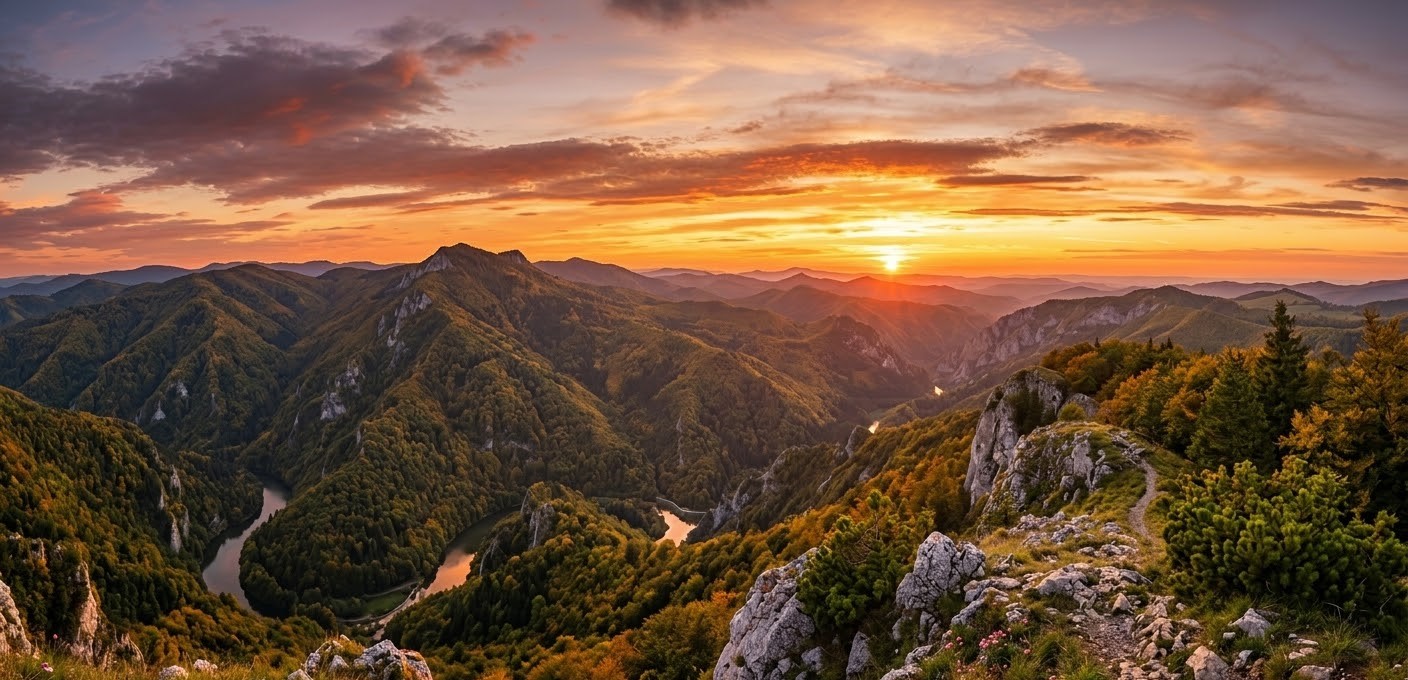
The Legends: Giants and Hidden Treasures
Like many places in the Apuseni, Codru-Moma is steeped in folklore:
The Legend of the Golden Cave: Locals speak of hidden caves filled with Dacian gold, guarded by "Solomonari" (powerful wizards who control the weather). It is said that the entrance only appears to those with a pure heart who wander the woods during the summer solstice.
The Spirits of the Forest: The name "Codru" refers to an old, thick forest. Traditional stories warn travelers to stay on the paths, or the "Muma Pădurii" (Mother of the Forest) might lead them astray to protect the trees she calls her children.
Fun Facts & Curiosities
- The "Sinkhole" Capital: The karst relief means the ground is literally like Swiss cheese. There are hundreds of doline (sinkholes) and "avene" (vertical shafts) that swallow entire streams, only for them to reappear kilometers away as crystal-clear springs.
- The "Money" Stones: In certain areas, you can find small, circular fossils called Nummulites that look exactly like ancient stone coins.
For those planning to visit this wild corner of Romania, here is what you need to know:
- Highest Peak: Pleșu Peak (1,112 meters). While not the highest in Romania, the climb is steep and rewarding.
- Access: The best entry points are from Moneasa (a beautiful thermal spa resort) or the town of Vașcău.
- Difficulty: Moderate. The trails are not always perfectly marked compared to the Bucegi mountains, so a GPS map is highly recommended.
- Key Attraction: Don't miss the Izoi Cave and the Moneasa Valley, where the air is exceptionally ionized, perfect for lung health.
FAQ: Exploring the Codru-Moma Mountains
1. Where are the Codru-Moma Mountains located?
They are part of the Apuseni Mountains (Western Carpathians) in western Romania, stretching across the Arad and Bihor counties. The nearest major gateway is the resort town of Moneasa.
2. What is the highest point in this range?
The highest peak is Pleșu Peak (Vârful Pleșu), reaching an elevation of 1,112 meters. While it may not seem very high compared to the Făgăraș Mountains, the climb offers stunning panoramic views of the Transylvanian plateau.
3. Are the trails well-marked for tourists?
The main trails around Moneasa and Vașcău are marked, but because this is a wild and less-commercialized area, some paths can be overgrown or faint. It is highly recommended to use a GPS-based map (like Muntii Nostri or Komoot) and to check the weather before heading out.
4. What is the best time of year to visit?
- Late Spring (May-June): To see the wild flowers and the full force of the karst springs.
- Autumn (October): For the spectacular colors of the ancient beech forests.
- Winter: Only for experienced hikers, as the limestone terrain can be slippery and hidden by snow.
Yes. These mountains are a sanctuary for brown bears, wolves, lynx, and wild boar. While attacks are extremely rare, remember that wild animals are unpredictable. Always make your presence known by talking or making noise while hiking, and never leave food scraps behind.
6. What makes the geology of this area special?
The range is famous for its karst landscape. This means the mountains are made of limestone that water has carved over millions of years, creating a "Swiss cheese" effect with numerous sinkholes (doline), caves, and underground rivers that disappear and reappear unexpectedly.
7. Is there any accommodation available?
The best place to stay is the Moneasa Resort, often called the "Pearl of the Apuseni." It offers various hotels, guesthouses, and thermal baths that are perfect for relaxing after a long day of trekking.
8. Are there any unique legends I should know?
Local folklore says that the deep "avene" (vertical shafts) in the ground are gateways to an underground world. Some villagers still believe that "Solomonari" (weather-wizards) use these hidden paths to travel between the peaks during storms.
