
The Composer of the "Wondrous Bird"
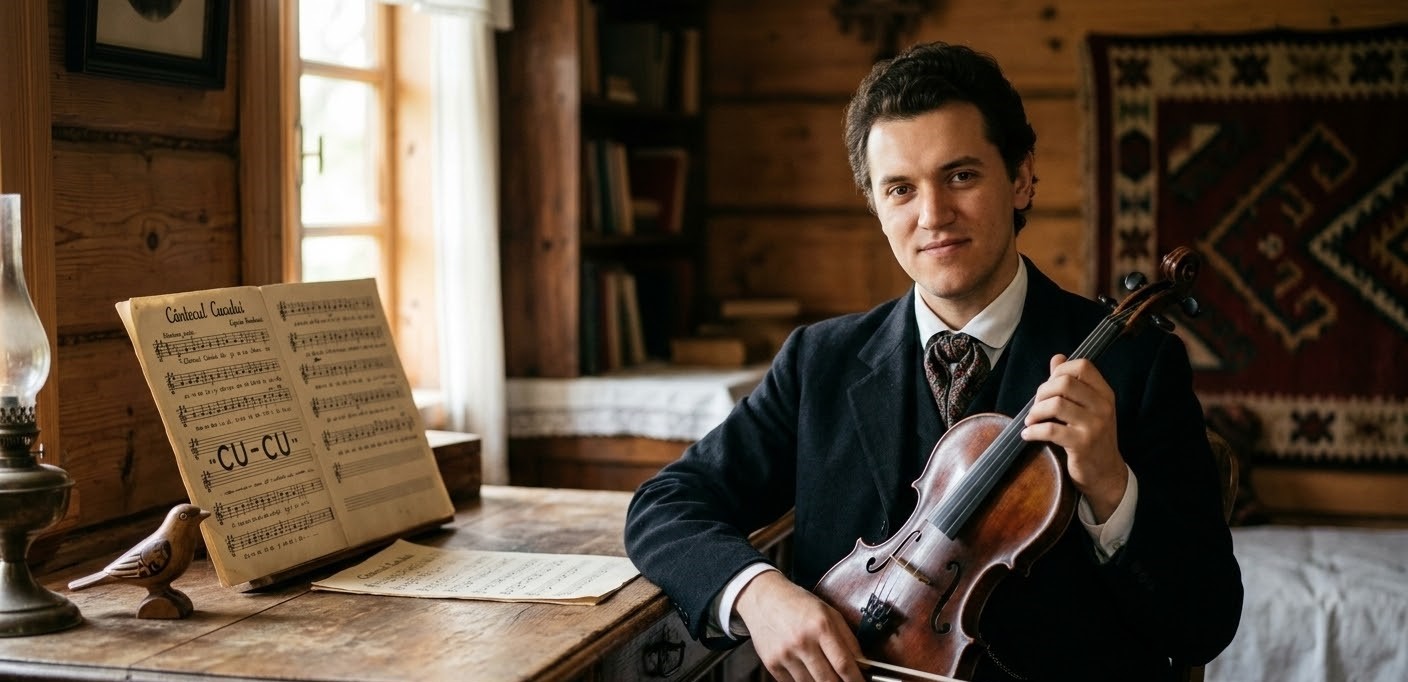
In our Wildlife section, we spoke about the Cuckoo (Cucul) (see more) as a muse for Romanian music. Ciprian Porumbescu was the artist who most famously captured this bird's essence in his choral work, "Cântecul Cucului" (The Song of the Cuckoo).
He believed that the forest, the mountains, and the birds were the true teachers of a Romanian musician. In his compositions, you can hear the "cu-cu" call not just as a sound, but as a heartbeat of the Romanian landscape, blending nature with high art.
Masterpieces that Defined a Nation
Porumbescu’s work is characterized by a profound sense of "Dor" (a unique Romanian word for longing and nostalgia).
- Balada pentru vioară și orchestră (The Ballad for Violin and Orchestra): His most famous work. It is a hauntingly beautiful piece that brings listeners to tears, expressing the suffering and the hope of the Romanian spirit.
- Trei culori (Three Colors): A patriotic song that became a symbol of national unity.
- Crai Nou: The first Romanian operetta, which premiered in 1882, proving that Romanian folklore could shine on the grandest stages.
A Hero’s Life and Sacrifice
Porumbescu was not just a musician; he was a passionate patriot. His involvement in the struggle for Romanian independence and his cultural activism led to his imprisonment by the Austro-Hungarian authorities in 1877. It was during this cold, harsh imprisonment that he contracted the tuberculosis that eventually took his life at the young age of 29. Even on his deathbed, his last wish was for his music to keep the Romanian spirit alive.
Fun Facts for the Curious
- The First National Anthem: Ciprian Porumbescu composed the melody for "Pe-al nostru steag e scris Unire", a song that served as an anthem for the union of Romanian provinces and later became the basis for the national anthem of Albania.
- A Musical Prodigy: He began playing the piano and violin at a very young age, often performing traditional songs for his family in the Bucovina region.
- The "Porumbescu" Museum: You can visit his memorial house in Stupca (now named Ciprian Porumbescu village), where his piano and original manuscripts are still preserved.
- Place of Birth: Sipotele Sucevei (Bucovina).
- Musical Education: Conservatory of Vienna (where he was a student of Anton Bruckner).
- Main Instrument: Violin.
- Status: One of the most celebrated figures in the "Icons of Romania" gallery.
FAQ: Ciprian Porumbescu
What is his most famous work?
His most iconic composition is the "Balada pentru vioară și orchestră." It is considered one of the most beautiful and emotional pieces in the history of Romanian classical music.
Why is he linked to the cuckoo bird?
He composed a famous choral piece called "Cântecul Cucului," where the singers' voices mimic the call of the cuckoo. He saw the bird as a symbol of the Romanian forest and used its rhythm to create a unique national sound.
Where can I see his legacy today?
Apart from his memorial house in Suceava, there is a prestigious Music University in Bucharest named after him, and his life story has been the subject of several famous Romanian films.
Was he really a prisoner?
Yes. He was imprisoned for 11 weeks for his patriotic activities and for organizing a celebration of Romanian history. Unfortunately, the conditions in prison severely damaged his health, leading to his early death.
