
Why Visit Lake Prisaca?
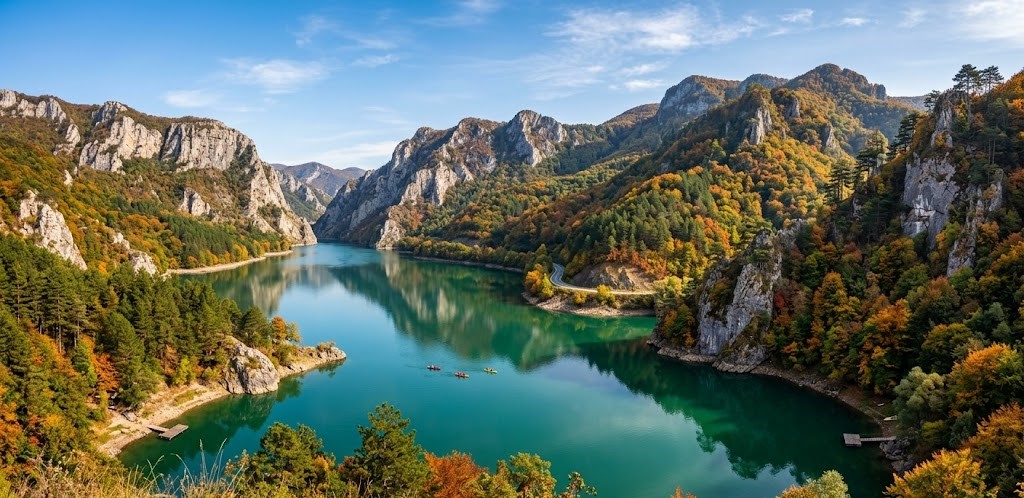
- The Color: Depending on the light and the season, the water shifts from a deep forest green to a vibrant turquoise, creating a stunning contrast with the grey limestone cliffs.
- Kayaking & Canoeing: Unlike larger, wind-swept lakes, Prisaca is usually very calm, making it the perfect spot for a quiet paddle through the narrow canyon-like areas.
- Proximity to Adventure: It serves as a gateway to some of the best hiking trails in the Domogled-Valea Cernei National Park, including the famous "Scărița" (The Wooden Ladders) trail.
The area surrounding the lake is part of a protected national park, known for:
-The Banat Black Pine (see more): You can see these rare, umbrella-shaped pines clinging to the vertical rocky walls above the lake.
-Butterflies: The Cerna Valley is famous among entomologists worldwide, hosting over 1,500 species of butterflies, many of which can be seen dancing along the lakeshore in summer.
-Caves: The limestone mountains here are "hollow," hiding numerous caves and thermal springs that feed into the valley.
Fun Facts for Travelers
- The Sunken Road: The lake was formed by a dam built in 1972. During very dry summers, you can sometimes glimpse the remnants of the old road that used to connect the mountain villages.
- Total Silence: Because motorboats are generally restricted or rare, the lake offers a level of acoustic silence that is hard to find near major tourist resorts.
For the best view of the entire lake, hike up to the Inălăț Peak or the White Cross (Crucea Albă) above Băile Herculane. From there, the lake looks like a thin blue ribbon winding through the mountains.
A stunning video presenting Lake Prisaca (Lacul Prisaca) and its nature surroundings:
Frequently Asked Questions about Lake Prisaca
1. Where exactly is Lake Prisaca located?
Lake Prisaca is situated in the Cerna Valley (Valea Cernei), approximately 10-12 km upstream from the historic resort of Băile Herculane, in southwestern Romania. It is part of the Domogled-Valea Cernei National Park.
2. Can I swim in Lake Prisaca?
While swimming is not strictly forbidden, the water is a reservoir for a hydroelectric plant and can be very deep and cold, even in summer. Most visitors prefer kayaking or simply enjoying the view from the shore.
3. Are there boat or kayak rentals available?
Yes, during the summer season, you can often find small local points near the shore (especially near the motel area) that rent out kayaks and rowing boats. It is one of the best ways to experience the limestone canyons from the water level.
4. How do I get to the lake from Băile Herculane?
By Car: It’s a short 15-minute drive on the DN67D road towards Târgu Jiu.
By Foot: For those who love walking, there are trails along the Cerna river, but most people prefer to drive to the dam and start their hikes from there.
5. What are the best hiking trails near the lake?
Lake Prisaca is a great starting point for:
- The Scărița Trail: Famous for its vertical wooden ladders that lead to the remote village of Ineleț (see more).
- The White Cross (Crucea Albă): A classic hike offering a panoramic view of the entire valley.
- The Tasna Gorge (Cheile Tasnei): A spectacular trail featuring waterfalls and unique rock formations.
There is no specific fee to see the lake itself, but since it is located within a National Park, you might need to pay a small protected area tax (usually a few lei) at the park's entry points or via SMS.
7. Can I go fishing at Lake Prisaca?
Yes, fishing is allowed, but you need a valid Romanian fishing permit and must follow the local regulations regarding the fishing season and protected species like the mountain trout.
8. Is the area safe from wild animals?
The Cerna Valley is a wild region. While encounters are rare near the main road, brown bears and vipers (specifically the Horned Viper) (see more) live in these mountains. It is advised to stay on marked paths and wear high hiking boots.
