
Why is it called "The Painted Cave"?
The name isn't a coincidence. As you explore its galleries, you are greeted by an explosion of colors—from pure whites and translucent ambers to deep reds and earthy browns. These hues are created by the diverse minerals (like iron and manganese) that have seeped through the limestone over thousands of years, "painting" the stalactites and stalagmites in ways that look almost artificial.
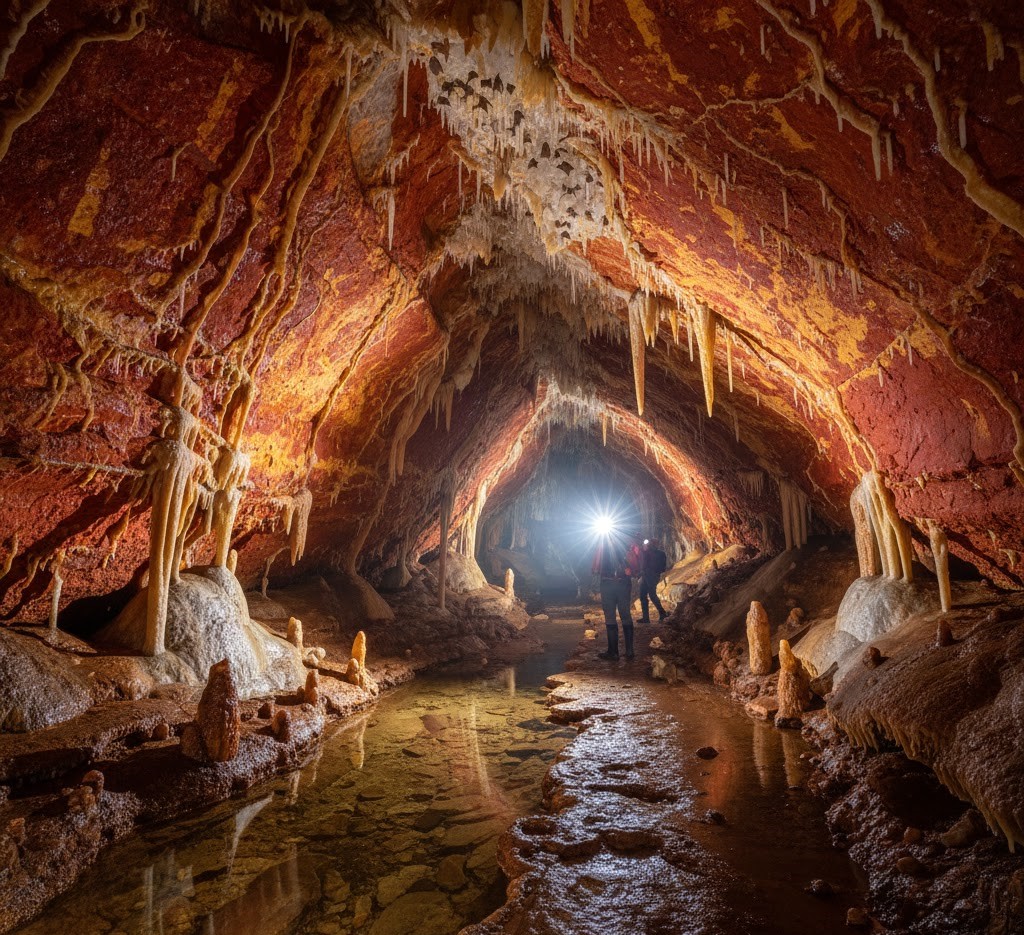
Legends of the Firestone
Local tradition says that the cave was named Piatra de Foc (Firestone) because, in ancient times, shepherds used the hard flint stones found near the entrance to spark fires during cold mountain nights. Some even say that the cave’s deep red walls were colored by the fires of legendary giants who once lived in the Apuseni, guarding the treasures of the earth.
 Biodiversity and Underground Life
Beyond its stunning colors, The Painted Cave is a living ecosystem. Visitors should be aware that they are guests in a fragile world:
The Guardians of the Dark: The cave provides shelter for several species of bats (such as the Greater Horseshoe Bat). These creatures are vital for the mountain's ecosystem. If you spot them, please keep your noise levels down and never shine your light directly at them, especially during the winter hibernation.
Endemic Species: Deep within the galleries, life exists in total darkness. Tiny, rare insects and crustaceans have evolved here over millions of years. These species are found nowhere else on Earth, making the cave a site of high scientific importance.
Access and Exploration
The cave is located in the Padiș Plateau area, a paradise for hikers. Accessing it requires a bit of effort and proper equipment. Since it is a protected site, it is highly recommended to visit with a certified guide to preserve its fragile ecosystem.
Conservation Ethics: "The Glass Rule"
To keep this place "beautiful" for future generations, we ask all explorers to follow strict caving ethics:
- Do Not Touch: The oils from human skin can chemically react with the limestone, permanently stopping the growth of stalactites and staining the vibrant colors. Treat the walls like a museum exhibit—look, but don't touch.
- Climate Control: Even a large group of people can slightly raise the temperature inside, affecting the delicate balance. Keep your visit efficient and respectful.
- Leave No Trace: Everything you take into the cave must come out with you. Even the smallest piece of trash can contaminate the pristine underground water sources.
- Remember: The mountains are beautiful but raw. Wild animals are unpredictable around cave entrances, which often serve as shelters. Always check your surroundings before entering or exiting.
1. Why is it called "The Painted Cave"? The name comes from the extraordinary natural colors of its walls. Mineral deposits like iron oxide and manganese create shades of red, orange, yellow, and black, making the cave look as if an artist has painted the interior.
2. Where exactly is Piatra de Foc located? It is located in the Bihor Mountains, within the Apuseni Natural Park (Western Romania). The nearest major hiking hub is the Padiș Plateau, a famous area for karst landscapes.
3. Is the cave open to the general public? Access is generally restricted or requires special permission/guides because it is a protected site. Its fragile ecosystem and "macaroni" stalactites are easily damaged, so it is best to visit with a certified speleology club or guide.
4. What equipment do I need for a visit? Even for an easy visit, you will need waterproof mountain boots, a professional headlamp (with spare batteries), and a helmet. The temperature inside stays around 10°C (50°F) year-round, so wear layers even in summer.
5. Are there bears or other wildlife near the cave? Yes, the Apuseni Mountains are home to brown bears, wolves, and lynx. Wild animals are unpredictable, and cave entrances are sometimes used as shelters. Always make noise while hiking to the cave and never store food near the entrance.
6. Can I take photos inside? Yes, photography is allowed and encouraged, but please never touch the formations to stabilize your camera. The oils from your skin can "kill" the stone and stop its growth forever.
