Goat Lake (Lacul Capra): The Glacial Mirror of the Făgăraș Peaks +video and views
Posted: Wed Feb 04, 2026 2:01 pm
High above the clouds, at an altitude of 2,230 meters, lies Lacul Capra—one of the most breathtaking glacial lakes in the Făgăraș Mountains (Click HERE to see more) . While many tourists stop at Bâlea Lake (Click HERE to see more) , those who venture just a bit higher are rewarded with a much wilder, more serene experience.
The Legend of the Brave Shepherd and the Mist
Local mountain men tell a story about a young shepherd who was caught in a thick, supernatural mist near the lake’s edge. Legends say that the lake is "bottomless" and guarded by the spirits of the peaks. The shepherd, having lost his way, was guided to safety by a mysterious white goat that appeared out of the fog. Ever since, the lake has been a symbol of protection for those who respect the mountain's power.
 Why You Should Visit
The View: From the ridge above the lake, you can see the Transfăgărășan highway (Click HERE to see more) carving through the valley like a giant ribbon.
The Connection: From Glacial Silence to Roaring Heights
One of the most fascinating facts about Capra Waterfall (Click HERE to see more) is its origin. The waterfall is directly fed by the overflow of Lake Capra, situated nearly 500 meters higher up the mountain.
As the snow melts on the jagged peaks of the Făgăraș range, the pristine water fills the glacial basin of the lake and then spills over the edge, beginning its dramatic descent. This mountain stream carves its way through the rocky terrain until it reaches the famous cliffside on the Transfăgărășan, where it transforms into the 40-meter-high spectacle known as Cascada Capra.
Traveler’s Insight: While most visitors admire the waterfall from the comfort of the road, the secret to its power lies in the silent, crystal-clear reservoir above. To truly understand this natural engine, one must hike to the ridge and see where the journey begins.
A video with the epic Goat Lake (Lacul Capra):
Frequently Asked Questions (FAQ) – Lake Capra
1. Is Lake Capra the source of the Capra Waterfall? Yes, it is! The waterfall is fed by the crystal-clear waters that overflow from Lake Capra. During late spring and early summer, the melting snow from the surrounding peaks increases the lake's volume, making the waterfall downstream exceptionally powerful.
2. How difficult is the hike to Lake Capra? The most common route starts from Bâlea Lake and goes through Șaua Caprei (Capra Saddle). It is a moderate but steep hike that takes about 45 to 60 minutes. Good hiking boots are essential as the terrain is rocky and can be slippery.
3. Can I reach the lake by car? No. While you can see the Capra Waterfall from your car on the Transfăgărășan road, reaching the lake requires a hike. The lake sits at 2,230 meters, far above the road level.
4. Is it safe to encounter wildlife near Lake Capra? The Făgăraș Mountains are a wild habitat. While sightings of chamois (black goats) are common and breathtaking, wild animals are unpredictable. Brown bears are present in the region, so it is vital to stay on marked trails, hike during daylight, and never leave food scraps behind.
5. Can I camp at Lake Capra? Yes, camping is popular at Lake Capra, and it is considered one of the most scenic camping spots in Romania. However, be prepared for low temperatures even in summer and strong winds. Always follow "Leave No Trace" principles to protect this fragile glacial ecosystem.
6. When is the best time to visit? The best window is between July and September. Before July, the path through Șaua Caprei is often covered in dangerous snow patches. By October, the first blizzards can occur, making the descent hazardous.
The Legend of the Brave Shepherd and the Mist
Local mountain men tell a story about a young shepherd who was caught in a thick, supernatural mist near the lake’s edge. Legends say that the lake is "bottomless" and guarded by the spirits of the peaks. The shepherd, having lost his way, was guided to safety by a mysterious white goat that appeared out of the fog. Ever since, the lake has been a symbol of protection for those who respect the mountain's power.
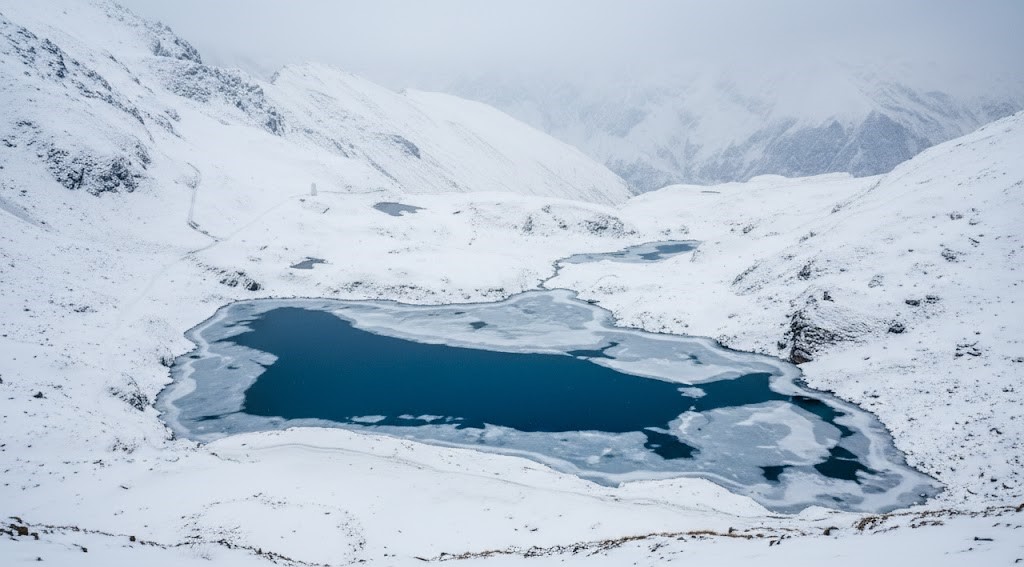
Ultra-wide winter panorama of Lake Capra in the Făgăraș Mountains, featuring partially frozen blue water and snow-covered alpine peaks.
- The Reflection: On a calm day, the lake perfectly mirrors the "Capra" and "Iezerul Caprei" peaks.
The View: From the ridge above the lake, you can see the Transfăgărășan highway (Click HERE to see more) carving through the valley like a giant ribbon.
The Connection: From Glacial Silence to Roaring Heights
One of the most fascinating facts about Capra Waterfall (Click HERE to see more) is its origin. The waterfall is directly fed by the overflow of Lake Capra, situated nearly 500 meters higher up the mountain.
As the snow melts on the jagged peaks of the Făgăraș range, the pristine water fills the glacial basin of the lake and then spills over the edge, beginning its dramatic descent. This mountain stream carves its way through the rocky terrain until it reaches the famous cliffside on the Transfăgărășan, where it transforms into the 40-meter-high spectacle known as Cascada Capra.
Traveler’s Insight: While most visitors admire the waterfall from the comfort of the road, the secret to its power lies in the silent, crystal-clear reservoir above. To truly understand this natural engine, one must hike to the ridge and see where the journey begins.
A video with the epic Goat Lake (Lacul Capra):
Frequently Asked Questions (FAQ) – Lake Capra
1. Is Lake Capra the source of the Capra Waterfall? Yes, it is! The waterfall is fed by the crystal-clear waters that overflow from Lake Capra. During late spring and early summer, the melting snow from the surrounding peaks increases the lake's volume, making the waterfall downstream exceptionally powerful.
2. How difficult is the hike to Lake Capra? The most common route starts from Bâlea Lake and goes through Șaua Caprei (Capra Saddle). It is a moderate but steep hike that takes about 45 to 60 minutes. Good hiking boots are essential as the terrain is rocky and can be slippery.
3. Can I reach the lake by car? No. While you can see the Capra Waterfall from your car on the Transfăgărășan road, reaching the lake requires a hike. The lake sits at 2,230 meters, far above the road level.
4. Is it safe to encounter wildlife near Lake Capra? The Făgăraș Mountains are a wild habitat. While sightings of chamois (black goats) are common and breathtaking, wild animals are unpredictable. Brown bears are present in the region, so it is vital to stay on marked trails, hike during daylight, and never leave food scraps behind.
5. Can I camp at Lake Capra? Yes, camping is popular at Lake Capra, and it is considered one of the most scenic camping spots in Romania. However, be prepared for low temperatures even in summer and strong winds. Always follow "Leave No Trace" principles to protect this fragile glacial ecosystem.
6. When is the best time to visit? The best window is between July and September. Before July, the path through Șaua Caprei is often covered in dangerous snow patches. By October, the first blizzards can occur, making the descent hazardous.