The Mystic Depths of Polovragi Cave (Pestera Polovragi): Where Legends Meet the Earth +video and views
Posted: Mon Feb 02, 2026 11:47 am
If you are traveling through the heart of Romania, specifically near the breathtaking Olteț Gorges (Cheile Oltețului) in the Southern Carpathians, there is a place where the veil between history and mythology grows thin: Polovragi Cave.
Known as one of the most spiritually significant caverns in the country, Polovragi is more than just a geological wonder of stalactites and stalagmites—it is a portal to the ancient world of the Dacians.
 The Legend of Zamolxis
The most enduring story of Polovragi is that of Zamolxis, the supreme deity of the Geto-Dacians. Local folklore says that this cave was his earthly throne.
According to legend, the "Great White God" lived here, and the moisture dripping from the cave walls isn't just water—it's said to be the tears of Zamolxis, shed after the Roman conquest of Dacia. It is also believed that he used secret tunnels within the cave to travel instantly between the mountain peaks and the underworld.
For centuries, pilgrims and healers (known as solomonari) traveled here to gather a legendary herb called "Polovraga," used to cure all illnesses, which gave the cave and the nearby village their names.
 What to See InsideWalking through the illuminated galleries, you’ll feel the cool, constant 9 degree C air and witness:
 Travel Tips
A video witch present the Polovragi Cave (Pestera Polovragi):
 Frequently Asked Questions (FAQ) – Polovragi Cave
1. Where exactly is Polovragi Cave located?
The cave is situated in Gorj County, Oltenia region, at the foot of the Căpățânii Mountains. It sits at the entrance of the Olteț Gorges, near the beautiful Polovragi Monastery.
2. Is the cave difficult to explore?
Not at all. The tourist sector (approximately 800 meters) is fully electrified and features a flat, accessible path. It is suitable for children and seniors, though the ground can be a bit damp and slippery.
3. How much does a ticket cost and what are the visiting hours? * Ticket Price: Generally between 10 - 20 RON ($2 - $4), with discounts for children and students.
The temperature stays constant at around 9 degree C year-round. Even if it's a scorching 35 degrees C outside, you will need a light jacket or a sweater and closed-toe shoes.
5. Can I take photos inside?
Yes, photography for personal use is allowed. However, avoid using high-power flashes near the bat colonies, as they are a protected species and very sensitive to light.
6. How much time should I allocate for the visit?
A guided tour usually takes about 30 to 45 minutes. We recommend spending an extra hour to walk through the Olteț Gorges nearby—the views are spectacular!
7. Is it true that the cave is 10 kilometers long?
Yes! While tourists can only visit the first 800 meters, speleologists have explored over 10.3 km of galleries. It is one of the longest and most complex cave systems in Romania.
Known as one of the most spiritually significant caverns in the country, Polovragi is more than just a geological wonder of stalactites and stalagmites—it is a portal to the ancient world of the Dacians.
 The Legend of Zamolxis
The most enduring story of Polovragi is that of Zamolxis, the supreme deity of the Geto-Dacians. Local folklore says that this cave was his earthly throne.
According to legend, the "Great White God" lived here, and the moisture dripping from the cave walls isn't just water—it's said to be the tears of Zamolxis, shed after the Roman conquest of Dacia. It is also believed that he used secret tunnels within the cave to travel instantly between the mountain peaks and the underworld.
For centuries, pilgrims and healers (known as solomonari) traveled here to gather a legendary herb called "Polovraga," used to cure all illnesses, which gave the cave and the nearby village their names.
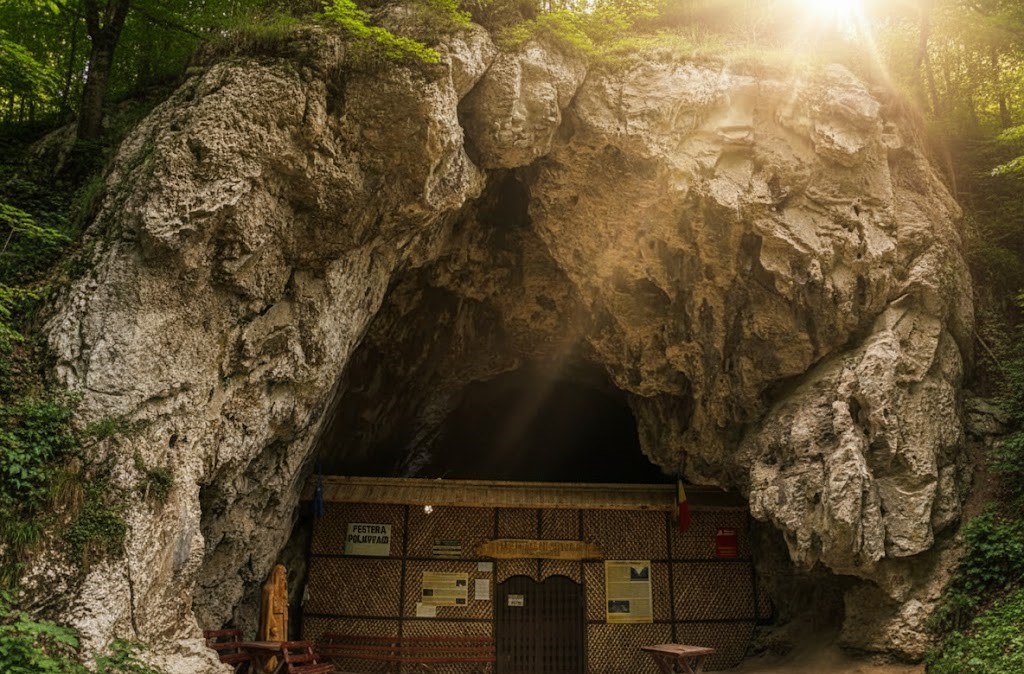
Ultra-wide landscape view of the Polovragi Cave entrance in the Carpathian Mountains, Romania, showing the massive limestone cliffs, lush green vegetation, and a warm golden sunset glow filtering through the trees.
 What to See InsideWalking through the illuminated galleries, you’ll feel the cool, constant 9 degree C air and witness:
- The Stone Throne: A rock formation shaped like a chair, where Zamolxis is said to have rested.
- The Monk’s Painting: A hauntingly beautiful depiction of Death (The Grim Reaper) painted by a monk who lived in seclusion here hundreds of years ago using natural pigments.
- Intricate Formations: From "The Candelabra" to "The Bat’s Gallery," the limestone sculptures carved by water over millennia are nature's own art gallery.
 Travel Tips
- Location: Gorj County, near the amazing Polovragi Monastery (Click HERE to see more) .
- Access: The road leading to the cave passes through the Olteț Gorges—the narrowest canyons in Europe, offering jaw-dropping views.
- Gear: The cave is humid; make sure to wear a jacket and comfortable walking shoes.
A video witch present the Polovragi Cave (Pestera Polovragi):
 Frequently Asked Questions (FAQ) – Polovragi Cave
1. Where exactly is Polovragi Cave located?
The cave is situated in Gorj County, Oltenia region, at the foot of the Căpățânii Mountains. It sits at the entrance of the Olteț Gorges, near the beautiful Polovragi Monastery.
2. Is the cave difficult to explore?
Not at all. The tourist sector (approximately 800 meters) is fully electrified and features a flat, accessible path. It is suitable for children and seniors, though the ground can be a bit damp and slippery.
3. How much does a ticket cost and what are the visiting hours? * Ticket Price: Generally between 10 - 20 RON ($2 - $4), with discounts for children and students.
- Hours: Typically open from 10:00 AM to 6:00 PM during the summer season. In winter, schedule may vary or require a minimum group size, so it's best to check locally.
The temperature stays constant at around 9 degree C year-round. Even if it's a scorching 35 degrees C outside, you will need a light jacket or a sweater and closed-toe shoes.
5. Can I take photos inside?
Yes, photography for personal use is allowed. However, avoid using high-power flashes near the bat colonies, as they are a protected species and very sensitive to light.
6. How much time should I allocate for the visit?
A guided tour usually takes about 30 to 45 minutes. We recommend spending an extra hour to walk through the Olteț Gorges nearby—the views are spectacular!
7. Is it true that the cave is 10 kilometers long?
Yes! While tourists can only visit the first 800 meters, speleologists have explored over 10.3 km of galleries. It is one of the longest and most complex cave systems in Romania.