
The Legend and the Moving Church

The story of Bârsana is as dramatic as its beauty. Its history dates back to the 14th century (around 1390), when the local noble family of Dragoș founded a monastery on the property.
But here is the fascinating part of the story: The Church that Moved. In 1711, during the Tatar invasions, the original monastery was destroyed. To save their sacred space, the locals rebuilt it in 1720 in a place called "Hair's Field." However, legend says that the souls of the departed could not find peace there, so in 1739, the entire wooden church was dismantled and moved to its current location. It was a symbolic act of "moving the faith" to protect it from invaders.
For a long time, the monastery was abandoned, but after the 1989 Revolution, the community rebuilt the current ensemble, creating what is now one of the tallest and most beautiful wooden structures in Europe.
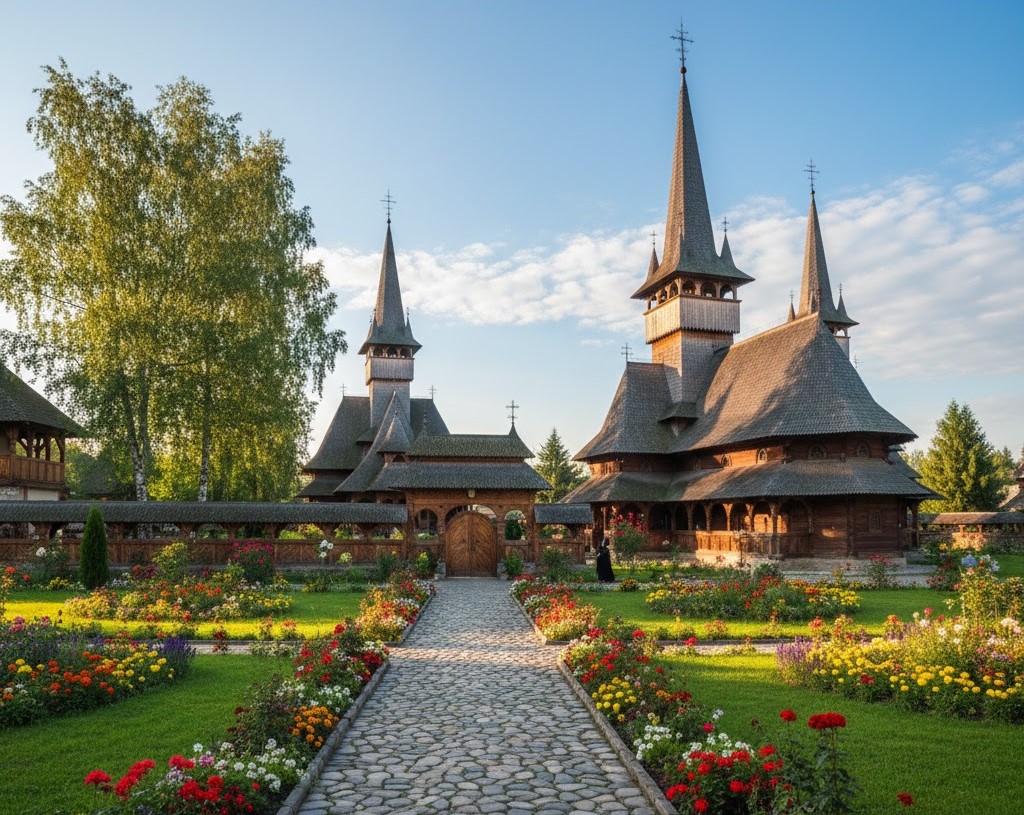
Why It Feels Like a Fairytale:
Walking through Bârsana today is a sensory experience:
- The Architecture: Built entirely of oak and spruce, the structures feature the iconic "gothic" Maramureș spires that reach for the clouds.
- The Gardens: Known for being impeccably kept, the monastery grounds are filled with flowers, emerald grass, and cobblestone paths.
- The Silence: Despite being a popular spot, there is a profound stillness here that invites reflection.
- UNESCO Heritage: The "Old Church" (the one that was moved) is part of the UNESCO World Heritage list.
- The Museum: Don't miss the museum on-site, which houses a rare collection of icons painted on glass and old manuscripts.
A 4K video witch present the magic of Bârsana Monastery (Manastirea Bârsana):"Bârsana is not just a place to visit; it is a place to breathe. It represents the resilience of the Romanian soul—rebuilt, moved, but never broken."
Frequently Asked Questions (FAQ) – Bârsana Monastery
1. Is there an entrance fee to visit the monastery?
No, entrance to the monastery grounds is generally free of charge. However, there might be a small fee (around 5-10 RON) if you wish to visit the museum on-site or the UNESCO-protected old wooden church. Donations for the maintenance of the complex are always appreciated.
2. What is the "Old Church" vs. the "New Complex"?
This is a common confusion!
- The Old Church (UNESCO): Built in 1720, it is a small, historic wooden church located on a nearby hill (Jbar hill). It’s famous for its interior frescoes.
- The New Complex: This is the stunning, large ensemble of wooden buildings (including the tall belfry and the main church) that you see in most photos. It was rebuilt starting in the 1990s to revive the local monastic tradition.
Yes. As this is an active monastery, visitors are expected to dress modestly.
- Women should ideally wear longer skirts and have their shoulders covered.
- Men should avoid wearing short trousers or tank tops.
- Pro Tip: If you are dressed for hiking, the monastery usually provides wrap-around skirts or shawls at the entrance for free.
You are free to take photos of the gardens and the exterior of the buildings. However, photography is usually prohibited inside the churches during services to respect the prayer of the nuns and the sanctity of the space.
5. How do I get to Bârsana?
The best way is by car. It is located in the Iza Valley (Valea Izei), about 20 km from Sighetu Marmației. If you are coming from the Merry Cemetery in Săpânța (Click HERE to see more), it’s about a 45-minute drive through some of the most beautiful villages in Maramureș.
6. Are there accommodation options at the monastery?
The monastery itself is a place of worship for nuns and does not typically offer "hotel-style" lodging for tourists. However, the village of Bârsana is famous for its traditional guesthouses (pensiuni) where you can stay in authentic wooden houses and enjoy local Maramureș cuisine.
