The Black Church (Biserica Neagră) Brasov County: The Gothic Soul of Brașov +video and views
Posted: Tue Jan 27, 2026 12:32 pm
If walls could talk, the Black Church (Biserica Neagră) in Brașov (Click HERE to see more) would have 600 years of epic tales to tell. Dominating the city's skyline, this massive structure isn't just a religious monument; it’s a symbol of resilience, history, and architectural grandeur.
 Why Is It "Black"?
The church wasn't always this dark. Its name comes from the Great Fire of 1689, which swept through Brașov and charred the church's walls. Instead of erasing its history, the people kept the name, turning a tragedy into an iconic landmark.
 The Black Church: Legends
1. The Great Fire (How it got its name)
The Legend: It wasn't always black. The Story: Originally named the Church of Saint Mary, its walls were blackened by the smoke of the Great Fire of 1689, when the Habsburg forces set the city ablaze. Legend says that although the interior was gutted and the roof collapsed, the stone walls stood firm, and a miracle happened: the only thing inside that remained untouched by the flames was a large painting of the Virgin Mary. Since then, the locals renamed it "The Black Church" as a tribute to its survival.
2. The Boy on the Roof (The Grinning Statue)
The Legend: If you look up at one of the exterior buttresses, you’ll see a statue of a boy leaning over the edge. The Story: This is the most famous (and slightly creepy) legend of the church. It is said that during the construction, a master builder was jealous of a young apprentice who was much more talented than him. The master pushed the boy off the roof to get rid of his rival. Later, consumed by guilt, the builder confessed, and the other workers carved a statue of the boy exactly where he fell, so his soul would watch over the church forever.
3. The "Innocent" Bullet
The Legend: Holes in the walls and a heavy history.The Story: During the 1989 Revolution, the church was caught in the crossfire. But even before that, legends say that the bells of the church have a "voice" of their own. One of the bells, weighing over 6 tons, is said to ring by itself whenever a great danger approaches the city, acting as a spiritual guardian of the Crown City (Brașov).
Why You Can’t Miss It:
Pro Traveler Tips:
 Location: Right in the heart of the Council Square (Piața Sfatului).
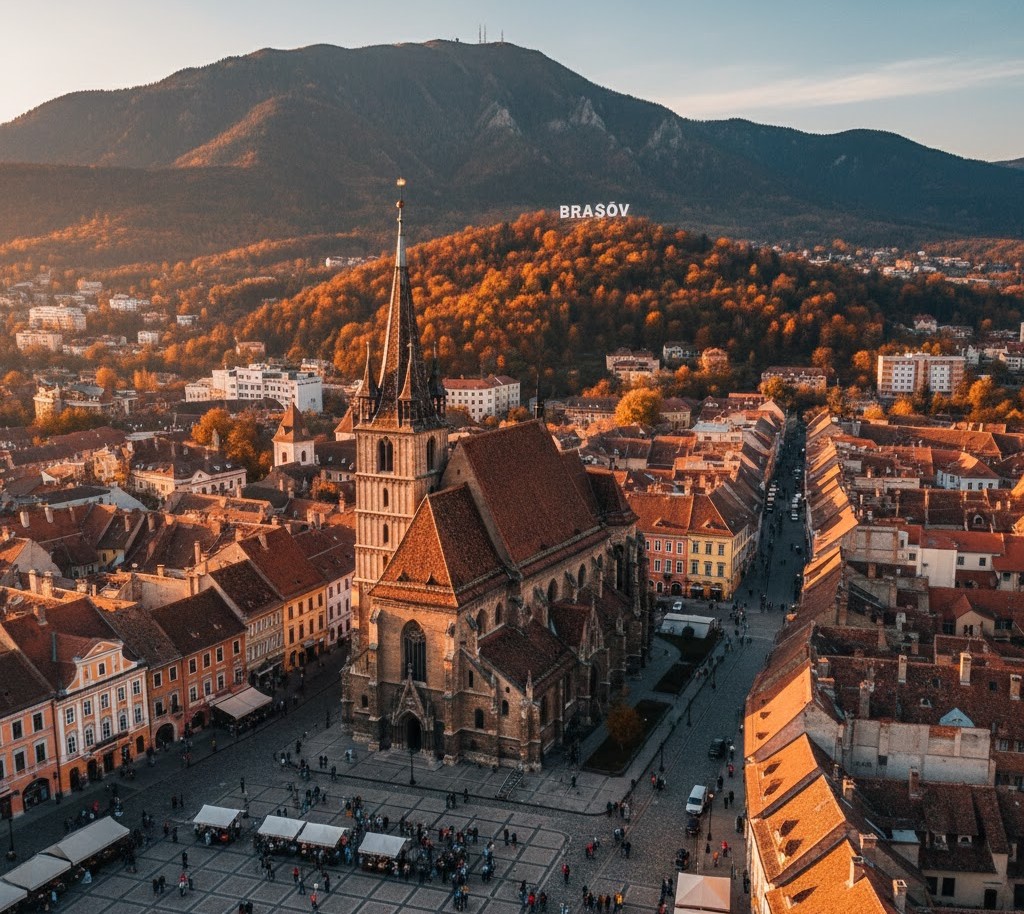
 Photo Op: The best view of the church is from the White Tower or the Black Tower on the nearby hills—perfect for that panoramic shot of Brasov!
 Duration: Give yourself at least 30–45 minutes to soak in the atmosphere and explore the interior museum.
 Frequently Asked Questions (FAQ)
1. Where is the Black Church located?
It is located in the historic center of Brașov, Romania, right next to the Council Square (Piața Sfatului). The exact address is Curtea Johannes Honterus 2.
2. What are the visiting hours for the Black Church?
Visiting hours vary by season:
Yes, there is an entrance fee for tourists. The revenue goes toward the maintenance and restoration of this medieval monument. Discounts are usually available for students and seniors.
4. Can you attend organ concerts at the Black Church?
Absolutely! During the summer months (June – September), the church hosts famous organ concerts (usually on Tuesday evenings). It is a world-class acoustic experience.
5. Is photography allowed inside?
To preserve the integrity of the ancient Anatolian carpets and the religious atmosphere, photography and filming are generally prohibited inside the church. However, you can take beautiful photos of the exterior from the Council Square.
 For more informations , virtual tours, photos and stories of the artifacts please visit The Black Church (Biserica Neagra) official website (Click HERE to see more)
The Black Church (Biserica Nearga, Brasov) aerial landscape
The church wasn't always this dark. Its name comes from the Great Fire of 1689, which swept through Brașov and charred the church's walls. Instead of erasing its history, the people kept the name, turning a tragedy into an iconic landmark.
 The Black Church: Legends
1. The Great Fire (How it got its name)
The Legend: It wasn't always black. The Story: Originally named the Church of Saint Mary, its walls were blackened by the smoke of the Great Fire of 1689, when the Habsburg forces set the city ablaze. Legend says that although the interior was gutted and the roof collapsed, the stone walls stood firm, and a miracle happened: the only thing inside that remained untouched by the flames was a large painting of the Virgin Mary. Since then, the locals renamed it "The Black Church" as a tribute to its survival.
2. The Boy on the Roof (The Grinning Statue)
The Legend: If you look up at one of the exterior buttresses, you’ll see a statue of a boy leaning over the edge. The Story: This is the most famous (and slightly creepy) legend of the church. It is said that during the construction, a master builder was jealous of a young apprentice who was much more talented than him. The master pushed the boy off the roof to get rid of his rival. Later, consumed by guilt, the builder confessed, and the other workers carved a statue of the boy exactly where he fell, so his soul would watch over the church forever.
3. The "Innocent" Bullet
The Legend: Holes in the walls and a heavy history.The Story: During the 1989 Revolution, the church was caught in the crossfire. But even before that, legends say that the bells of the church have a "voice" of their own. One of the bells, weighing over 6 tons, is said to ring by itself whenever a great danger approaches the city, acting as a spiritual guardian of the Crown City (Brașov).
Why You Can’t Miss It:
- Gothic Grandeur: It is the largest Gothic church between Vienna and Istanbul.
- The Buchholz Organ: Home to a massive 4,000-pipe mechanical organ. If you visit during the summer, you might catch a soul-stirring concert.
- Oriental Carpets: Surprisingly, the church houses one of the richest collections of Anatolian rugs in Europe—gifts from merchants who returned safely from their travels.
- The Legendary Bell: Inside the tower hangs a 6-ton bronze bell, the largest in Romania.
Pro Traveler Tips:
 Location: Right in the heart of the Council Square (Piața Sfatului).
  Photo Op: The best view of the church is from the White Tower or the Black Tower on the nearby hills—perfect for that panoramic shot of Brasov!
  Duration: Give yourself at least 30–45 minutes to soak in the atmosphere and explore the interior museum. Frequently Asked Questions (FAQ)
1. Where is the Black Church located?
It is located in the historic center of Brașov, Romania, right next to the Council Square (Piața Sfatului). The exact address is Curtea Johannes Honterus 2.
2. What are the visiting hours for the Black Church?
Visiting hours vary by season:
- Summer (April – October): Usually open Tuesday to Saturday (10:00 – 19:00) and Sunday (12:00 – 19:00).
- Winter (October – April): Typically shorter hours, closing around 16:00 or 17:00.
- Note: The church is usually closed to visitors on Mondays.
Yes, there is an entrance fee for tourists. The revenue goes toward the maintenance and restoration of this medieval monument. Discounts are usually available for students and seniors.
4. Can you attend organ concerts at the Black Church?
Absolutely! During the summer months (June – September), the church hosts famous organ concerts (usually on Tuesday evenings). It is a world-class acoustic experience.
5. Is photography allowed inside?
To preserve the integrity of the ancient Anatolian carpets and the religious atmosphere, photography and filming are generally prohibited inside the church. However, you can take beautiful photos of the exterior from the Council Square.
For more informations , virtual tours, photos and stories of the artifacts please visit The Black Church (Biserica Neagra) official website (Click HERE to see more)